








#10: Gary Ball


Peaks climbed

Journey
Kosciuszko list (Bass): #10
7summits journey
7summits timeline
Books & films about Gary Ball
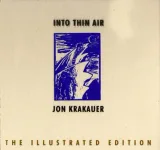
The illustrated edition of Krakauer’s account of the 1996 Everest disaster, published by Villard in 1998 — the same story in a large format, carrying the photographs and maps the… Read more →: Into Thin Air: The Illustrated Edition

Colin Monteath's “Hall & Ball, Kiwi Mountaineers” is a personal memoir of two of New Zealand's most famous mountaineers, known both for their dedication to high-altitude climbing… Read more →: Hall Ball Kiwi Mountaineers From Mount Cook To Everest

When Jon Krakauer reached the summit of Mt. Everest in the early afternoon of May 10, 1996, he hadn't slept in fifty-seven hours and was reeling from the brain-altering effects of… Read more →: Into Thin Air
Finisher badge

Biography
Gary Ball was born on 6 April 1953 in New Zealand and died on 6 October 1993, at the age of 40. He was the climbing and business partner of Rob Hall, and much of his career was shared with him.
In 1990 Ball and Hall climbed Mount Everest together with Peter Hillary, son of Sir Edmund Hillary. Over the following months the pair went on to complete the 7 summits, the highest peak on each continent, in a record seven months, for which they received the New Zealand 1990 Commemoration Medal.
Looking for a new mountaineering challenge, Ball and Hall founded Adventure Consultants in 1991, establishing an office in Christchurch and becoming one of the first operations to offer guided ascents of the world's highest peaks. "They were pioneers in this new style of mountain guiding," said Guy Cotter, one of the Adventure Consultants guides and later the company's director. "Till then it had hardly ever been done." Their initial price for guiding Everest was US$35,000 per client; the two men judged that anyone serious about climbing in such an extreme environment would pay a premium for their expertise.
Their guiding formula was built on, in the words of climber and photographer Colin Monteath's biography Hall and Ball: Kiwi Mountaineers, "a comfortable base camp, a quality menu, dedicated medical back-up, a communication system both on the mountain and by satellite to the world, Russian state-of-the-art aluminium/kevlar oxygen equipment, a realistic acclimatisation schedule and the all-important guide/Sherpa to client ratio."
The approach proved successful quickly. On 12 May 1992, Hall, Ball and Guy Cotter -- guiding in the Himalaya for the first time -- led six paying clients to the summit of Everest, while another four clients did not make it due to exhaustion. Hall and Ball ran another Everest expedition in 1993, during which Ball, bleeding from his sinuses, was forced to turn back.
It was not the first time Ball had suffered altitude problems on an expedition. During an earlier attempt on K2, he had needed a fast withdrawal from the mountain's highest camp after developing breathing difficulties.
Death
In September and October 1993, Ball joined Hall on a private expedition to Dhaulagiri, the seventh-highest peak in the world: their sixteenth major expedition together. On 6 October 1993, six months after his fortieth birthday, Ball died of pulmonary oedema at around 6,500 metres (21,325 feet) on the peak's Northeast Ridge. He died in Hall's arms. Two days later Hall lowered his friend's body into a crevasse on the slopes of Dhaulagiri, using the rope the two men had climbed with together for many years.
Hall later wrote in an obituary that in a guiding career spanning twenty years Ball had "enjoyed an unbroken safety record of which he was rightfully proud," and that his greatest guiding achievement had arguably been taking clients to the summit of Everest, a goal Ball believed had become too elite and which he was glad to help make attainable for climbers of more modest skill. Hall closed the obituary with the words: "Some people come into your life and leave footprints across your heart -- and they never go away."