
Aconcagua by the Falso de los Polacos, December 2000
Gipfel erreicht 31. Dez. 200019 TageVerfasst auf Englisch
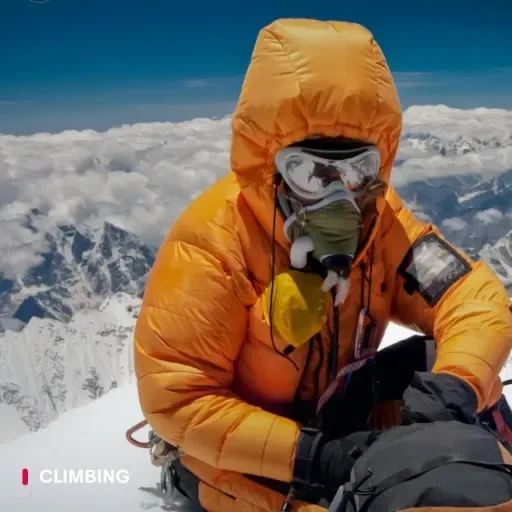
- Tage
- 19
- Gipfeldatum
- 31. Dez. 2000
- Höchster Punkt
- 6.962 m
- Route
- Polish Traverse (Falso de los Polacos)
- Organisiert mit
- Selbst organisiert
- Team
- Erik Slot, Don Cook
Inhalt
Hi All you (armchair) mountaineers!
In December 2000-January 2001 I climbed Aconcagua with a few friends, Erik Slot from the Netherlands and Don Cook from the US; we also met several others which we teamed up with. We raised money for SOS Children's villages. Here's the total Aconcagua trip report, including pictures and even a video from the summit!
Prologue: this is what happened before we even reached Mendoza...:
Harry & Erik were on national radio (3FM) to talk about the trip
Our plane was already broken in Amsterdam and 31 volunteers were needed to stay the night in A'dam. Hell no! We have spent enough nights there and want to go to South America!
After 2 hours they (=Iberia) finally got the persons they needed and only then started to search for their luggage: another 1.5 hours and we were sure to miss our connecting flight: Madrid- Santiago de Chile
Although the flight to Santiago is a 14 hour flight and we were only 5 minutes late, the plane did not wait for us (30 passengers in total, thank you Iberia).
Instead, they put us on the only plane left.... to Rio de Janeiro!
As our plan was to take a taxi from Santiago to Mendoza (Arg), we inquired about the possibility to fly to Mendoza and that seemed to work out fine: we got boarding passes from Rio-Buenos Aires & BA- Mendoza.
What they did not tell us was (A) that we had to change airports (!) in rush hour and (B) that even if you make the transfer in time it is impossible to board with a boarding pass only, without a valid ticket... Anyway, after some delicate political plays between the Evil Lady in Red, two innocent charming Dutch mountaineers and some beautiful Ladies in Blue, we worked it out, exactly 2 minutes for departure. Special business class check in, short cut through the airport, jump aboard and before we were seated the plane took off for Mendoza, base of all Aconcagua climbs!
Mendoza Airport, 15-12-2000
When we arrive at Mendoza airport, the weather is great. It is nice and warm and we are confident that most of the transportation problems are behind us, seems that getting there is half of the expedition.
We get a cab to our reserved hotel, where Don -our 3rd team member from the US- will be waiting for us. The hotel is there, but where is Don? He was supposed to arrive this morning and it is now already late at night. We make some calls to other hotels and check our email, but complete radio silence. This is quite annoying as not only we have no idea where he is, we also have booked a complete line of services for the next days: transportation to the mountain, mules for the luggage etc. We go out for some dinner, but even a midnight email check does not give us any answers and we go to sleep.
Mendoza, 16-12-2000
The next morning we get our permits; as Aconcagua is a national park you have to register if you want to hike or climb the mountain. Even in the morning the temperature is very pleasant and we decide to spend some time on one of the many terraces in the pedestrian zone. Now this is vacation! We wait until the permit office is closed for today and have everything we booked (mules, transportation) postponed for one day. We haven't heard anything from Don and if he doesn't show up by tomorrow morning, we will have to go without him.
We take a walk in the relaxing park (plaza Indepencia) and find some white gas which we will use for cooking and melting snow on the mountain. Decision time: will we see Don today? Then we should take 6 liters in stead of 4. Think positive!
This seems to help as Don is alive and kicking and just checking in our hotel when we get back! We thought we had a long trip from Amsterdam (30 hours), but he has been on the road/into thin air for 48 hours, just to get from Dallas, Texas to Santiago! Anyway, we are very glad he's here and together with Justin and Andrea, a young couple he met on the plane we are going out for some pizza and burgers to celebrate. I arrange a good deal for J&A as well and we decide to start our real trip together. The rest of the day we enjoy all of the wonders of this magnificent city: nice atmosphere, good food and views ;- )
Mendoza, 17-12-2000
The next morning all we have to do is get the permits for Don, Andrea and Justin and we are off! It takes about 3.5 hours to get to Puente de Inca, a natural bridge, formed by hot springs. Am amazing place and a good spot do do some first acclimatizing (2700m ASL).
Then the big sorting game starts, which is the first part of parting with the comfortable world: what do we take and what do we leave behind? You cannot just go back and get that extra pair of socks when you are at camp II, but you certainly don't want to carry too much stuff on your shoulders as well. We have rented 2 mules, they will carry a max of 60kilos each for us. Our bags are weighed and after some reshuffling we seem to have exactly 4 bags of 31 kilos each and we get approval from ´sr Pollo (chicken)´ who handles all the luggage. One last good meal and off to bed!
Puente de Inca, 18-12-2000
The next morning we are taken by car to Punta de Vacas (2500m asl), the trailhead for the Polish Glacier approach. We will ascend all the way to the base of the glacier, traverse to the normal route at 6000m and summit from there. This does mean that all the stuff the mules are currently carrying will have to be taken up to 6000m and down the other side of the mountain by us...
We just met a Swiss man who told us that a Japanese movie star has been climbing the mountain, supposedly he had brought over 4000kg of luggage, including 20 kilos of pornography and many, many rolls of toilet paper... of course many of these stories are hearsay, but the many crewmembers we saw coming down from the mountain did look exhausted.
The mules are late and we decide to start walking without them. The Vacas valley is very beautiful and it's a pleasure to walk along the rivers, mountains and hidden valleys. We meet the Alpine Ascents group, the only other group that starts that day on this route and meet two soloists, the college professor Barry and Mike, who wants to climb the Polish Glacier. The next few days we act as one group of 7 and it's great fun listening to each others stories and plans.
At the end of the first day we arrive at Pampa de Llenas, where our permits are being checked. The muleteers unload Pablo and Fred, our two mules and stay in a small tent. We decide not to put up tents, roll out our sleeping bags on the sandy floor and sleep under a cloudless sky, filled with billions of stars...
19/12/2000
the next morning we are awoken at 6.30 AM by a helicopter bringing materials to the next camps. Daylight is already there and we pack our stuff. Then the fun starts: how to cross a river that is 4 feet deep and 40 feet wide? That's where the muleteers come in. They saddle one horse extra, let you climb onto it with a heavy pack on your back and head into the river. This is even more exciting than it sounds as the river is icy and muddy and flowing fast. We are taken over one by one, but just as it's our turn the empty mule returning from the other side cannot longer hold on and falls into the strong stream. He manages to get up again, but is still shaking like a leaf when I mount his back and isn't planning on getting back into the river. But the muleteer doesn't really give him another option and so we head down into the water. I can feel he's scared stiff and try to comfort him, but I am not too happy myself either as this part of mountaineering is out of my control...
But we all get safe to the other side and after some changing of clothing we start walking on the banks of the Vacas river. Another beautiful day of about 18 km takes us over small rivers, moraine fields, heather, hills and valleys and finally brings us to a wide river delta where a little rock hut stands, the Casa de Piedra at 3200m asl.
This is also the first time we can actually see the mountain we came for: in the west we see through the narrow valley of the relinchos river a magnificent mountain covered with glaciers. Still more than 20 kms away, but really impressive! As there were some drops of rain and some winds this afternoon we decide to pitch our tents on the valley floor. Don does not feel to well and Erik and I go for a little acclimatization walk, about 150m up. We have a great view over camp and the valley floor and even spot a big rabbit. Satisfied we go to sleep and dream of wild rivers, cold glaciers and rabbits.
20/12/2000
The next morning starts out with another river crossing, but the river is very wide and therefore shallow and it's no problem. The sun is already burning hot when we enter the steep and narrow Relinchos valley. Today we walk about 15kms and have to go up 1km, so it will be a tough day and ´pole, pole´ (´easy´, as the porters on Kilimanjaro say) is the word.
Soon we have two choices: cross the river again or make a high traverse. We opt to cross the river, some guys including Erik jump to a big slippery rock, but I don't want to jeopardize my cameras and decide to wade trough the cold and fast flowing river. This gives me the nickname from Mike: the wading Dutchman... it's knee deep and wild and I have to use both of my walking poles upstream to stay upright, but manage to get on the other side where I have to dry out my boots and socks.
Just a few hundred yards away we cross again, but an old part of the glacier is still there and acts as a natural snow bridge. We continue the rest of the day moving up the steep hills and can feel the altitude gain. After another river crossing and numerous climbs up and down (mostly up) gorgeous hills and hot valleys I finally arrive with Mike at a big flat area where Base camp should be. But where is it? I get out my GPS and check my bookmarked waypoints: hmm, it should be 80 meters in that direction! Exhausted we climb a small ridge and suddenly another glacier appears, covered with rocks and moraines and a big sign that says: hot dogs!
Mike does not hesitate and tells me he's going to get me a hotdog. A nice looking woman appears from the tent and looks like she wants to hug us and welcomes us us to Plaza Argentina. Her name is Paula and she smiles a lot; first of all Mike and I are convinced it is because of our incredible good looks, but later the suspicion lurks that it might also have something to do with the coca leaves tea some people drink over here... Anyway, she is friendly and the hotdogs ($5 each, just the same price as Yankee stadium, according to Yankee Mike) taste good after the long and strenuous walk.
After the hotdog still nobody else of our group has arrived and we decide to find some good camping spots. Mike finds a nice little spot for his small tent and I reserve 3 spots for our, A&J's and Don's tents.
Erik is the next one who enters base camp and is clearly exhausted, beating his previous altitude record with more than a kilometer (won't be the last time...). We put up our tents and have to take a rest after every few actions. Especially the carrying of the 31kilos heavy bags the mules brought to the edge of the camp makes us look like a one-legged retired chain smoker after winning the Tour de France...
We get a bit worried about Don, as after another hour he still isn't in and the last time we say him was only about 3 hours away from base camp. But then again, the big organized AAI group is not in either, so maybe he is joining them.
We start with erecting all our tents and carrying the rest of our luggage to our sites. Finally after another hour Don emerges on the edge of camp and we rush towards him, take over his pack and lead him to the site we reserved for him. He is clearly over exhausted and not the strong man he normally is.
We sit him down and ask his advice on how to best set up his tent. He doesn’t even want to drink the soup we made and gets inside the moment he is able to. The rest of the evening he only drinks some tea we supply and barely eats dinner.
Our dinner slightly surprises Mike:
´What the hell did you bring?'
´Just Nasi Goreng with fresh salami, fresh onion, some fried onions, cocos and some kecap-peanut sauce to top it off!´
Unfortunately the fresh peppers we brought were squashed and had gone bad, so this would have to do....
21/12/2000
The next morning we wake up, ready for our difficult task: acclimatizing! This means sitting in the sun, relaxing, filtering and drinking water, tea and soup, eating something and maybe listen to music. It’s a hard job being a high altitude mountaineer...
Even this leisure program is too much for Don and although he seems to have waken up a little better than the day before, he still isn’t the strong guy I know he normally is. He has no big headaches, so we decide to see what happens after another night at this altitude.
22/12/2000
The next morning everybody feels better except for Don. There is a medic in the base camp and Don heads off to him. We and the rest of the team had decided that today we will make a carry to camp I at 5000m, so we can move up the rest of our gear the day after. But Don returns quickly with a sad grin on his face.
´It seems that the virus that bugged me a few weeks ago at home hasn’t left my system yet. It has caused a pulmonary infection that can easily turn into a pulmonary oedema. I have to go down immediately...´
A pulmonary oedema is one of the most common and dangerous high altitude diseases; your lungs slowly fill up with slime and you start coughing pink saliva. If you wait too long (= a few days) it can easily kill you.
Justin, Andrea, Mike and Barry are already packed and ready to go for their carry when Don breaks the news, so Erik and I have to make the necessary arrangements. Besides the fact that we hate to see our buddy go, it also means that a lot of practical things have to be arranged. First of all we must decide how to get Don down. The situation is not life threatening (yet), so we cannot use the helicopter that is stationed at the park entrance. A horse to ride Don out will cost a day and $300 so that’s both too late and too expensive (´cash please´). We decide to rent a mule for Don’s gear and have him walk down with a light daypack. This also costs $160, but can be arranged right away. Other problems involve Don’s rope (we decide to continue without) and the food portions: Erik and I packed 10 days of food for 3 persons, it’s not all that easy to transfer this into 15 days for 2 persons, but we will manage.
Erik and I start taking down Don’s tent and pack his stuff. Meanwhile a group of Australians is packing as well and they tell us that they have placed 13 out of 15 people on the summit, a very good number. But they also tell us that an Irish woman they met earlier has died this week after a fall around one of the high camps, so the happiness is mixed with sadness.
We sadly say goodbye to Don around 12.30 and decide to go for a carry to camp I after all as we need the acclimatization. Also, as we will be traversing the mountain at high camp (6000m), we cannot leave any stuff behind in base camp. Therefore we must carry everything up the mountain, so we’d better start with it.
We fill up our packs with surplus food and gear and slowly start walking up the moraines. Soon we encounter the first field of ´penitentes´, snowfields that have been formed by the strong winds and look like an army of narrow snowmen. But we are lucky, they are not extremely high this year, about a few feet each and it is easy to walk through.
We continue on the opposite moraine ridge and slowly gain altitude. Every now and then the path is not completely clear or there are more options and sometimes we split up. During one of these moves, Erik takes the low path and I take the high one (´when in doubt, always take the high one!´, one of the famous Harry-mountaineering truths...). This seems all right, but the moment I place my foot a meter away from a large boulder, the ground starts to move beneath my feet. I see that I am actually sliding into a dirt covered crevasse, but my immediate concern is the boulder that is sliding towards me. It’s about 80cm in diameter and therefore heavy enough to break some bones if it hits me. So within a split second I start sliding downwards towards the crevasse, while pushing the also sliding rock away from me with all my force. This helps and I end up a few meters down at the crevasse floor while the rock remains stuck between the narrow walls, just besides my hip. Erik saw the thing happen within a second and asks if I am all right.
´I think so, although my leg hurts. Hold on a second..´ I check all my muscles but the damage seems to be just some bruises on my left leg. Just to check, I throw a little rock in the black hole that appears just behind the stuck boulder and to my surprise it takes a while before I hear it hit the bottom of the crevasse, far down. Because the entire glacier is covered with rocks and dust, you forget it’s a glacier at all, but mountains have subtle ways like this to remind you...
We take a little break and continue to the big rock in the middle of the 'minefield' as I used to to call this section. On the way we met Andrea, who felt strong this morning, but had to return below the snowy headwall. She has given Justin her luggage and we see him climbing up the last part together with Mike, two tiny dots on a large sheet of white paper.. The AAI group is resting besides the big rock and enjoys fresh fruit spread out on a large plastic sheet. This looks like Kilimanjaro!
We continue quickly to the rest of the minefield but it takes a while before we find a sensible way through this maze. It ends up at the bottom of a large snowfield of about 35 degrees and a few hundred meters high. We are affected by the altitude now and need to rest every few steps, while taking care that we do not slip on the snowfield.
After another hour we finally emerge onto a small plateau, where a few people are camped: camp I, 5000m, higher than the Alps! It is windy and cold and I feel a terrible altitude headache coming up and am glad that Erik is arriving as well. We quickly load all our luggage in one big duffel bag and place it behind one of the stone walls that marks a camping spot. We quickly exchange a few words with some people already camped there and head down.
This is where the fun starts as besides the quite steep snowfield there is an even steeper screefield! Every step is more a slide down and with the help of the poles we work our way down the first couple of hundreds of meters in a few minutes, back into the ´thick´ air! But even back down my headache is desperately asking for some aspirin.
Back into the minefield we notice some nice Mexican guys that are re-marking the best route (it's way easier to spot the route from above) with new ´stone men´. This certainly helps and the way down is a piece of cake. We show them our way across the penitentes and soon we can see our base camp again.
Andrea is still not feeling well, but in general everybody is happy with our accomplishments. We do decide however to take another resting day tomorrow. Yes! More music, sun and tea!
23/12/2000
We have slept a bit better last night, seems that the number of red blood cells is improving, so we can extract more oxygen from the thin air.
We take it easy but notice that Andrea and Justin still haven’t left their tent around noon. When Justin finally appears he looks sad. ´Andrea has a pulmonary oedema, she is already coughing up stuff and we will have to go down today...´ We are stunned as they are such a strong couple, but on the other hand that is often the reason that people get sick: because of strength, they push themselves too far, or ascend too fast, with acute mountain diseases like these as a result.
Andrea decides to descend right away and leaves while I am still resting in my tent, suffering from the last remains of my headache. Justin has problem now: yesterday he brought up all their stuff to camp one and now he has to get that first. He does not hesitate long and heads up again for the hard trip.
The remainder of our ´group´, Erik, Barry, Mike and me spent the rest of the day filtering water, drinking, sunbathing and relaxing in general. When Justin returns after a couple of hours we have already prepared some Dutch food for him: hutspot with hamburgers! He thankfully accepts and decides to continue to go down immediately to the campsite where Andrea will be waiting.
Sadly we see him go down as well while the setting sun is shining on his back. They are a really cool couple and I am sure that they will be back for the summit one day.
24/12/2000
Today is a very tough day, we are going to move the rest of our gear to camp I, 5000m. This means, taking down the tent, getting everything in our packs and slowly hiking up to the camp. We have much more stuff than Barry & Mike and they move faster as a result. But even though our packs are even heavier than during the carry (about 22kilos), we do all right. Even the steep headwall has some nice steps we can follow and a few hours later we arrive at the plateau where our cache is.
Out of breath we enjoy the good weather and put up our tent quickly, feeling the thin air. Mike and Barry still haven’t put up theirs, although they had arrived at least one hour before. All the people we had seen during the carry have already moved up to camp II at 5900m, so it’s mostly just us, Barry & Mike and the AAI group up here.
Getting water is already a bit more difficult now as the stream has completely frozen into a solid waterfall. But the ever-present ice axe helps: cut a big hole and the water will flow. It’s so clean that we don’t even have to use the filter.
I take out some X-mas decorations from my bag as it is X-mas eve! While I am decorating the interior of the tent I notice the wind getting stronger and stronger. There are very strong gusts that make the entire tent move suddenly and loudly. We eat quickly and try to go to sleep, but this is hard: not only the altitude is keeping our bodies awake, also the strong wind has turned into a real storm and our tent is flapping and moving like crazy. I think back in my mind: this tent, the North Face Mountain tent, can officially stand a 110km/hour storm in the open. The gusts are already much stronger, but we are behind a little stone wall. It has already survived a big storm on Mt Elbrus and several storms on Denali, but this one seems to top them all. The frightening thing is not the strong gusts but the preceding silence. Camp I is beneath high rock walls and before the winds hit the tent you can already hear then coming down from the rocks like an intercity train: sjjjjjjiiiiiiiieeeeeehhhhhKABOEMMMMMflapflapflapflap.... and this happens a few times per minute, not really your favorite background noise for a comfortable night...
25/12/2000
We seemed to have survived the storm as the tent is all right. As it’s X-mas morning I take out my special little bag and take out some gifts: Dutch chocolate letters! I had brought a ´D´ for Don, but as he’s not around I give it to Mike & Barry.
Although we had some plans to carry some stuff to camp II today, it is clear that the wind is too strong. The rest of the day we spent in the tent as the winds are too strong to stay outside too long. It’s quite an adventure to take a dump in this wind I can tell you!
That night the storm continues to strike the tent, but my mind has been put at ease by the strength the tent has shown the previous night and we sleep a lot better.
26/12/2000
Still too much wind to go up and carry and we decide to stay where we are. Our decision to stay gets justified even more by many people who are suddenly appearing in the afternoon.
´Where are you coming from?´ I ask
´Camp II´
´How is it up there?´
´If you think the wind is blowing here, you should go up there, it's crazy! We have camped at camp II for 6 days, waiting for better weather, but it is getting worse every day. Everybody that was at camp II has come down, there is nobody on this side of the mountain higher than we are now. And to be frankly, probably the other side of the mountain is worse as it gets the direct hit of the storm...´
This gives me mixed emotions: first of all I feel bad for all the people on the normal route, on the other side of the mountain. I know their camps are much more crowded and exposed and I am sure many tents will have been destroyed. Also I feel bad for the guys that just came down. Although they say they’re acclimatized enough to bid for the summits from base camp, I know that that’s easier said than done. Once you are down, you need to be very strong both mentally and physically to get up to the hostile upper part of the mountain.
On the other hand I know that these storms normally don’t last longer than a week, and if these guys already have been trapped for 6 days... I decide to see the weather in the morning and if it’s not completely bad we will at least do a carry up to Camp II. I go to sleep with mixed feelings crawling through my mind and have a restless sleep.
27/12/2000
I take a peek through the tent’s backdoor: thick grey clouds move quickly across a dark sky, but no sudden gusts of wind. Hmmm... An hour later I check again: same grey sky, it even seems that it might snow, but also the sun seems to have poked a few blue holes through the grey blanket; it is a lot colder as well though. I wake up Erik and tell him that we will carry today. Erik is not too sure about this and tries too convince me otherwise, but I am stubborn and the appointed trip leader, so... While we prepare for our load, we hear from Mike that Barry is going down as well. He has had a cough for a few days and it doesn’t seem to get any better. Barry is already packing his stuff and seems very happy with his decision; not only will he be getting down to civilization, his wife is also in the area and he is looking forward to meet her.
So that’s 4 down, 3 to go out of our original team of 7. But before I can say this out loud, Mike approaches and tells us he’s going down as well. First he says that he doesn’t want to be alone at camp II and he has so little stuff that he doesn’t need to carry and can move at once, but I also see him feeling his frostbitten finger with a painful and worried face.
´It’s your finger, right?´ I ask him.
´Yep, I don’t think it was a good idea to get here with this frostbite, if the weather would have been perfect for 2 weeks I would have had a chance, but even this cold is already hurting my finger like hell. If I go any higher, the risks of losing it are too high. The mountain is not worth that much...´
Although I hate to see him go, I support his decision. It was stupid to get here in the first place with a finger like this, but it’s very human not too cancel a trip that has been arranged for a long time, based on wishful thinking...
So that actually means I have to update my team numbers again: 5 down, 2 to go out of our original team of 7 people....
Let’s see if we can get our heavy loads up today, all the way through the strong winds to camp II. If we make it, will we ever be able to get up again and see our stuff?
Mike suddenly points out a large moving spot on the mountain, about the same altitude as our camp, but a few hundred meters to the side. What is that? We see a big Guanaco, a large animal that is related to the Lama, slowly stepping up the headwall towards the col with Cerro Ameghino. It moves so graciously and constant that we only notice afterwards that it takes him about 20 minutes to do a part that will takes us 4 hours tomorrow...
After saying goodbye to both Barry and Mike, we feel a bit weird. Wasn’t this mountain supposed to be a ´walk-on mountain´? If so, then why is everybody we met already out of the game? Weird indeed. Well, no time for useless thinking, let’s start the constructive part of today: the carry to camp II, 5900m, so 1 km below the summit.
We pack as much stuff we can in our packs to avoid having to drag up a really heavy pack during the move tomorrow or day after. Slowly we start doing our moves: step, breathe, step, breathe, step, and breathe. After every few hundred steps a longer ´breather´ and after about every 125 vertical meters a rest where we take off our packs and drink and eat something. The AAI group is moving to col camp today, a camp halfway our camp I and II. Although this is better with regards to acclimatization, the expected winds are so hard that we rather skip this one and try to get some good sleep below, which is equally important as gaining altitude at this point. But it's nice to talk to Willy (the guide) and his group every now and then and before we know it we are at their col camp, at about 5500m asl. They start to make camp, but we continue quickly as we have a difficult scramble to do up the loose scree hills towards camp II.
The thin air tightens it’s grip on our systems and soon we have to take a breather after every few steps. In the meanwhile we have gotten really magnificent views of a large portion of the Andes mountain range on one side, a beautiful view back to our camp on the other while the impressive Polish Glacier has emerged from above. This is what it's all about: looking at a very beautiful and large part of unspoilt nature and us being two tiny little spots, hardly noticeable from a distance...
´5700m, there should be some camping spots here!´
´well if you see them, please let me know, cause all I see is this annoying scree slope!´
There should be 3 campsites: 1 at 5700m, the official camp II at the base of the polish glacier at 5900m and one at the same altitude, but towards the traverse route. We are getting really tired now, but none of the sites can be seen. I have entered the GPS waypoint of our traverse camp into my little e-trex GPS unit, put it just points toward some high cliffs and no camp can be seen from here. We have to rest after each step now and I feel a slight headache entering my brain. After gaining another 100 meters without any sign of a campsite, we decide to save this problem for another day, cache our stuff and go down. We go in the direction my GPS tells us to go for the traverse camp, take out our duffel bags, fill them up with our extra gear, tie all of it together and to a large exposed rock, mark this waypoint on the GPS and down we go.
We had already seen the ´highway´ coming down when we stepped up and now we find out why it is called this way. It goes down a quite steep scree slope in nothing less than straight line, so with the help of two poles you can really run back into the thicker air of camp I. As a comparison: the way up from 5000m to 5900m took us nearly 7 hours, the way down... 39 minutes. But even the thick air does not take away the uneasy feeling in my stomach and I spend about 15 minutes, regaining some of my strength. Although the part to camp II is technically not difficult, it is quite a big step to go up nearly 900m at this altitude and my body lets me know that it doesn’t like it.
We shoot a long video update and make some dinner. That evening the wind comes back and seems even stronger than the night before, but I sleep a lot better as my confidence in the tent is completely restored. The x-mas decorations have become annoying and we have hang them outside...
28/12/2000
In the morning the winds are still blowing like crazy and Erik does not want to move up. Normally it is fun for a man to pee when the wind is blowing (as long as you do it in the sensible direction of course), but when the wind is literally blowing you over the fun turns into embarrassment and annoyance... But the skies are a lot clearer, the winds, although strong, are more constant and I suspect that this is the last part of the storm and use my power of leadership to decide to go.
We pack our tent and the rest of our gear and head into the wind. We have to wear our windstopper gorilla facemasks and ski goggles today, so no part of our skin is exposed to the freezing wind. Last night has adjusted our bodies a bit more and until the col we make good time. I am happy to see that the skies are getting clearer and clearer, but the winds only seem to be getting stronger. The moment we get close to the col it is blowing so hard that we have to wait for it to calm down a bit, take a few steps and then quickly use our poles for stability, head and upper body leaning forward against the wind, trying not to get blown off our feet. As there is not that much calming down around it takes us quite a while to round the exposed corner of the col and I begin to understand the stories of our friend Robert who climbed the mountain a few years ago. He already warned us that the wind sound more like a freight train that is driving an inch from your face and totally out of control...
After making the turn left on the col to continue up the ridge towards camp II the wind alternates between blowing straight from the side and blowing from behind. Even though it's extremely hard work getting up here, I feel a lot better than yesterday though and make some nice shots of Erik fighting his way up the mountain as well. I notice that if I time the switchbacks right, the wind will actually blow me up the mountain, which takes the load off the actual ascending. On the other hand it costs energy just to keep my balance, but I guess that is my distorted idea of fun...
We see some other climbers ahead but they seem to be looking for Camp II as well and we decide to go for the GPS waypoint straight away. This takes us past the bags we have cached, but I don't take anything out except my plastic boots, crampons and camera. The waypoint leads us straight up one of the scree faces beneath a few large rocks that are too steep to scramble up to. After a hundred meters the scree is covered by a large ice and snowfield that runs all the way from the big rocks until way below the col camp, many hundreds of meters down. As Erik has no real experience with crampons, I put on mine, take my ice axe and check out the route. Although steep, there seem to be no nasty surprises and I decide to give Erik the 2-minute crash course about crampon walking. (Some useful advice: "Just don't slip here, cause you will end up way below!" and some other practical info as well.) I don't want him to walk with his heavy backpack though to avoid risking losing his balance and after we both crossed the largest part of the field together, I return to get his pack as well. I like to walk through snow and Ice, but at 5800m the ascending of this little part 3 times, of which 2 times with a heavy pack makes me loose my breath for a while.
But the GPS indicates that the camp is only about 80 meters up and I try to find out the most sensible way to get past the rocks. I notice some piles of trash, so unfortunately humans will not be far away; the rock leading towards the spot is totally covered by an inch of ice and although fun and exciting, not really safe and I tell Erik to pass the rock on the other side. He moves well on his crampons, even on this mixed terrain and soon I see him appear on the other side. Now it really should be close, but where is it? I scramble a few meters up, look all around and spot the 3 TNF VE-25 tents of Willy's group. Seems we have found what we have been looking for!
The campsite is at the moraine-covered end of the Polish Glacier and there are some nice spots available as we are the only people here besides the AAI group. Some ice chopping has to be done, but then our tent is neatly behind a firm stonewall and close to one of the nicest views imaginable. Although the wind has continued to cease, it's still cold: even with the sun still up the temperature inside the tent drops quickly below -5 and while cooking the outside temperature falls beneath -20 degrees centigrade. Time to get in!
Our dehydrating trick with the camelback hanging inside the tent that worked out nicely in the first week is no use as you can see the contents freeze. So we fill up our thermoses and go to sleep, feeling good about today’s accomplishments.
29-12-2000
Today is a relatively rest day, the only thing that needs to be done is to pick up our cached luggage. The weather is really nice, it's almost warm and we decide to take the long detour route on top of the rocks back to our cache so we don't need to take our crampons. It takes us less than half an hour to get to our bags and after loading everything in our packs we slowly start our way back. We still haven't seen the official camp II so when another climber asks us for it we can only tell him the direction in which we suspect it to be...
We have to decide which traverse route we will be taking tomorrow. We are now at 5900m altitude at the base of the Polish Glacier, but as we want to summit from the normal route we have to round the mountain. There are 2 possibilities: we can go straight up to a place below the Independencia shelter at around 6400m or make a longer but less steep traverse to the Piedras Blancas, the White rocks at 6000m. Even the first route has the advantage that summit day will be much shorter, we must think about all of our gear (we will have to do the traverse twice and prefer to do this on one day) and decide to go for White Rocks.
Willy returns with his group from a little acclimatization walk and recommends us to go and see a place beneath the 'Piedra Bandera' the rock on the Glacier that resembles the Argentinean flag. Even though it's just an easy walk, I can feel my heart rate go wild and have to take it very easy. But it is worth it as we end up at an amazing view from a 1-kilometer high ice and rock cliff down the route between base camp and camp I. On Denali's 2nd base camp you have a place called 'the end of the world' and this is clearly the southern hemisphere counterpart of it.
After a lot of picture taking we slowly return and I still don't feel too well; a few new guys we already met at camp I have arrived and I know that they have a little oxygen saturation meter. I check my oxygen saturation level and see my fears about the lack of acclimatization translated in cold hard numbers: although my level at base camp was between 80 and 90, it has dropped to 70 here. A rule of thumb says that below 75 you should no longer ascend and even though we only plan to ascend 100m tomorrow, I am worried.
30-12-2000
We wake up in another day of nice weather, make some extra chocolate and warm water and head for the White Rocks. First we have to go down and cross the icy part of the glacier; but this can be done without crampons in about 10 minutes by carefully picking out the rocky and soft snowy parts. Even after another night at this camp my body does not feel strong and I cannot get my famous diesel pace going. Erik feels better and warns me I am going to fast. We slow down a bit and enjoy the magnificent views over this side of the Andes mountain range while crossing large scree fields and some more snowy parts.
Just when I am filming Erik crossing an icy patch he shouts:
"He, check out how deep down this ice field goes!", so I reply:
" You better watch out that you don't check it out yourself!"
We go off track to see if there is a way to cache our gear at Berlin or a lower part of the normal route without having to go up to White Rocks first, but all I can see is a loose and very steep scree slope, so we decide to let that idea go. While Erik is still going strong I feel myself getting weaker while slowly stepping up the switchbacks to White Rocks and decide to return to camp. It's either on to White rocks now and too exhausted to do it again today, or cache my load here, so I can do it again this afternoon. Erik decides to continue the last part up and I will go down to start taking down our tent. The way up took a bit more than 2 hours and the slightly downhill return beat this with almost an hour.
While I am busy making some more water and taking down the tent, Erik returns as well and tells me it was only about another half an hour to a perfect campsite. We finish our packing together, drink some more and leave for the Rocks again, taking everything we have. The second time goes a little faster as we both discovered some tracks on our way down and while the sun is slowly setting we arrive at White Rocks.
This is a very nice place Erik has found, quite sheltered and near a nice patch of really clean and packed snow, perfect for water. We put up our tent and enjoy the evening sun; after eating dinner we take a little walk to the edge of the plateau from which we can see Berlin camp: an exposed, crowded an polluted piece of rock, filled with tents. It makes me feel very glad that we ascended the other side of the mountain and makes me wonder why no one takes the extra 30 minutes of effort to get to this clean and safe site. Even the approach to the summit track is easier from White Rocks.
Anyway, although very tired we decide to wake up at 2 to get up and make some water, around 3.30 we should be ready for our summit attempt. Although I feel far from optimized for a heavy summit attempt, I can see some changes in the weather patterns in the distance and think we should grab our chances while they're hot. And besides, wouldn't just be nice to summit on New Year’s Eve ;-}
(camp II).
31/12/2000
Although I never really sleep before a summit attempt (good old nerves combined with the fear to oversleep) I wake up because 2 minutes before the alarm goes off.
It is freezing inside the tent and I start putting on some clothes and warming some others inside my sleeping bag. I try to wake up Erik, but he doesn’t want to give up his warm sleeping bag that easily.
As our stoves and the snow for melting water are out of reach and it is really cold, I have to get dressed completely before I can start the stoves. The cold (estimated –25/-30) hurts my body and makes my already uneasy stomach feel even worse. It also makes the melting of water a long task and after 1.5 hours I decide to eat no breakfast, take warm water only and propose to leave.
Erik is dressed as well and we head off into the dark night. There are billions of stars but no moon and there is no visible trail. My stomach is starting to feel worse and I can also feel my heart rate go up to too fast. After only 5 minutes I decide that I will never make it under these conditions and I tell Erik that I need to return to the tent quickly. He is a bit disappointed as he is feeling all right, but together we crawl back into our warm sleeping bags.
Inside I feel already a bit better and while Erik returns to sleep I keep on thinking about summit day. I don’t think that my situation will improve much while I am at 6000m but on the other hand I know that if we decide to go down for a night it will be very hard to get the (mental) strength to get up again the next day. Also the weather seems to be perfect today, but I am sure that it will change soon.
While these thoughts are keeping me awake the first light enters the tent again and around 8am I wake up Erik.
“ He Erik, this is plan 16b (we had changed our plans frequently the last week, adapting them to circumstances): let’s get up now, the weather is nice and the temperature is rising again. I want to cook some water without any time pressure, eat some breakfast and see how I feel afterwards. If I feel any better before 11.00am we should give it another try. It will mean a late summit, but the weather looks good and I think we should take our chances.”
Erik agrees and together we slowly start our daily chores. I still do not feel good but at least my stomach has eased a bit and around 10am I tell Erik that I want to give it another try.
We pack our bags again: down jacket, extra gloves and mittens, water, tea and some candy bars and of course my cameras. Around 10.30 we slowly start walking up the slope besides White Rocks. There is no real track at this point, but the slope has an easy gradient and we both make our separate switchbacks at the angle we are each most comfortable with until we reached the track coming from Berlin simultaneously. I feel that my body offers a very narrow margin in which I could probably push it for a long time but I have to take care no to cross the borders of that margin. This means: steady pace, not too much rests, plenty of fluids on a regular basis and no food as I was sure that my stomach would not like it.
The track from Berlin is an easy walk and slowly we gain altitude. The moment we approach the slope beneath the ruins of the Independencia huts we see the second AAI group starting from their tents as well. We continue together, go past Independencia and across the little ridge towards the beginning of the infamous canaleta.
The track splits up here and although the AAI group takes the left part, I hesitate, as it seems that they have to scramble up rocks and then cross a snowfield. But one climber that just comes down the other track smiles and says:
“ you better follow them, this right track is only suitable for going downhill as it is the beginning of the Canaleta and the longer you can stay off that one, the better, trust me…”
The Canaleta is the name of the narrowing part of the enormous screefield that in fact already starts at Plaza de Mulas, the base camp of the normal route. Although the route manages to avoid the largest part of this so-called ‘Gran Acarreo’ the last 500vertical meters to the summit you will have to use it. The Canaleta consists of a collection of rocks with their size varying between a few millimeters and over a meter in diameter. But they all have one thing in common: they are in complete balance on the steep slope, which means that whenever somebody touches them, they will slide down until they refound their delicate balance. In practice this mean that every step up in the Canaleta is immediately followed by a slide down, sometimes more than the original step takes you up. Combined with the altitude of nearly 7kms it means that you will have to use a lot of energy to climb up just a few meters.
This is really as tough as it sounds and many climbers don’t make it up here as it is mentally and physically very demanding. We follow the group, cross the snowfield and start the struggle against gravity. 4steps up, 1step down, 2steps up, 3steps down etc etc…
We can tell that we have started out late as many climbers are already on their way down. Some share their tips and advice with us:
“From here it is another 2 hours”
“The track on the right is the best”
“From here it is another 4 hours” (10 meters further)
“The track on the left is the best”
“From here it is another ‘couple’ of hours” (same spot)
“It is a fairy tale that the Canaleta ends…it does not, the moment your feet have stopped sliding down, it means you are on the summit.”
“Going down is even tougher and takes about the same time”
All very comforting, but the only way to find these facts out for ourselves is to continue walking and scrambling. I do find out that the right side, where some snow patches and larger rocks can be found is the easiest way, but Erik prefers the center track. Willy and his group come down and wish us luck for the last part. Slowly we continue but the rest stops have to come every few steps now as the altitude is working it’s way into our bodies.
“Are you strong enough to get to the summit?” Erik asks.
“No, but I’ll get there one way or the other” I reply, “how about yourself”
“No, but if you can make it, then so can I!”
The summit seems close and when the clouds blow away we can see people standing on it. But what would be a 5-minute scramble at the foot of the hill means another hour up here. We pass the last people on their way down 50 meters below the summit. I take another rest, but Erik manages to continue and starts filming me from just below the summit. Another 20 steps, 19, …10, …3,2,1
Views from the summit:
We made it! We start hugging and congratulating each other, but it takes me a minute before I can get enough breath back to say anything on camera. Erik has been bugging me since the beginning of the trip to ask me if of the hard parts are harder than climbing Denali and for the first time I must admit that it was: this summit day was for me tougher than my Denali summit day. Aconcagua is known as a ‘walk-on’ mountain, but clearly deserves a lot more respect.
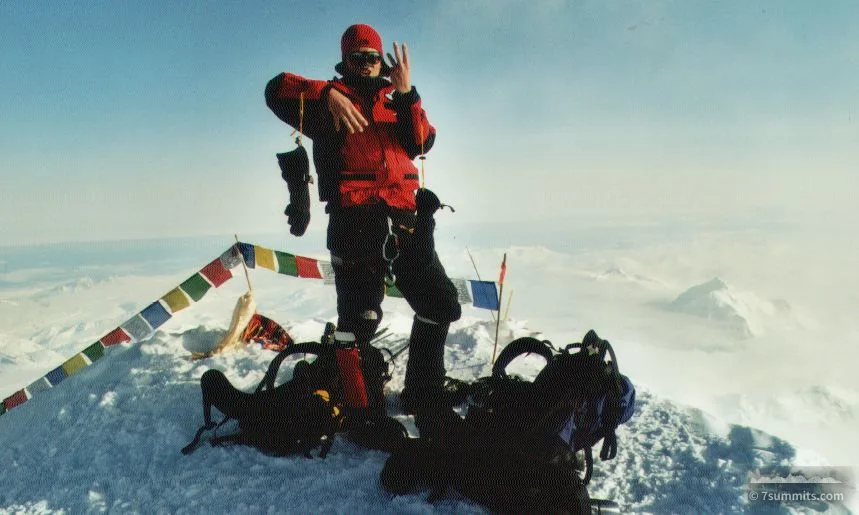
After a minute or two I notice that we are still not at the real summit and we scramble up the last two meters to get there. There is the famous little metal cross, covered with stickers and photographs. 6962m, the highest point of South America, the western and southern hemisphere! The weather is great, there are still a lot of clouds, but somehow they drift away really fast giving us enough opportunity to capture the beauty of the Andes. We also take some pictures of me depicting ‘5 down, 2 to go’, and of some of the stuff we brought up: a magazine I want me to sponsor my next trip, a salami, that will bring in $40 for charity if we serve it in Amsterdam, some stickers from 3FM radio station and the single of Eric Dikeb. We met him in the radio studio and he complained about the lack of high rankings of his singles. Well, this is the highest position it will reach ;-}
Another climber has come up and we take some pix for him as well. As no one is coming up and it is 6.45pm on 31st December, we realize that we are in fact the last 3 climbers of this millennium!
I shoot some more video and we get ready to descend, as we will have to hurry to get down before dark. I gesture to the other, Japanese, climber that he should be getting ready as well; he nods, but does not move. I try to make it clear that it is really time to get down, especially if he is going back down to Berlin camp, but he does not want to leave yet.
Well, we do and slowly we start our descent. Down the canaleta does cost a lot of energy, but if you can work your poles well and you are not afraid to make some involuntary cool slides every now and then, then you can get down the canaleta within 1.5 hour.
As we near the point where we now we must make a turn or we will go down the wrong way, (into the Gran Acarreo) we spot another Japanese man, bent over his poles with his back into the wind. He looks sick and confused and we walk up to him.
“What’s up?”
“ ehhhh?….”
“Why are you standing like this? You have to go down right away as it is getting dark soon; where is your tent?”
“I don’t know” he whines back.
Don’t know? What’s happening here? Who is this guy and why is he on this mountain, by himself?
“ You don’t know? But where is your campsite?”
“I camped at Berlin, but am lost and do not know where Berlin is….”
Erik and I exchange amazed looks. What if we would not have stopped to ask this man some questions? Would he than still be standing here in the bottom part of the Canaleta until his memory came back? Even though he was wearing a down jacket, he would be frozen solid during the evening.
“ Are you with that other Japanese man, who is still on the summit?”
“ No I am alone”.
Smart move… He is clearly suffering from acute mountain sickness and seems a few rocks short of a mountain. I tell him to stay close behind me and that we will take him down to his camp. He seems really relieved and slowly follows. We make the turn at the right spot, (something that this man never would have remembered on his own) and leave the scree for the better track.
The Japanese guy keeps on lagging behind and we have to wait for him every few hundred meters. He keeps on telling us that we are strong guys, but I rather have him use his energy to hurry up a it as I don’t want to arrive in camp when it’s dark. We pass Independencia, wait for our Japanese and head down to the crossing of the normal path and the slope towards our White Rocks camp.
We gesture to our follower what we have explained to him before: we go right here, you continue to Berlin on this track. It’s just another two hundred meters along a straight track and we are confident that he will be ok from here. We hurry down our slope and arrive at our tent just when the sun disappears behind the horizon. Time to sleep!
1/1/2001
New Year’s day! We start off our day with a little new years video message for our friends and family, while lighting the little fireworks Erik’s sister has given him in his ‘survival’ package.
We are very glad we summited yesterday, but there is no time to really celebrate yet as today will be another hard day. We have to pick up the cache I left about 100 meters lower while traversing, take down our tent and get everything we have been carrying up in two parts down to Plaza de Mulas in one time. This means a fully loaded 80pound backpack all the way from 6000m to 4200m, just one day after summiting.
We finish our packing, check for rubbish and leave camp around 14.00hr. The first part, down the shortcut to the track to Berlin is a bit tricky and we have to get used to the heavy weights on our backs. But then the track eases and we make good progress, although it costs a lot of energy and we have to take a lot of small rests.
We take a little break at Nido de Condores (5600m camp on the normal route) and are very glad that we did the route we did. Although it means carrying up and over all our gear, it is so much more beautiful on the other side of the mountain. The normal route is really an exposed, polluted and overcrowded mess and I would not have like to spend 2 weeks here.
Although very tired we manage to get down to the circus know as Plaza de Mulas around 18.00 and notice over a hundred mountaineering tents, lots of muleteer services, guide services a restaurant and more. Another half an hour of actually going up with our heavy packs finally brings us to the Plaza de Mulas ‘Hotel’, where, after some discussion about our reservation we get our room. Dinner will be served in an hour! That gives us time to sort out our gear for the mules that will take it down from here. Dinner is nice and afterwards we sleep like kings…
1/2/2001
When we wake up, it’s cold, but we go down to get our breakfast. It’s just a few cups of tea and some bread, but combined with the thick air it’s enough energy to get us started.
Today is another heavy day, we have lost the weight of our backpacks, but we have to go down to Puente de Inca today, which is a walk of over 35km over the rocky sides of the Horcones valley. Although some of the views are nice and going down is not too bad, in general this valley is boring as well and we are again glad that we went up the other side of the mountain.
We walk almost non-stop, but we don’t reach the park gate until after 6pm. Another few kilometers bring us back to the Hosteria where we manage to arrange the final room available: showers and dinner! We each shower for at least half an hour, the first time in two weeks.
Although my skin is sun burnt, it feels great and I have to pull myself out of the cabin to get ready for dinner. We celebrate with a little bottle of wine and enjoy our simple but nice food.
On the large table next to us that is used by a large international group I discover the two guys I met while climbing Elbrus last year and we spend some time listening to each other’s stories. Erik is already sleeping and soon I head off to bed as well.
I am very satisfied about the trip. It was a bummer that Don was taken out by a virus, but Erik and I have done well. We have not been in real danger at any time (relatively speaking) and have worked well as a team, even though it was Erik’s first time above 3000m.
The next week we spent eating and drinking, relaxing at the pool of hotel Carollo, dancing with the beautiful Argentinean girls until the early morning in the Apeteco discotheque and sending out the first reports. We took the night bus to Santiago ($20 each, 7 hours) and spend another nice day in this enormous metropolis.
I hope you have enjoyed these reports, when the story will appear in a book they might have changed a bit, so hold on to these collector items ;-} Check this site regularly for new items & special offers.
You can let me know you have enjoyed the reports by sending me email (or just sign the guest book ) or by making a donation to SOS Children’s villages, check out the form and the info on the site or send an email(100% of proceeds go to the charity).
Next trips will be Mt Vinson (Antarctica) and Everest, with maybe some practice climbs in between. As these trips are expensive I need corporate sponsors for this, so if you or your company can help, let me know. You will be repaid with lots of publicity, mentioning on the site, mailing list, exclusive pictures etc.
Thanks, until next time (which might be sooner than you think) and keep climbing,
Best regards,
Harry
http://7summits.com
This trip is sponsored by the North Face outdoor gear: http://www.thenorthface.com
and Suunto wrist top computers:
Diskussion
Noch keine Antworten: sei der Erste.
Weitere Berichte über Aconcagua
Aconcagua Challenge Christmas 2003
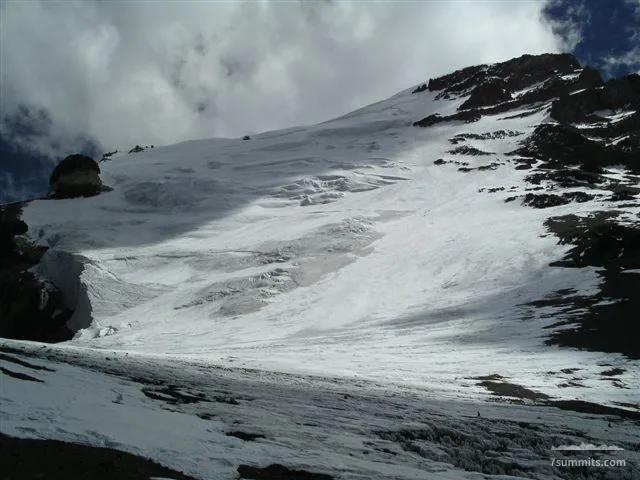
A second attempt at Aconcagua with Adventure Peaks over Christmas 2003, by the Polish Traverse. Sixteen set out and three summited; Tim turned round on the col above Independencia in wind gusting to 60 mph and a wind chill near −40 °C, and explains why that was the right call.
Aconcagua by the normal route, January 2003 — a photo journal
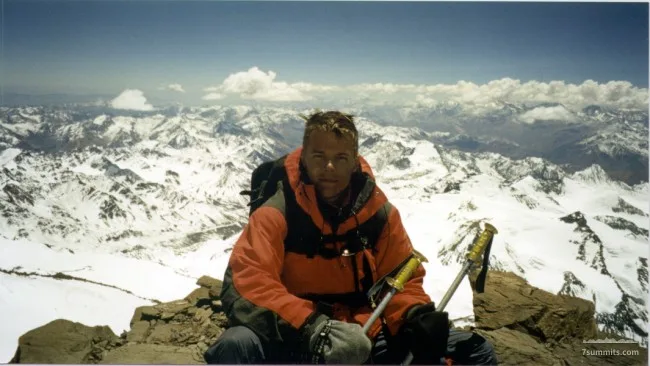
Fourteen photographs from a January 2003 climb of Aconcagua’s normal route with Jonathan: Plaza Francia under the South Face, a 24-hour snowstorm at Plaza de Mulas, the Canaleta, and the summit on 25 January.
Aconcagua with Adventure Consultants, February 2001
Ellis Stewart’s journal from Adventure Consultants’ February 2001 expedition under Guy Cotter: camp two beneath the Polish Glacier, a 3.30 am start at −30 °C, the Canaleta, the summit on 12 February — and a descent that taught him the hardest lesson of the climb.
Weitere Berichte von Harry
 DenaliGipfel erreicht
Denali West Buttress, May 2001 — the Denali trip for Warchild
HarryTrekker15. Juni 2001Three weeks on Denali’s West Buttress in May 2001, climbing for Warchild with Jose: skis and sleds up the Kahiltna, the headwall and the ridge to 17,000 ft, a season with a 15 % success rate, and the summit at 8 pm on 16 May as the eighteenth person on top that year.
 ElbrusGipfel erreicht
To the Summit of Europe: Elbrus, June–July 1999
HarryTrekker1. März 2000Fourteen days in the Caucasus in the summer of 1999 with Niall, Saskia and a Russian team: Moscow, the Baksan valley, acclimatising on Cheget, the Priut 11 hut, and the summit of Europe at 5,642 m on 6 July — with a call home from the top.
14 Tage