









colijn carstensz
Die 7 Gipfel
What is the history of Carstensz Pyramid?
Carstensz Pyramid was seen from the sea in 1623, first approached by outsiders in 1913, nearly climbed in 1936 and first climbed on 13 February 1962. In between, the mountain passed from the Dutch East India Company's charts to a Dutch colony, then to Indonesia, and a mine grew up next to it that is one of the largest in the world. That history still decides how climbers reach it today.
1623: Jan Carstensz and the Dutch East India Company
In January 1623 the Dutch East India Company (the VOC) sent Jan Carstensz from Ambon with two ships, the Pera and the Arnhem, to explore the south coast of New Guinea and the land beyond it. On 11 February, at a landing on the New Guinea coast, the master of the Arnhem and ten others were killed in a fight with the people living there. Five days later, on 16 February, Carstensz wrote in his journal that the crew saw "a very high mountain-range in many places white with snow, which we thought a very singular sight, being so near the line equinoctial". Europe did not believe in snow on the equator, and he was laughed at. The Company was looking for trade, not mountains, and nobody went to look.
Three centuries on the coast
The interior of New Guinea stayed unknown to outsiders until the twentieth century. In 1909 the Dutch explorer Hendrikus Lorentz reached the snow line of Mount Wilhelmina, now Puncak Trikora, further east. In 1910 a British expedition tried to reach the Carstensz range by the Mimika river and spent fifteen months getting about halfway. One of its members, the British explorer Alexander Wollaston, came back in 1912 with 226 people, among them 74 Dayaks from Borneo as carriers and a Dutch military escort. They entered the Utakwa river on 18 September 1912, and it took 92 days to cover the 31 miles from their first depot to the snow. On 1 February 1913 Wollaston and the naturalist Cecil Kloss reached 14,866 ft (4,531 m)14,866 ft on the south face, where a wall of ice and steep rock stopped them, by Wollaston's estimate less than 500 ft below the summit ridge.
1936: the Colijn expedition and the ore mountain
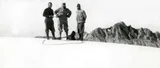
The first outsiders to reach summits of the Carstensz range came in 1936. Anton Colijn, an oil company man and the son of the Dutch prime minister, the geologist Jean Jacques Dozy and the naval pilot Frits Wissel, who flew a Sikorsky amphibian for the Netherlands New Guinea Petroleum Company, planned the route from the air. They left Aika on the south coast on 29 October 1936, and on 5 December they reached the ice-capped summits of East Carstensz and Ngga Pulu, then thought to be the highest at about 5,030 m16.503 ft. Bad weather stopped them on the rock pyramid. On the way Dozy recorded a large outcrop of ore and named it the Ertsberg, the ore mountain. His report of 1939 would bring the mining company Freeport to the mountain twenty years later.
From Dutch colony to Indonesian province
When Indonesia became independent in 1949, the Netherlands kept western New Guinea, arguing that its people should decide their own future. In 1962 the two countries signed the New York Agreement, a short United Nations administration followed, and Indonesia took over on 1 May 1963. The agreement promised an act of self-determination, which took place between 14 July and 2 August 1969: 1,025 representatives, chosen under Indonesian military supervision out of a population estimated at 800,000, voted unanimously to remain part of Indonesia. The United Nations took note of the result. Indonesia regards the question as settled; many Papuans and outside observers regard the vote as deeply flawed, and an independence movement has continued ever since. In the same years the mountain's name changed from Carstensz to Puncak Sukarno, and then to Puncak Jaya.
1962: Harrer and the first ascent
In 1961 a small New Zealand team led by Philip Temple came in from Wamena in the Baliem valley through the Ilaga valley with Papuan porters, and had to turn back when an expected supply drop by air never arrived. In early 1962 Temple returned with the Austrian Heinrich Harrer, of Eiger North Face and Seven Years in Tibet fame, the Australian Russell Kippax and the Dutch patrol officer Bert Huizenga. On 13 February 1962 they reached the top of Carstensz Pyramid by its north face, the line climbers still follow. Harrer told the story in his book I Come from the Stone Age.
The mine next door
In 1960 the Freeport geologist Forbes Wilson led an expedition that found Dozy's Ertsberg and confirmed a huge copper deposit. In 1967 Freeport became the first foreign company to sign a contract under Indonesia's new foreign investment law, and the first ore was shipped in December 1972. The company built a road from the coast, a town called Tembagapura, an airstrip and a port. In 1988 it found the far larger Grasberg deposit about 3 km from the Ertsberg, now one of the largest gold and copper mines in the world, a few kilometres from Carstensz Pyramid. The mine has long been at the centre of environmental and social disputes in Papua, and its road and its security have shaped access to the mountain ever since.
The 7 summits arrive
Reinhold Messner climbed Carstensz Pyramid in 1971 and argued that the continent of Oceania includes New Guinea, which makes Carstensz, not Australia's Kosciuszko, its high point. Dick Bass finished the Kosciuszko list on 30 April 1985, and on 5 August 1986 the Canadian Pat Morrow became the first to finish the list with Carstensz, three months after climbing it. From then on Carstensz drew climbers who would never otherwise have gone to Papua.
The ways in
For decades climbers walked in. The classic trek started from Ilaga in the highlands to the north, and in the 2010s most trekkers came from Sugapa to the west, about a week each way through mud and rain forest, with Beoga and Tsinga as variants when other routes were blocked. Every trek ran through the lands of highland communities, and passage was negotiated village by village. The mine road through Tembagapura goes most of the way to the mountain, but climbers have only rarely been allowed to use it. The mountain was closed to climbers for long periods, one of them from 1995 to 2005. Today almost everyone flies in by helicopter from Timika, and every foreign climber goes through a trekking organiser licensed by Lorentz National Park.
The ice Carstensz saw
The snow that Jan Carstensz saw from the sea has nearly gone. The glaciers that made Ngga Pulu the highest summit in 1936 have been shrinking for decades, and the last of them are expected to disappear within a few years.
Our guide tells the climbing side of this history in History and first ascents, the approaches in The approaches, the mine in The Freeport / Grasberg mine and the politics in The West Papua situation. The names are in Is Puncak Jaya the same as Carstensz Pyramid?, and how to get there now in Can I still trek in to Carstensz Pyramid, or is it helicopter only?