







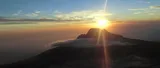

Kilimanjaro sunrise over Mawenzi
Trips & expedities
How hard is it to climb Kilimanjaro?
Kilimanjaro is not technically hard: there is no climbing, no rope, no crampons and no ice axe on its normal routes, only a long walk uphill. What makes it hard is the altitude. The summit is at 5,895 m19.341 ft, where the air holds about half the oxygen it does at sea level, and every year altitude sickness turns back or seriously harms a good number of the people who try.
The hard parts
Summit night is the test: a cold walk that starts around midnight, climbs about 1,200 m3.937 ft on loose scree in the dark, and reaches the crater rim around sunrise, followed by a long descent the same day. Before that, a week of walking four to seven hours a day, camping, at ever thinner air. A reasonably fit person who walks regularly can do it; you do not need to be an athlete, but you do need to be patient.
What decides whether you reach the top
The number of days. Down is always 1.5 days, so a five-day climb is up in 3.5 days, taking you from 1,800 m5.906 ft to nearly 6,000 m19.685 ft faster than the body can adjust, which is how most people fail and some get seriously ill. Seven days on the mountain is a sensible minimum, and eight to ten is much better. A route that climbs high and sleeps low, such as Lemosho or Machame, a slow pace, and a guide who watches how you are doing matter more than fitness.
How many days to plan is in How many days should a Kilimanjaro climb take?, the routes in Choosing your route, and how it compares with the other peaks in Which of the 7 summits is the easiest to climb? Our Kilimanjaro guide describes every route stage by stage.