








"Everest: The Other Side" reaches cinemas and IMAX screens this week. Jimmy Chin and Elizabeth Chai Vasarhelyi follow Jim Morrison and Hilaree Nelson on the north face of Everest, up the Super Direct through the Japanese and Hornbein Couloirs. Nelson died in an avalanche on Manaslu in 2022; Morrison went back three more times and skied the line in four hours. Here is what the film and the reporting around it set out, and which details still rest on a single account.
National Geographic's "Everest: The Other Side" reaches cinemas and IMAX screens this week, released by the Walt Disney Company. Jimmy Chin and Elizabeth Chai Vasarhelyi directed it, the pair behind "Free Solo" and "Meru". The subject is Jim Morrison and Hilaree Nelson, and their plan to make the first ski descent of the north face of Mount Everest. The film premiered at the Venice International Film Festival and screened at Telluride, Toronto, Camden and the BFI London Film Festival ahead of the wider release.
Er wordt niets van YouTube geladen totdat je op afspelen drukt.
The line
The north face is on the Tibetan side, where access is tightly controlled. The route Morrison and Nelson wanted is the Super Direct, linking the Japanese and Hornbein Couloirs. Five people had reached the summit by it. Nobody had skied it.
The New Yorker's profile by Nick Paumgarten puts the pitch at up to sixty degrees and the drop at nine thousand vertical feet, most of it ground where a fall would not stop. The Hornbein is a stone flute holding a thin ribbon of ice and snow. In spring there is too little snow on it to ski. In autumn, straight after the monsoon, avalanches run constantly. Morrison and Nelson worked on the idea that a short window opens late in the autumn, once the avalanche cycle settles and the surface firms up.
One person had tried the descent before. The snowboarder Marco Siffredi climbed Everest by another route in 2002, dropped into the Hornbein and disappeared. His body was never found, and the line was left alone until Morrison.
For those who want the ground plan of the mountain and the ordinary ways up it, our Everest guide covers the north and south sides and the normal seasons.
What the cameras were there for
Chin and Vasarhelyi started filming after their Oscar for "Free Solo", with the Everest project as the destination. Morrison and Nelson met on Makalu in 2015 and climbed together from then on. They made the first ski descent of the Lhotse Couloir, the route known as the Dream Line.
Nelson had summited Everest in 2012 and reached the top of Lhotse inside the same twenty-four hours. Morrison stood on the Everest summit in 2018 by the North Ridge and skied part of the way down. Chin summited and skied the south side in 2006.
The rehearsals for Everest included Manaslu in 2022. Nelson was two turns into her descent when the snow released beneath her and carried her over a mountainside. Morrison and his Sherpa companions searched the debris field and brought her body down, a recovery that involved a helicopter working at extreme altitude and the constant threat of further slides.
Her body was cremated at a Buddhist temple in Kathmandu. The cameras recorded it, and the AP review notes that the sequence is on screen in IMAX.
Morrison had buried a family before that. His wife, Katie Morrison, was a pilot, flying a single-engine turboprop Cessna from Long Beach to Henderson with their children Wyatt, six, and Hannah, five, aboard. A pocket of bad air over the desert dropped the aircraft and it crashed. Morrison has said that his children came to him near the top of Everest in 2018, thirty minutes below the summit, and that on the Super Direct summit it was Nelson whose presence he felt.
Summit and descent
It took three attempts in the three years after Nelson's death. On 15 October, Morrison's team put a dozen climbers on the summit, including Chin and several of the film crew, more than tripling the number of people who had ever topped out by that route. Morrison scattered some of Nelson's ashes, clicked into his skis and set off toward the Hornbein. He had noticed on the way up that the snow was rock hard and poor. The descent took him four hours.
How the film plays
Chin told ABC7 that this was the most logistically difficult and technically complex film he has made, and that it ends up being a story about passion and about loss.
Vasarhelyi made the comparison of scale plainly: "Free Solo" was a three-thousand-foot cliff, and this is twenty-nine thousand feet, the altitude at which aircraft fly. Morrison said that he did not want to continue at first, and that over time he was drawn to finishing the goal for Nelson and her legacy.
The AP's Jake Coyle gave it two and a half stars out of four in a review carried by Sentinel Colorado. His argument is that the film asks hard questions early and fewer of them as the climb goes on. It lingers on the departures from home, on Nelson's two sons growing up through the years of footage, and on some of the Sherpas growing wary of the risk on the first attempt.
Vasarhelyi appears on screen to say that in this film the worst happened, and asks Chin how many people who have eaten at their dinner table have died. Coyle's view is that by the summit the families have fallen out of the picture and the film becomes a solitary march. The release is rated PG-13 and runs 115 minutes.
The interviews
Good Morning America published two conversations with Chin and Morrison around the release, both embedded in this week's coverage. In one, Morrison speaks about the grief he carries and about learning to bring those he lost along with him. In the other, the two go through the practical problem of filming a ski descent on that face. BroadwayWorld collected both.
Our library covers books and films about these mountains, and the 7 summits challenge page explains where Everest sits among the rest for anyone arriving at this story from that direction.
This story is part of This week on the 7 summits: 26 October – 1 November 2026, the week's news in brief.
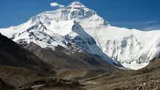
Header photograph: Everest North Face toward Base Camp Tibet Luca Galuzzi 2006.jpg by Luca Galuzzi ( Lucag ), CC BY-SA 2.5 (licence), via Wikimedia Commons.