









A Russian climber fell ill during an Everest ascent and left the mountain. She is back in St Petersburg, and the Russian Mountaineering Federation says her three teammates are continuing on a second acclimatization rotation at around 6,000 metres. A Telegram channel reported a wider version, with an unknown illness affecting the whole party.
A climber down, three still on the mountain
A Russian climber on an Everest expedition became ill during the ascent and left the mountain. She has returned to St Petersburg. Three teammates are still climbing. That account was given by the Russian Mountaineering Federation to the TASS news agency and reported by Fontanka on 22 October.
Alexander Pyatnitsin, the federation's vice-president, said the team are experienced climbers. One woman became unwell, and during a rest she decided to end her attempt. She descended and travelled home. The other three are on their second rotation at around 6,000 metres, on a route Pyatnitsin described as not among the hard ones. Alexander Yakovenko, who chairs the federation's classical mountaineering committee, told TASS the same thing: the three are still working on the climb.
The version that circulated first
The story reached Russian readers through the Telegram channel SHOT, and from there into Life.ru and Brief24. In that telling a party of four, led by a climber named Andrei, started up the mountain at the beginning of the week. A woman in the group, named as Natalya, felt weak and dizzy on 19 October and could not continue. She was flown off the mountain by helicopter. No cause was established for her illness.
The channel went further. It said the remaining three developed the same symptoms on the fourth day, and that they were climbing without supplementary oxygen and without support. It described them as trying to get back down through bad weather, with wind forecast to strengthen and Friday the most dangerous day. An unidentified virus was offered as the explanation for all of it.
Russian outlets gave the climbers' first names only, with surnames withheld. Both versions were published on the same day, 22 October.
Where we put the weight
The federation is speaking for the team, and two of its officers put their names to the same picture: one climber down and home, three still acclimatizing at around 6,000 metres. We put the weight there. That comes with an honest qualification, which is that officials at home depend on radio calls and messages from people high on a mountain, and a situation at altitude can change inside a day.
What will settle it is the team's own report once they are down. Early expedition news nearly always arrives from somewhere other than the climbers themselves, because the climbers are busy and often out of signal. The careful reading is to hold the attributable parts and wait for the rest.
Six thousand metres is still the early work
A second rotation at around 6,000 metres is acclimatization, a long way below the summit. The pattern on Everest is to climb to a higher camp, sleep, and come back down to recover before going up again. Each rotation buys the body time to adjust before the summit push.
A climber who turns round at that stage has given up the summit for this trip. She has also done the one thing that works against altitude illness, which is to lose height. Weakness and dizziness have plenty of ordinary causes at 6,000 metres, from dehydration to a straightforward stomach bug, and most of them improve on the way down. The FAQ covers the altitude questions that come up most often, and the Everest guide explains how the climb is normally broken into rotations and where the camps sit.
The decision she made
The detail worth keeping from the federation's account is that the climber made the call herself, during a rest, and acted on it. That is the decision experienced climbers describe as the hardest one on any big mountain, and it is the decision that gets people home. She was on the mountain one week and back in St Petersburg soon after.
It is also worth separating two things that got mixed together in the first reports. One climber leaving a mountain because she felt ill is an ordinary event on any 8,000 metre peak. A whole team retreating with an unknown infection, without oxygen, in rising wind, is a different story altogether, and only one channel has described it that way.
For readers following the 7 summits
Everest draws more reporting than the other six peaks combined, and it also draws the most second-hand reporting. Anyone tracking the 7 summits challenge learns quickly that the first account of an incident and the final account are often different documents. Names get attached before families have been told. Causes get named before anyone has examined a patient.
The practical advice for a reader is short. Look for a named person speaking on the record, note who they are speaking for, and give the team a few days to come down and tell it themselves. In this case there are two named officials of a national federation on one side, and a Telegram channel on the other, and the two do not describe the same week.
The firm facts as of 22 October: one Russian climber left the mountain ill and reached home, and three of her teammates were continuing at around 6,000 metres in cold, windy conditions. If the team's own account adds to that when they return, it is the one worth reading.
This story is part of This week on the 7 summits: 19–25 October 2026, the week's news in brief.
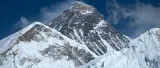
Header photograph: Everest, Himalayas.jpg by Vyacheslav Argenberg, CC BY 4.0 (licence), via Wikimedia Commons.