








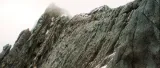

World Meteorological Organization figures reported by BBC News Indonesia put the ice on Puncak Carstensz at about 0.1 square kilometres in July 2025, some 34% smaller than a year earlier. The WMO describes this as the final stage of Indonesia's tropical glaciers and expects the remaining ice to vanish at the end of 2026 or in early 2027. For the Amungme and Moni communities the summit ice is sacred ground. For climbers, the seventh summit on the Messner list keeps its rock and loses its white.
The ice on Puncak Jaya, the summit known to climbers as Carstensz Pyramid, covered about 0.1 square kilometres in July 2025. That is roughly 10 hectares. The figure comes from the World Meteorological Organization and was reported by BBC News Indonesia, whose account was summarised in Indonesian by Universitas Teknokrat Indonesia.
Measured against August 2024, the ice had shrunk by at least 34% in eleven months. The WMO's conclusion, as quoted in the reporting, is direct: this is the final stage of the tropical glaciers of Indonesia, and the ice that remains is believed to disappear at the end of 2026 or in early 2027.
The numbers
Three figures carry the story.
- 0.1 square kilometres of ice in July 2025, about 10 hectares.
- 34% loss against the August 2024 measurement.
- 0.07 square kilometres per year, the average annual loss over 2016 to 2022.
Set the last two side by side and the forecast follows without much arithmetic. The long-run average rate of loss is close to the whole remaining area. The rate over the most recent year was faster than the 2016 to 2022 average.
The WMO tracks two ice bodies on the massif, named in the reporting as Carstensz and East Northwall Firn. In 2025 they are estimated to hold about 2% of the area they covered in 1988. Papua's ice is the last tropical glacier ice in Indonesia, and by the WMO's account it has a year or so left.
What the mountain means locally
The massif sits in the central highlands of Papua. The Amungme in Mimika and the Moni in Intan Jaya regard the ice-covered summit as sacred, and BBC News Indonesia spoke to three generations from both communities about what a peak without snow would mean to them.
The BBC's framing notes that Papuans hold the mountain sacred while having contributed almost nothing to the warming that is removing its ice.
The Indonesian summary describes the ice as a water store for people living below it. At 0.1 square kilometres of remaining area, how much water this represents in practice is not quantified in either source.
Both accounts mention local monitoring work with researchers, and water management programmes started by communities in the area.
Neither describes any measure that would slow the melt itself. Ice at this stage responds to regional air temperature, and nothing done on the mountain changes that.
What it changes for climbers
Carstensz Pyramid is the highest summit in Oceania and the seventh peak on the Messner version of the 7 summits challenge. Climbers working from the Bass list go to Kosciuszko instead, which is one reason the two lists have stayed in parallel use for decades. Carstensz is the harder of the two by a wide margin, and it is the one that makes the Messner list a climbing list.
The summit itself is limestone. The climbing on the standard route is rock, and the route description is in the Carstensz Pyramid guide rather than repeated here. What disappears in the coming months is the white in the middle distance, the ice visible from the ridge and from the approach across the plateau.
Photographs taken on the summit in 2027 will show a different mountain from the one photographed in the 1990s, and the difference will be obvious without any measurement.
Altitude on Carstensz is modest by 7 summits standards, and the usual precautions apply on the way in. The FAQ covers acclimatization and altitude illness.
The 1988 baseline
The 2% figure against 1988 is the one to keep. It means that a climber who stood on the summit in the late 1980s, and a climber who stands there in 2027, are looking at two different landscapes rather than two stages of the same one. Satellite records for this ice go back far enough to make the comparison solid, and the WMO has been publishing the series for years.
For the 7 summits record, nothing administrative changes. Carstensz stays on the Messner list, the route stays the same grade, and the people who complete the list are recorded on the finishers pages as before.
What changes is the thing people remember about the place. A tropical glacier a few degrees from the equator is rare enough that its presence was part of why Carstensz felt strange to visit. That part is ending inside the next eighteen months, and the date is now specific enough to write down.
The WMO forecast window closes at the start of 2027. The next measurement season will show whether the ice reached it.