
Climbing Mount Everest in short
- What it is: Mount Everest (8,849 m29,032 ft), on the border of Nepal and Tibet, is the highest mountain on Earth and the hardest of the 7 summits.
- Routes: Almost every Everest ascent follows the Nepal route or the Tibet route. The Tibet side was closed to foreign climbers in 2026.
- How long: An Everest expedition takes up to two months and summits in May.
- Cost: In 2026 the Nepal permit alone was US$15,000, and a whole Everest expedition cost from the low US$30,000s to well over US$100,000.
- Risk: About one in every 130 people who went above Base Camp on Everest between 2016 and 2025 died there.
- When in your list: Everest belongs at the end.
- Elevation
- 8,849 m / 29,032 ft
- Summit of
- Asia
- Location
- Nepal / China
- First ascent
- 1953
- Main routes
- 2: Tibet, Nepal
- Season
- Apr–May
- Trip length
- 60–65 days
- Typical cost
- from ~$55,000
Height: 8,848.86 m, agreed by Nepal and China in 2020; the guide rounds it to 8,849 m.
How hard is it to climb Mount Everest?
Everest is the hardest and deadliest of the 7 summits, and the reason is its height. The two main routes are mostly not technical. But above 7,500 m24,606 ft, in the Death Zone, the body can no longer acclimatize, and at the summit the air pressure is one third of that at sea level. The guide's own description of summit day is running a triple marathon with weights on your feet, while breathing through a straw.
That day comes after weeks of exhaustion. You cross crevasses on ladders, go from baking heat to deep cold within hours, and feel unwell for most of two months. Frostbite is a real risk and evacuation cannot be counted on.
Treat Everest as a final exam. Crevasse rescue, rope work, winter camping and self-sufficiency must all be learned on other mountains first (Planning your trip). The introduction to the Everest guide places it among the seven, and the FAQ Which of the 7 summits is the hardest to climb? compares them.
Mount Everest climbing routes: Nepal or Tibet
The two standard routes carry 98.6% of all ascents. Of the 13,737 summits recorded by the Himalayan Database to the end of 2025, 72% were made from Nepal and 28% from Tibet.
| Nepal route (South Col) | Tibet route (North Col) | |
|---|---|---|
| Getting to Base Camp | A week's trek through the Khumbu valley | By vehicle; yaks carry on to Advanced Base Camp |
| Main danger | The Khumbu Icefall, low on the route, crossed several times | A very long summit day at extreme altitude |
| Summit day | Starts lower; steep and direct; one Step | Starts high; a long traverse; three rock Steps |
| Getting a sick climber down | Difficult: the Icefall and weather can block the way | Quicker: yak from Advanced Base Camp, vehicle from Base Camp |
| Open to foreigners in 2026 | Yes | No |
China closed the Tibetan side of Everest to foreign climbers for the 2026 season, and no reopening date had been announced when the guide was last checked in October 2026. Every commercial expedition went to Nepal that spring, which saw a record 1,008 summits. Ask your operator before planning anything on the Tibet side.
Choosing your route compares the two in full, and the FAQ Should I climb Everest from Nepal or from Tibet? gives the short answer. Read both route descriptions whichever side you choose: each holds advice that applies to the other.
The Nepal route up Everest, camp by camp
The Nepal route begins with a flight to Lukla and one of the world's classic treks.
| Stage | Height | Time, first time up |
|---|---|---|
| Kathmandu to Tengboche | Lukla 2,840 m9,318 ft to 3,860 m12,664 ft | 2 to 3 trekking days, plus a rest day in Namche Bazaar |
| Tengboche to Base Camp | to 5,360 m17,585 ft | 4 to 5 trekking days, plus rest days |
| Base Camp to Camp 1, through the Khumbu Icefall | to 5,950 m19,521 ft | 5 to 8 hours |
| Camp 1 to Camp 2, up the Western Cwm | to 6,400 m20,997 ft | 2 to 4 hours |
| Camp 2 to Camp 3, on the Lhotse Face | to 7,150 m23,458 ft | 4 to 7 hours |
| Camp 3 to the South Col | to 7,925 m26,001 ft | 4 to 6 hours |
| South Col to the summit | 8,849 m29,032 ft | 6 to 12 hours up, 3 to 6 down |
The Khumbu Icefall is the most dangerous stretch: a moving glacier crossed on ladders and fixed ropes, several times in one expedition. Above it the Western Cwm can be very hot, and the Lhotse Face is a long ice slope where a mistake can be fatal. Summit day climbs past the Balcony (8,400 m27,559 ft) and the South Summit (8,749 m28,704 ft) to the Hillary Step and the top. Descent and return covers the way down.
You climb most sections several times, going up to acclimatize and down again to rest, and you get faster each time.
The Tibet route up Everest, camp by camp
The Tibet route saves its hardest part for last.
| Stage | Height | Time, first time up |
|---|---|---|
| Kathmandu to Base Camp, by road | 5,200 m17,060 ft | Several days, with stops to acclimatize |
| Base Camp to Intermediate Camp | to 5,800 m19,029 ft | 5 to 7 hours |
| Intermediate Camp to Advanced Base Camp | to 6,400 m20,997 ft | 6 to 8 hours |
| Advanced Base Camp to the North Col | to 7,060 m23,163 ft | 5 to 7 hours |
| North Col to Camp 2 | to 7,650 m25,098 ft | 5 to 7 hours |
| Camp 2 to High Camp | to 8,250 m27,067 ft | 4 to 7 hours |
| High Camp to the summit | 8,849 m29,032 ft | 6 to 12 hours up, 3 to 7 down |
Yaks carry loads all the way to Advanced Base Camp at 6,400 m20,997 ft, and the route has few objective dangers until the top section. The slopes to the North Col can avalanche. High Camp, at 8,250 m27,067 ft, is the highest campsite in the world. From there the route crosses the First Step (8,550 m28,051 ft), the Second Step (8,625 m28,297 ft) and the Third Step (8,700 m28,543 ft), on exposed ledges and rock in extreme cold, and the long traverse makes the descent far more tiring than people expect. On the summit and Descent and return complete the route.
How long does it take to climb Everest, and when is the season?
A full expedition takes up to two months. It starts four to five weeks before the summit attempt, so most teams leave Kathmandu in late March or early April. A Nepal permit is now valid for 55 days, down from 75.
Most of those weeks are acclimatization. On the Nepal side the team treks for about a week to Base Camp, then makes rotations: climbs to Camp 1, Camp 2 and Camp 3, each followed by a return to Base Camp to recover. That takes four to five weeks. When the body has adapted and the forecast shows a window, the summit push takes four to six days from Base Camp, and the descent two more.
It cannot safely be done faster, because the body adapts slowly and above about 7,500 m24,606 ft it stops adapting at all. The fastest ascent on record, from Base Camp to the summit in 9 hours 55 minutes by Tyler Andrews on 28 May 2026, was made with oxygen by a fully acclimatized athlete. It is a record, and no guide to planning (What is the fastest climb of Everest?).
For most of the year the summit is hit by jet-stream winds of 200 to 300 km/h. The weather window opens just before the monsoon, from late April to early June, and roughly two-thirds of all ascents have been made between 15 and 31 May. On the Nepal side aim for May, because warmer weather in June makes the Icefall more dangerous.
Everest is a spring mountain. To the end of 2024, 97.5% of all summits were made in spring, 287 in autumn and nine in summer, and the record 1,008 summits of 2026 were all made in spring. Of the 834 Everest ascents with a known month in our own finisher records, 786 were in May.
There is a second, quieter season in autumn. Very few expeditions use it: your team may be alone, fixing every rope itself, with days that get shorter and colder. Planning your trip weighs the two seasons, and the FAQs are How long does it take to climb Everest? and When is the Everest climbing season?
How much does it cost to climb Mount Everest?
The figures below come from Alan Arnette's 2026 survey of the prices operators publish, and from the permit fees checked with the authorities in August 2026.
| Item | Cost per person |
|---|---|
| Nepal permit, spring (March to May) | US$15,000 |
| Nepal permit, autumn | US$7,500 |
| Basic Nepal-side expedition, essential services only | From the low US$30,000s |
| Nepali operator, median | About US$45,000 |
| International operator with a Western guide | About US$76,000 |
| Premium expeditions | Well above US$100,000 |
| Tibet side, median (closed to foreigners in 2026) | About US$69,000 |
On top come flights, gear, insurance, and tips and bonuses for your Sherpas, cooks and guides, from a few hundred to a few thousand dollars. Before you compare two prices, find out what each includes: how much oxygen, a personal Sherpa, a guide, a doctor, the food, the number of tents and radios.
Cheap can be expensive here. People have died for lack of a radio or medical care, and a failed attempt that has to be repeated costs more than doing it properly once. Everest: Permits and costs has the current figures. The FAQs: How much does it cost to climb Everest?, How do I get money or sponsorship? and what all 7 summits cost.
What Everest costs
- With a guided expedition
$54,000–$85,000 for the middle half of the 45 trips we researched.
The full range is $19,800–$145,000.
17 more are priced in other currencies and are not included here.
Each company’s own price, in the currency it quotes, read from its website. Prices change, so check with the company.
- Organising it yourself
About $35,000–$45,000 on the mountain.
Nepal side: the $15,000 spring permit, a garbage deposit, the icefall fee, a licensed Nepali guide (one for every two climbers, required since 2023), base camp services and bottled oxygen.
Our estimate. International flights, gear and insurance are extra.
- Permits and fees
Everest climbing permits and rules in Nepal and Tibet
Nepal charges its fee per climber. Besides the US$15,000 in spring, every team pays the Sagarmatha Pollution Control Committee, whose "Ice Doctors" build and maintain the route through the Icefall.
Nepal's rule book for 2026 adds conditions. Solo climbing is banned, and every two climbers must have one certified Nepali guide. The team pays a US$4,000 garbage deposit, and every person hands in at least 8 kg of rubbish at Base Camp. Satellite phones, radios and drones need official permission. The Nepali staff must be insured against accidents. A proposed requirement of a previous climb above 7,000 m22,966 ft is not law: as of mid-2026 the bill was still in parliament.
On the Tibet side the permit comes packaged with transport, hotels, a liaison officer and yak support. There is no published price list; the survey puts it at US$15,800 to 18,000 per person in a team of four or more. Everest: Permits and costs lists every rule with its source, and Practical issues on the mountain covers liaison officers and life in camp. The FAQ Do I need to climb a 7,000 m22,966 ft peak before Everest? follows the proposal.
The Death Zone on Everest, and when to turn around
Above 7,500 m24,606 ft is what climbers call the Death Zone. Your body deteriorates there even at rest: digestion slows, sleep fails, and you can lose kilos in days. Plan to be in it for as short a time as possible, preferably no more than three days.
If you get into trouble that high, others may be unable to help, because they are at their own limit. A twisted ankle or a failed headlamp can be enough. Most climbers who die there die of exhaustion, heart attack, stroke or cold, still clipped to the fixed rope, and their bodies usually stay where they are, because nobody can carry that weight down such ground.
Some teams agree a fixed turnaround time. We partly disagree with the idea. A fixed time can be dangerous, because the weather and the state of your team should decide, and your watch should have no vote. If the weather turns at six in the morning, or you are climbing too slowly, that is the time to go down, wherever you are. As a guide: if it takes you eight hours from High Camp to reach the Second Step on the Tibet route, or the South Summit on the Nepal route, draw the obvious conclusion.
Danger, Death Zone and turnaround is the chapter, and the FAQ What is the death zone on Everest? the short version.
How dangerous is climbing Mount Everest?
About one in every 130 people who went above Base Camp from 2016 to 2025 (the latest ten years counted) died on the mountain, counting both sides and the Sherpas as well as their clients. In the 1980s it was about one in 30. For a paying climber the figure has stayed close to one in 100 since 2000.
What has changed is the success rate: two in three now reach the summit, against one in twelve in the 1980s. The worst recent years came from events no climber controls, the Icefall avalanche of 2014 and the earthquake of 2015, and from crowds in 2019 and 2023. To the end of 2025 the mountain had claimed 339 lives, 132 of them hired workers.
The numbers are worked out in four FAQs: What is the death rate on Everest?, What is the success rate on Everest?, How many people have died climbing Everest? and How many people climb Everest each year?
Supplementary oxygen on Everest
Most climbers breathe bottled oxygen through a mask from about 7,500 m24,606 ft. Only about 1.6% of all summits have been made without it: 221 ascents by 188 people to the end of 2025. Climbers with oxygen were about twenty times more likely to reach the top, and the death rate without it is higher, even though those climbers are far more experienced.
Most climbers use at least four to five bottles on a summit attempt. A 4-litre bottle at 250 bar holds about 1,000 litres of oxygen. At 2 litres a minute, the normal climbing rate, it lasts about 8 hours 20 minutes; at 0.5 litres a minute, for sleeping, about 33 hours. Plan summit day for up to 18 hours of oxygen, even though a fast team can be up and down in about 10. Cold, leaks and gauges that can be 15% out all change the sums, so work them out at Base Camp. Mark your bottles clearly.
Oxygen also keeps you warm, which protects against frostbite. A system weighs at least 4 kg before spare bottles. Almost all expeditions use a constant-flow set: a bottle, a regulator set between 0 and 4 litres a minute, a hose and a mask. Test your own mask and regulator long before the summit push, and never spend longer in the Death Zone than you have oxygen for. Running out suddenly can kill.
Supplementary oxygen explains the systems and the checks, and the oxygen system page covers the kit. The FAQs: How many oxygen bottles do I need on Everest? and Can you climb Everest without oxygen?
Altitude sickness and health on Everest
At altitude your body responds in stages: faster breathing at once, a faster heart within minutes, and after several days more red blood cells. You help it by drinking at least one extra litre a day for every 1,000 m3,281 ft above Base Camp, and by avoiding sleeping pills and alcohol, which slow your breathing at night.
Acute mountain sickness (AMS) is the body's warning that it has gone up too fast: headache, nausea, poor sleep. Its two dangerous forms are fluid on the lungs (HAPE) and on the brain (HACE). The protection is a sensible schedule and a team that watches each other, starting on the trek in, where the walking is easy and the altitude already serious.
Altitude effects is the chapter, and Other health issues covers frostbite, the Khumbu Cough and the rest. The FAQs: What are HAPE and HACE?, How do you train to prevent altitude sickness? and What should I eat and drink at high altitude?
Summit fever, frostbite and the Khumbu Cough on Everest
The guide calls summit fever a real disease, and probably the main cause of death on Everest. After two months of doubt and pain the goal is finally in sight, and it becomes very hard to judge anything clearly. The signs are thinking the summit is the only thing left that matters, ignoring exhaustion or freezing fingers, and no longer caring about other people. It is the main reason not to climb alone. Before any big decision, talk to someone with a clearer head than yours. There is one true goal in climbing, and that is to come back alive.
Frostbite comes easily because you move too slowly to warm up again. Start warm and stay warm, in boots with room for your toes and down mittens within reach. If you cannot feel your toes or fingers, warm them at once, on a team mate's belly or in an armpit if you have to. You do not feel flesh freeze, only thaw, so check each other's faces.
The Khumbu Cough is caused by weeks of breathing cold, dry air, on both sides of the mountain. It is not an infection, so antibiotics do not help. Cover your mouth with a mask or a scarf, even while sleeping, slow down, and drink a lot. Sunburn and snow blindness are worse than people expect, above all in the Western Cwm and on the way to the North Col (Other health issues, glacier glasses, sunscreen).
Weather, rescue and communications on Mount Everest
Wind is what stops climbs. The plume that blows off the summit is condensation, and it shows the summit wind, which can be ferocious while the lower camps sit in calm air. Storms have destroyed whole camps. In a whiteout, stay close to the fixed rope. Use forecasts, compare them with other teams, and be ready for sudden change.
Rescue depends on where the trouble starts. Up to Base Camp you can usually be evacuated: by vehicle in Tibet, by helicopter, yak or porter in Nepal, when the weather lets a helicopter fly. There are usually doctors in Base Camp. On the Nepal side helicopters reach Camp 2 in good weather. Above that, and above all on summit day, do not count on anyone. If you are in trouble, stop climbing, tell your team where you are, keep drinking, stay awake and keep going down.
Mobile networks now reach both base camps and much of the Khumbu, and many base camps have satellite internet. Teams use radios on a fixed frequency with set call times. In Nepal a satellite phone, a radio or a drone needs official permission. Practical issues on the mountain covers all of it, with food, fuel and rubbish.
What experience and training do I need to climb Everest?
You need a series of climbs and courses behind you before you land in Kathmandu: extreme endurance, winter camping, crevasse rescue, rope management, and the habit of looking after yourself in a hostile place. Many climbers first trek to Base Camp, or climb to the North Col, Lakhpa Ri or Island Peak, and come back in a later season.
Many well-prepared climbers put an 8,000 m26,247 ft expedition before Everest. Nepal is also drafting a law that would make a climb of a 7,000 m22,966 ft peak in Nepal a condition of an Everest permit. None of the other six of the 7 summits reaches 7,000 m22,966 ft, so finishing them would not satisfy it. A permit for a 7,000 m22,966 ft peak in Nepal costs a foreign climber US$400 to 1,000, depending on the height and the season, and Himlung (7,126 m23,379 ft) is the one most people choose.
Start training 9 to 12 months ahead, and a year or more if you are not already fit. Build aerobic endurance with running, cycling and hiking, working up to many hours a day for several days in a row. Strengthen your back and core, but do not bulk up: big muscles use oxygen. Teenagers and people over 70 have both summited, so there is no best age.
Training for Everest covers the physical and the mental side, and Planning and preparation lists every planning chapter. The FAQs: How do you train for the 7 summits?, What does a training plan look like? and Which skills do the 7 summits need?
What gear do I need for climbing Mount Everest?
The Everest gear list has every item. The pieces that matter most are a full down suit, high-altitude expedition boots rated to at least −30 °C−22 °F, down expedition mitts, a balaclava, a sleeping bag rated to at least −29 °C−20 °F on a good sleeping mat, crampons, an ice axe, a harness and an ascender for the fixed ropes.
Everest adds two things to a normal cold-mountain kit. You cannot warm up by moving faster, because there is no oxygen to spare. And during the acclimatization climbs your gear is spread over several camps, so you need at least two sets of the basics. Equipment and packing explains the choices and Where your gear lives between camps shows what stays where. The FAQs: Why would I need two sleeping bags on Everest? and Which gear works on more than one of the 7 summits?
Can I climb Everest without a guide? Sherpas, guides and operators
Not in Nepal. The rules require one licensed Nepali guide for every two foreign climbers, and solo climbing is banned. Every expedition is commercially supported in any case. What you choose is how much support: basic (permit, transport, oxygen), medium (with food and cooks) or full service with guides, Sherpa support and a doctor.
The Sherpas (who they are) know the mountain like nobody else. Hired climbers, most of them Sherpas, made 7,081 of the 13,737 recorded summits to the end of 2025, more than half. Even so, be ready to look after yourself. In the Death Zone your guide is affected by the altitude too.
Everest operators lists the companies we have checked and says which run their own expedition and which sell a place on another company's. Can I climb each of the 7 summits without a local guide? compares the rules across all seven, and Can weaker climbers in my group hurt my summit chances? covers the team.
Trekking to Everest Base Camp without climbing
You do not have to climb Everest to see it. The trek to Nepal Base Camp through the Khumbu valley has teahouses and lodges at every stop, and the viewpoint of Kala Pattar, 5,545 m18,192 ft, gives the best view of the summit you can get without climbing a serious mountain (Kathmandu to Tengboche, Tengboche to Base Camp). On the Tibet side, when it is open, Base Camp can be reached by vehicle past the monastery at Rongbuk (Kathmandu to Base Camp).
A trek needs trekking insurance that covers the altitude; the climb needs expedition cover, which most "dangerous sports" policies do not give above 6,000 m19,685 ft (travel insurance). The two countries you pass through are described in Nepal and Tibet.
Mount Everest: height, names and history
Mount Everest is Sagarmatha (सगरमाथा) in Nepali, Chomolungma (ཇོ་མོ་གླང་མ) in Tibetan and Zhumulangma (珠穆朗玛峰) in Chinese. Everest is 8,848.86 m29,032 ft high, rounded to 8,849 m29,032 ft, by the joint Chinese and Nepali survey of 2020. The first calculation, published in 1856 from measurements made more than 170 km away, was less than 10 m33 ft off (How high is Everest, and why are there different numbers?). To Tibetans and Sherpas the mountain is Chomolungma, to Nepalis Sagarmatha.
George Mallory and Sandy Irvine disappeared near the summit ridge on 8 June 1924, and whether they reached the top is still not known. Tenzing Norgay and Edmund Hillary made the first ascent on 29 May 1953, from Nepal. A Chinese team first climbed it from Tibet on 25 May 1960. On 8 May 1978 Reinhold Messner and Peter Habeler reached the top without bottled oxygen.
The two standard routes carry 98.6% of all ascents. Only 187 ascents have come by any other line, and those routes account for 70 of the 339 deaths. The best known are the West Ridge (Tom Hornbein and Willi Unsoeld, 1963, who went down by the South Col and made the first traverse of the mountain), the Southwest Face (Dougal Haston and Doug Scott, 1975) and the North Face, which Reinhold Messner climbed alone and without bottled oxygen in 1980.
Of everyone who has ever set out for the top, 43% reached it. That all-time figure is pulled down by the early decades: in the 1980s about one climber in twelve reached the summit, and today two in three do (What is the success rate on Everest?).
Kami Rita Sherpa stood on the summit for the 32nd time in May 2026, more often than anyone else.
By the end of 2025 the Himalayan Database had recorded 13,737 summits by 7,563 different people. History of the mountain tells it in full, and Background information opens the section. The record FAQs: How many people have climbed Everest?, Who has climbed Everest the most times? and What is the fastest climb of Everest?
Mount Everest questions
About this Mount Everest climbing guide
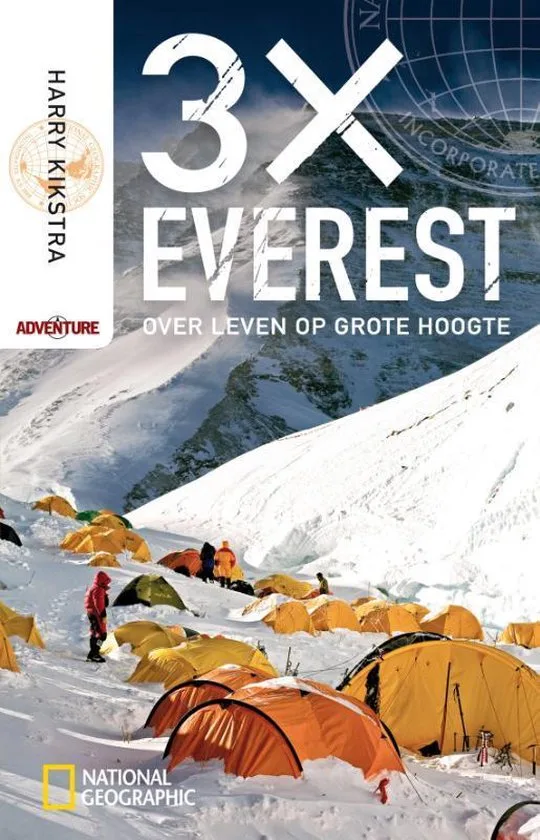
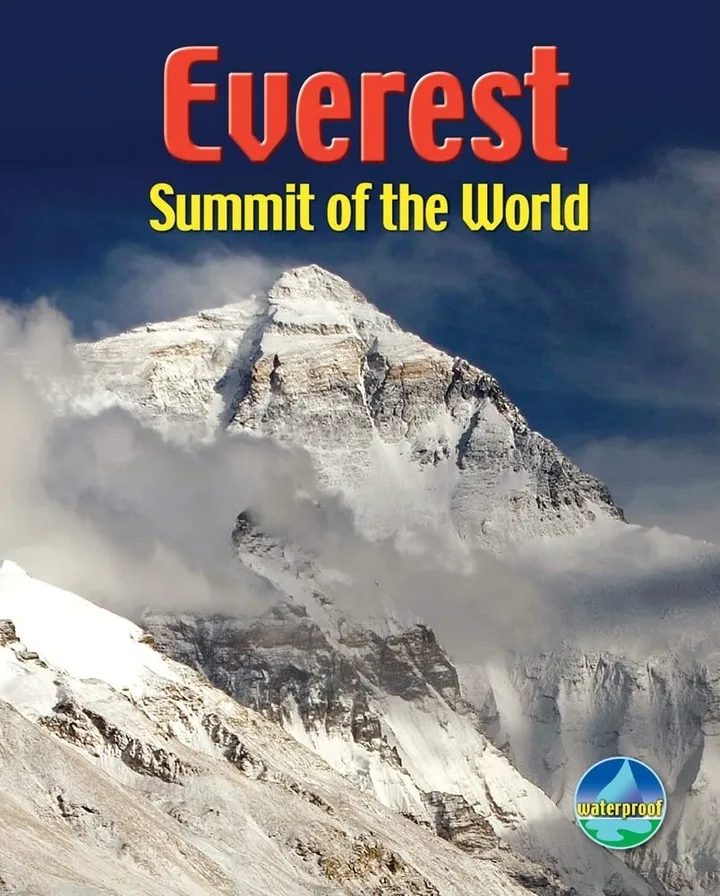
The Everest guide grew out of 7 summits finisher Harry Kikstra's printed guidebook, Everest: Summit of the World (Rucksack Readers, 2009), and has since been expanded and brought up to date. Harry reached the summit in 2005 from the Tibetan side, and 7summits.com ran expeditions to Everest for several years.
Every chapter is on a review schedule, and the permit and access pages are re-checked most often. Sources and credits lists the maps and sources, the table of contents and the index reach every chapter, and the books worth reading first are on Everest books and films.