








The full Elbrus gear list, item by item, with a line for camping wherever it changes the answer.
Written from the kit lists expedition operators and climbers use today. Standard is what you need; optional is what some climbers add. No quantities: how many is yours to decide.
Sign in to tick what you already own. · Every item, explained
Standard
| Clothing | |
|---|---|
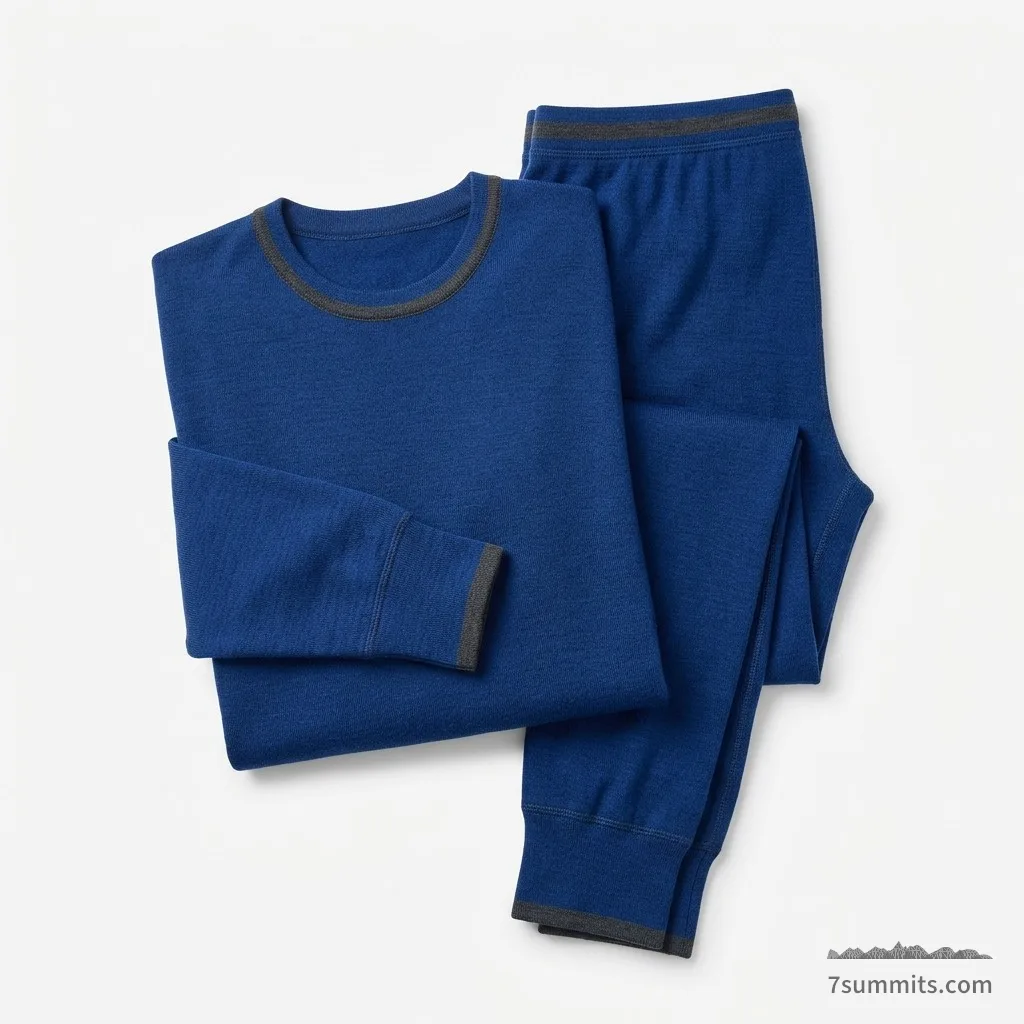 Base layers (top and bottom) | Merino or synthetic top and bottom, never cotton; a light and a heavier set |
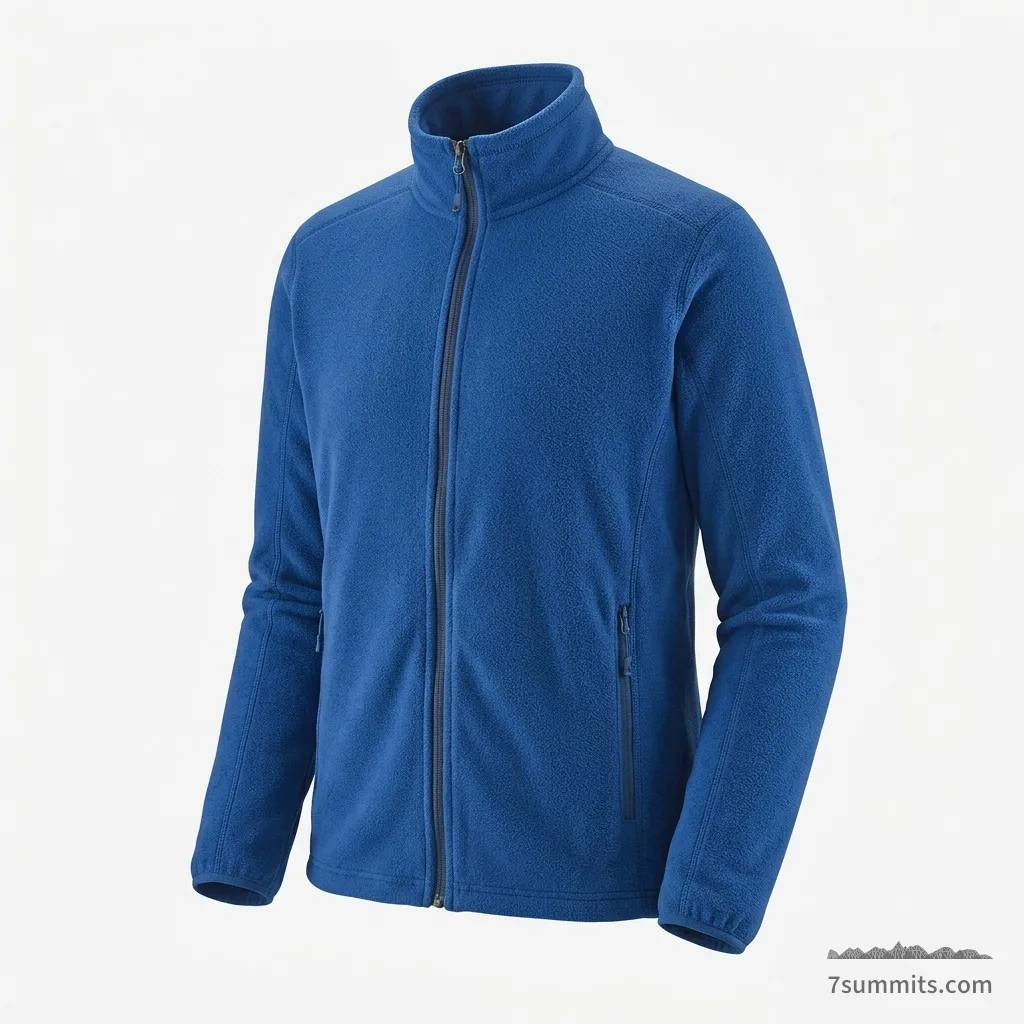 Mid-layers (fleece or light insulated top) | Fleece or a light synthetic jacket (a vest works too) to layer under the shells |
| Mid-layer trousers (softshell or fleece) | Softshell or fleece trousers for the acclimatization walks and summit day |
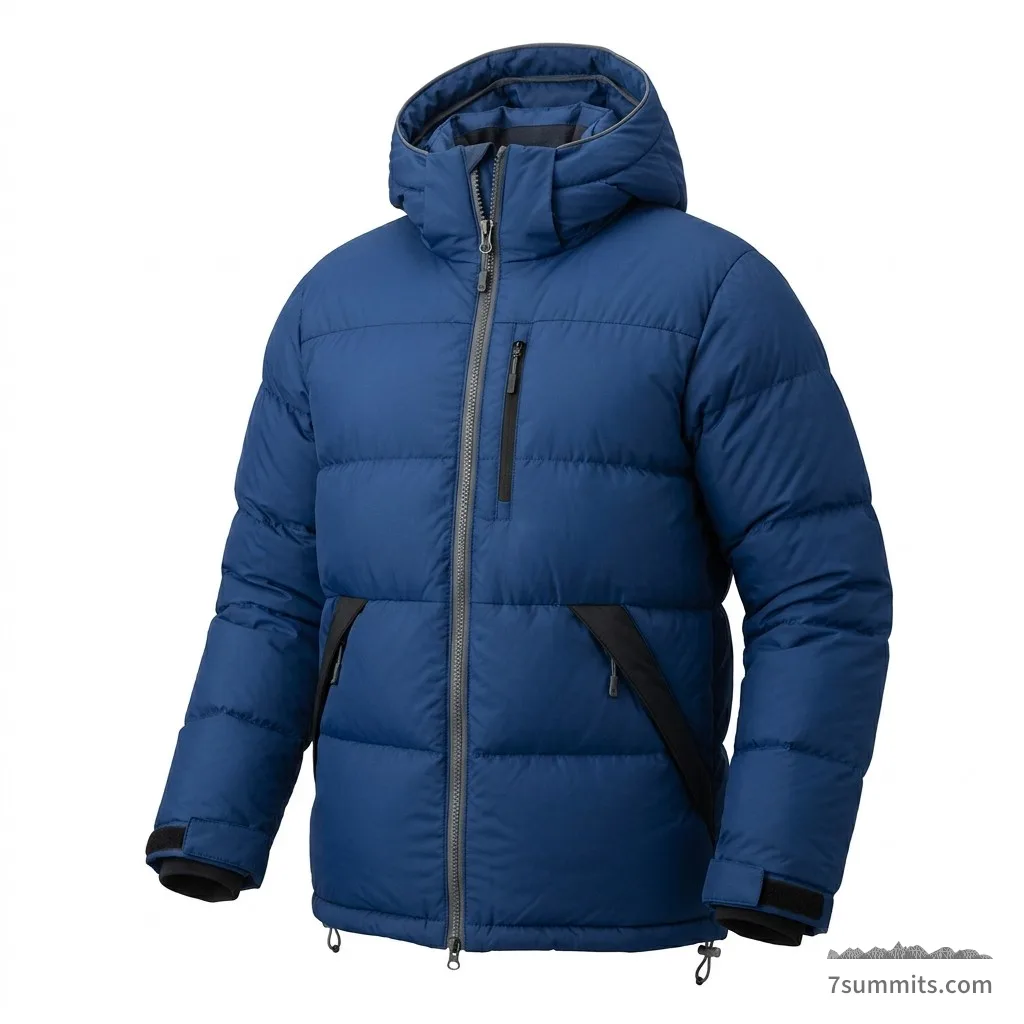 Insulated jacket (down or synthetic) | Hooded down parka, 700 fill or more, big enough to go over every other layer: summit day is long, cold and windy; rentable in Terskol |
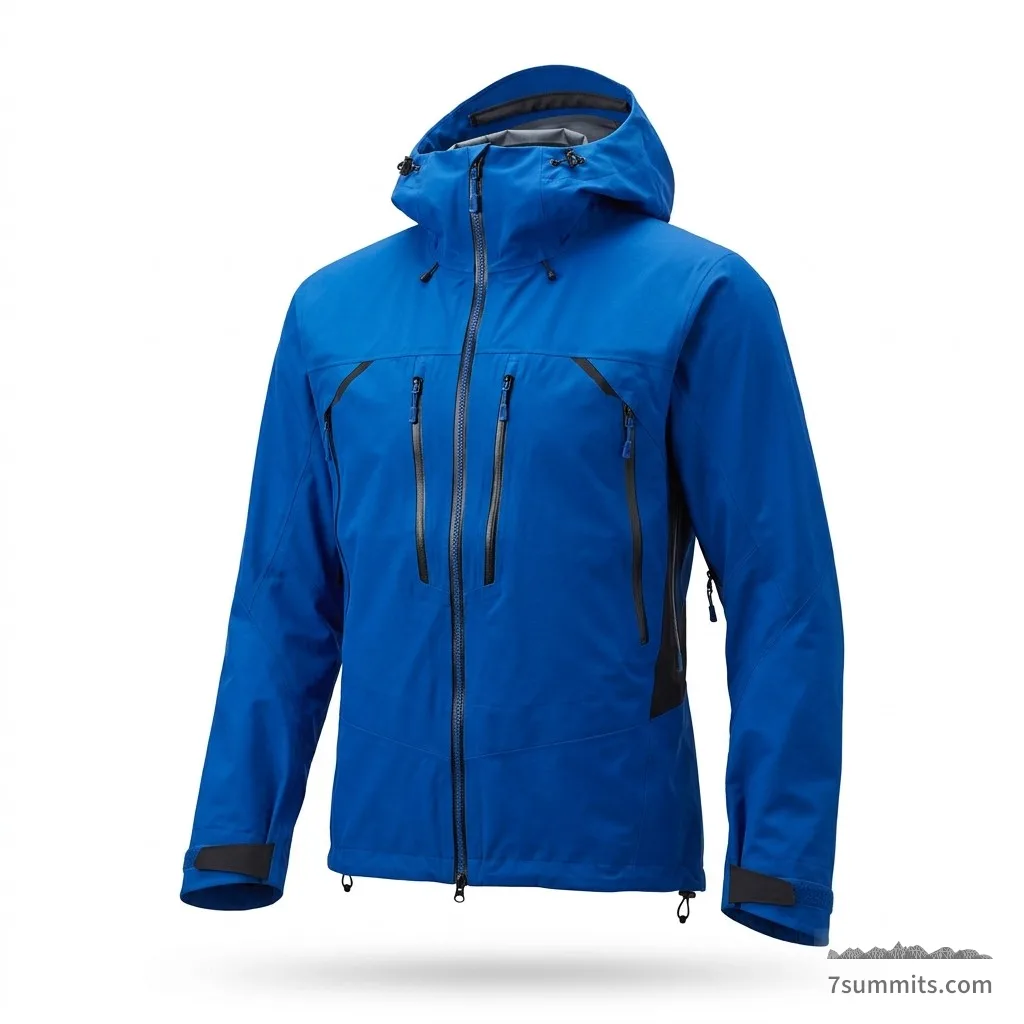 Hardshell jacket | Windproof and waterproof, with a hood that fits over the helmet: wind on the upper mountain, rain in the valley |
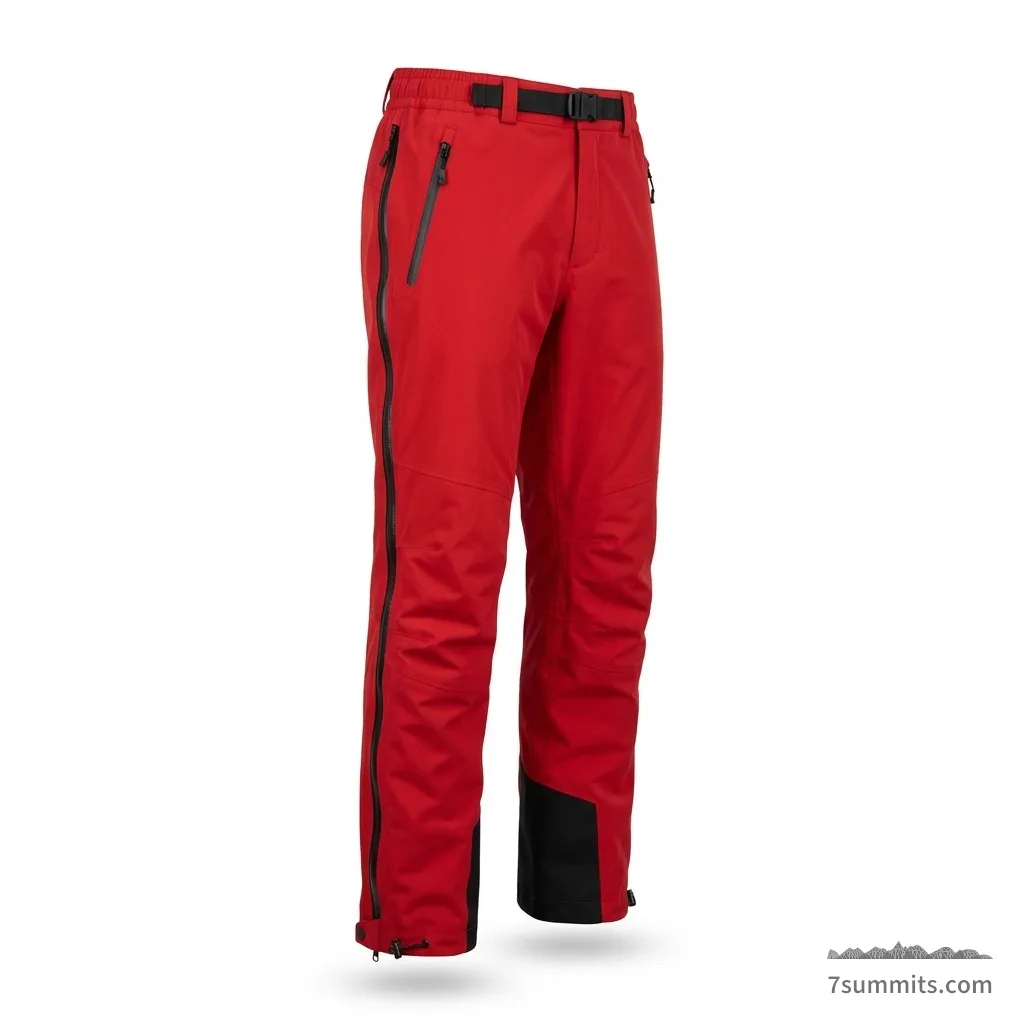 Hardshell trousers | Windproof and waterproof, full-length side zips so they go on over boots and crampons |
| Trekking trousers | Light trousers for travel and the valley hikes |
| Underwear | Merino or synthetic, never cotton |
| Town and base-camp clothes | Clean clothes for travel and the hotel, shorts and T-shirts for warm valley days; they stay in the hotel bag |
| Head, hands & feet | |
|---|---|
| Mountaineering boots | Double boots (6000 m class): a modern synthetic double or a plastic double; summit day is long and cold, a single boot is not enough; rentable in Terskol and Azau |
| Trekking boots or trail shoes | The valley: trekking boots or trail shoes for the acclimatization hikes from Terskol and Cheget |
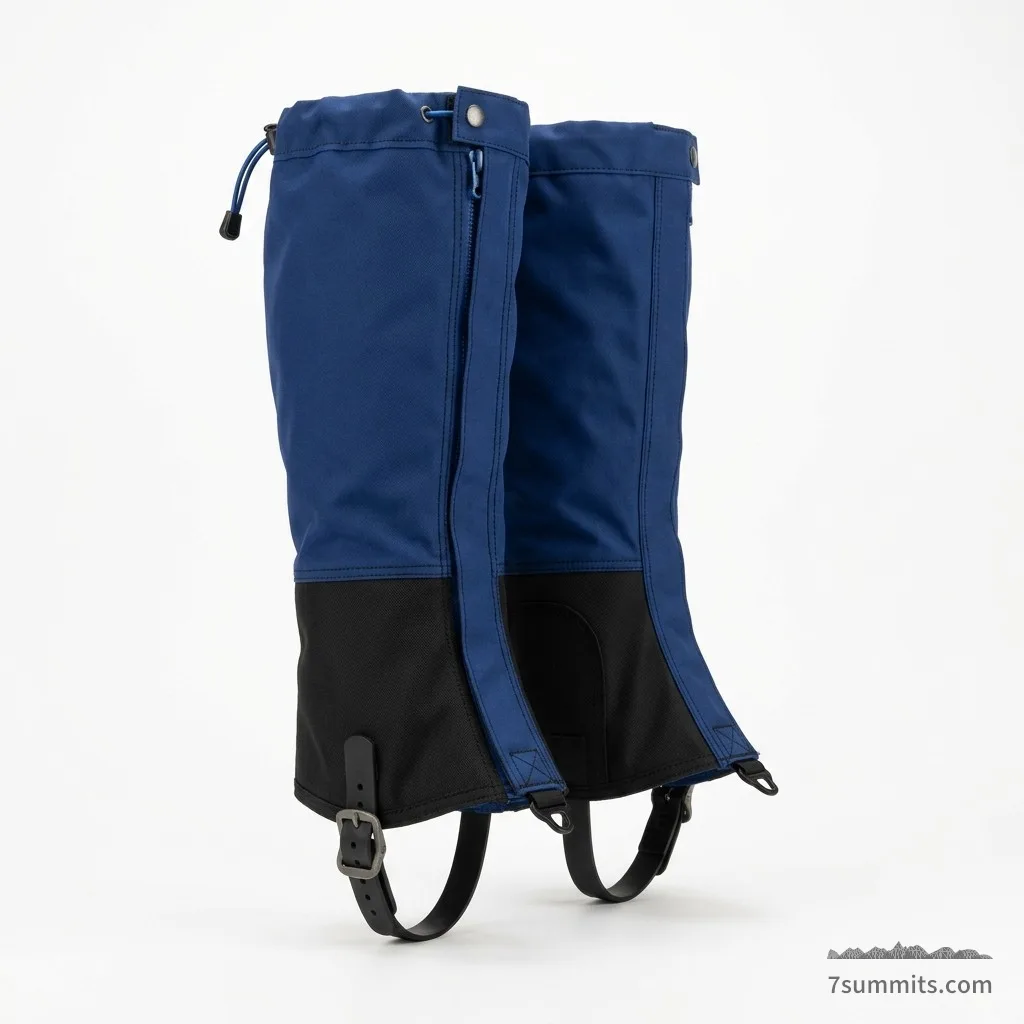 Gaiters | For snow on summit day and the north route; not needed with a boot that has one built in |
| Warm socks | Heavy wool or synthetic mountaineering socks; one pair kept dry for summit day |
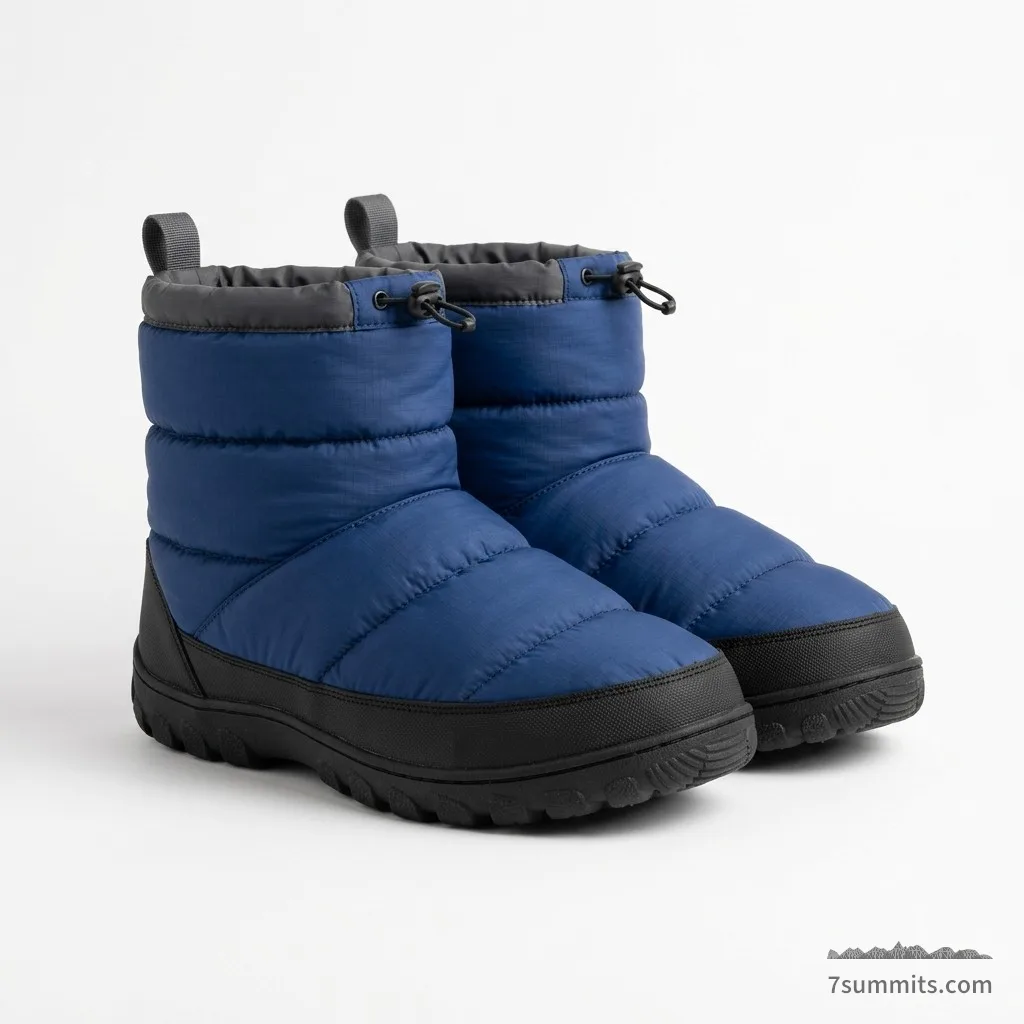 Camp shoes | The huts and the hotel: light shoes or sandals; boots come off indoors; down booties for the north-route tents |
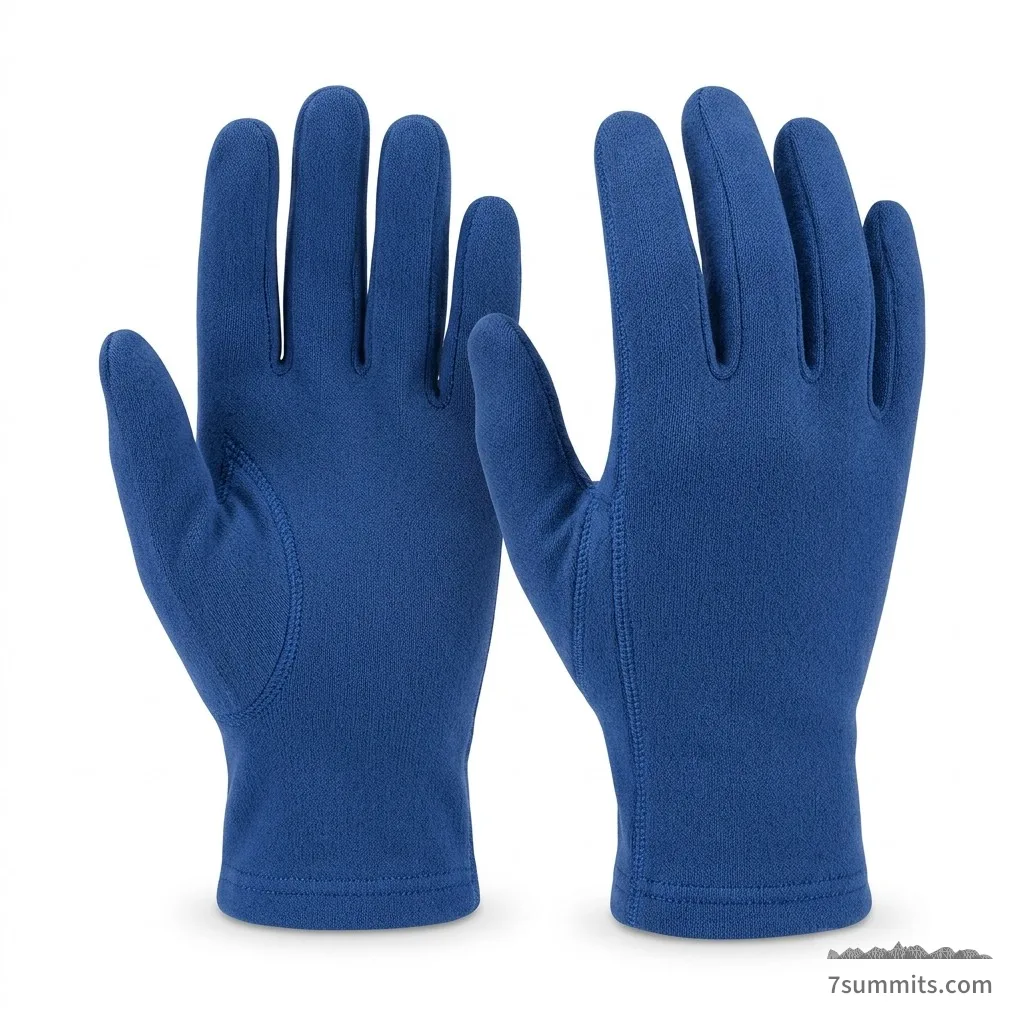 Liner gloves | Thin gloves you can work in; take a spare pair |
| Warm gloves | Insulated, windproof gloves for the acclimatization walks and the upper mountain |
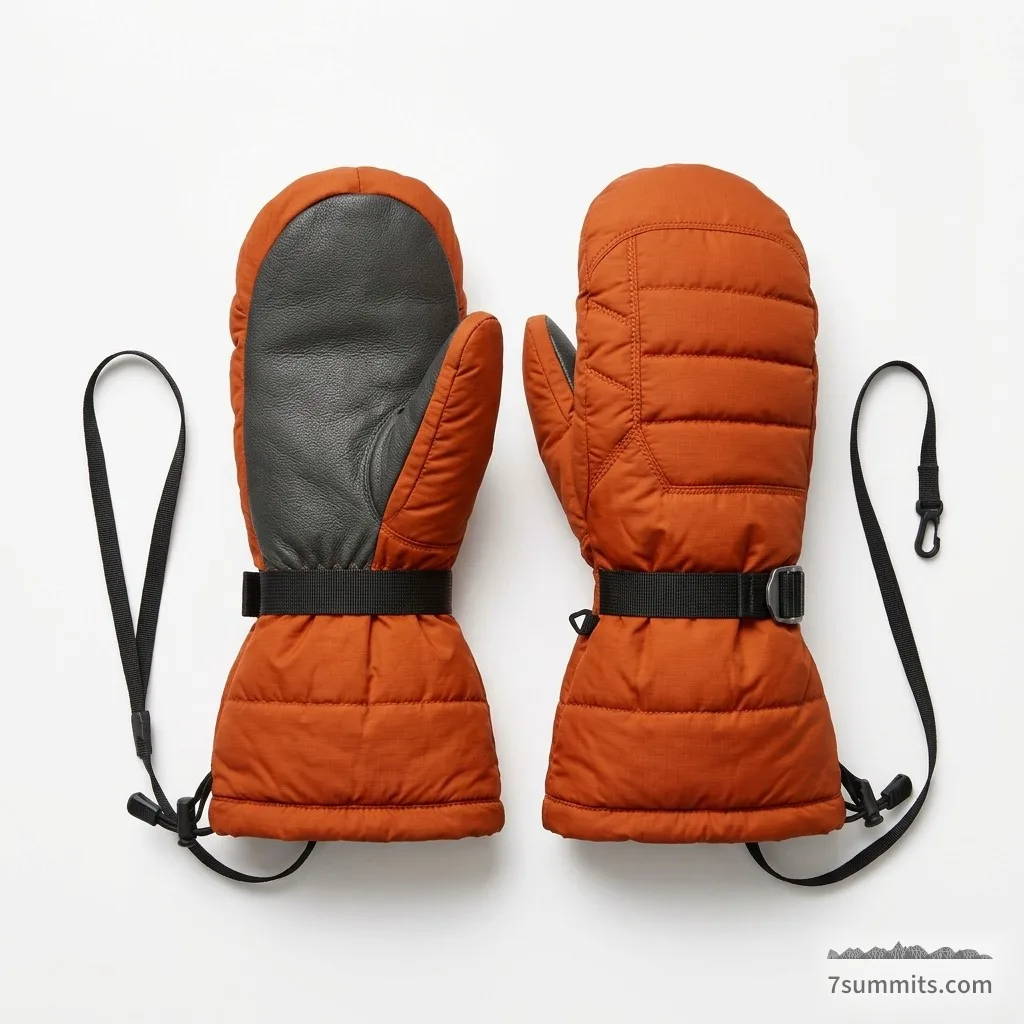 Expedition mitts | Summit day: down or synthetic expedition mitts, big enough to go over the liners |
| Warm hat | Warm hat that covers the ears and fits under the helmet |
| Sun hat | Sun hat or cap with a brim: the snow reflects the sun from below |
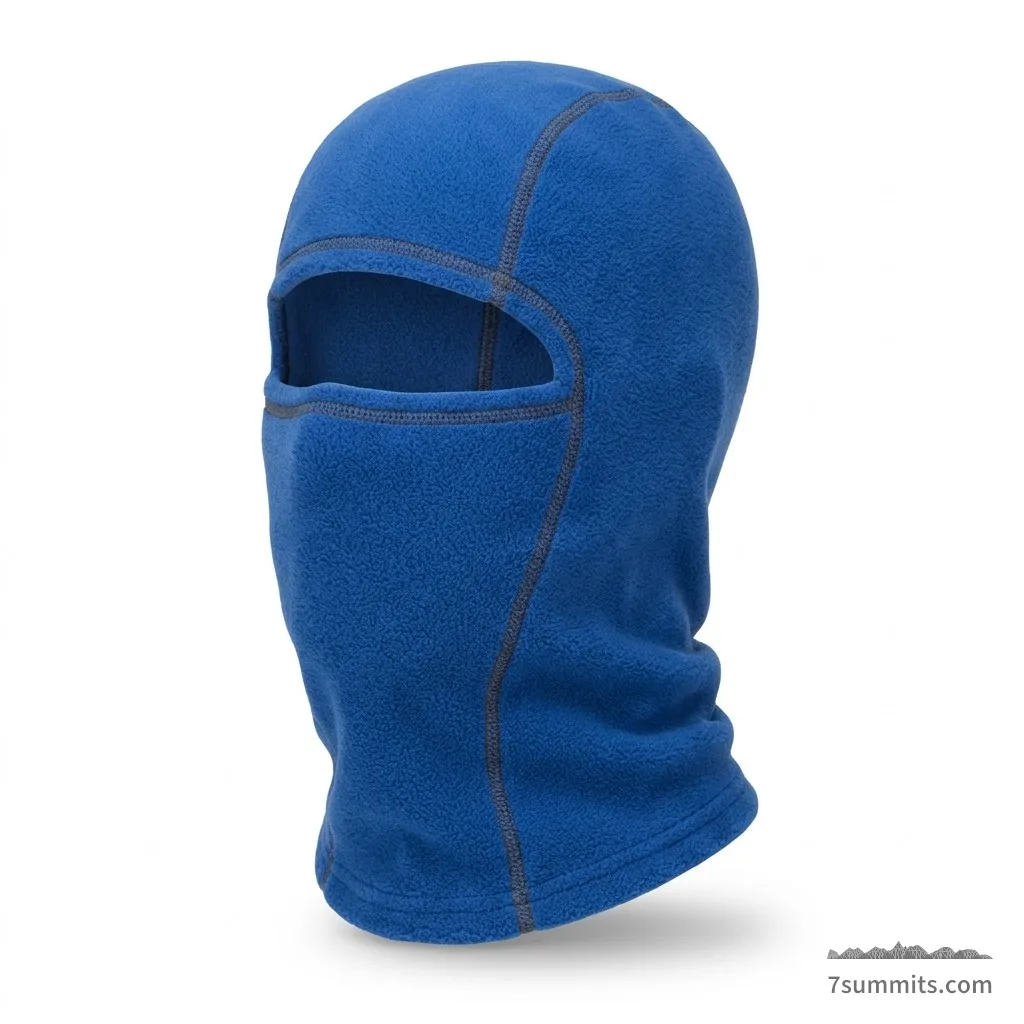 Balaclava or face mask | Balaclava or face mask for the wind on summit day |
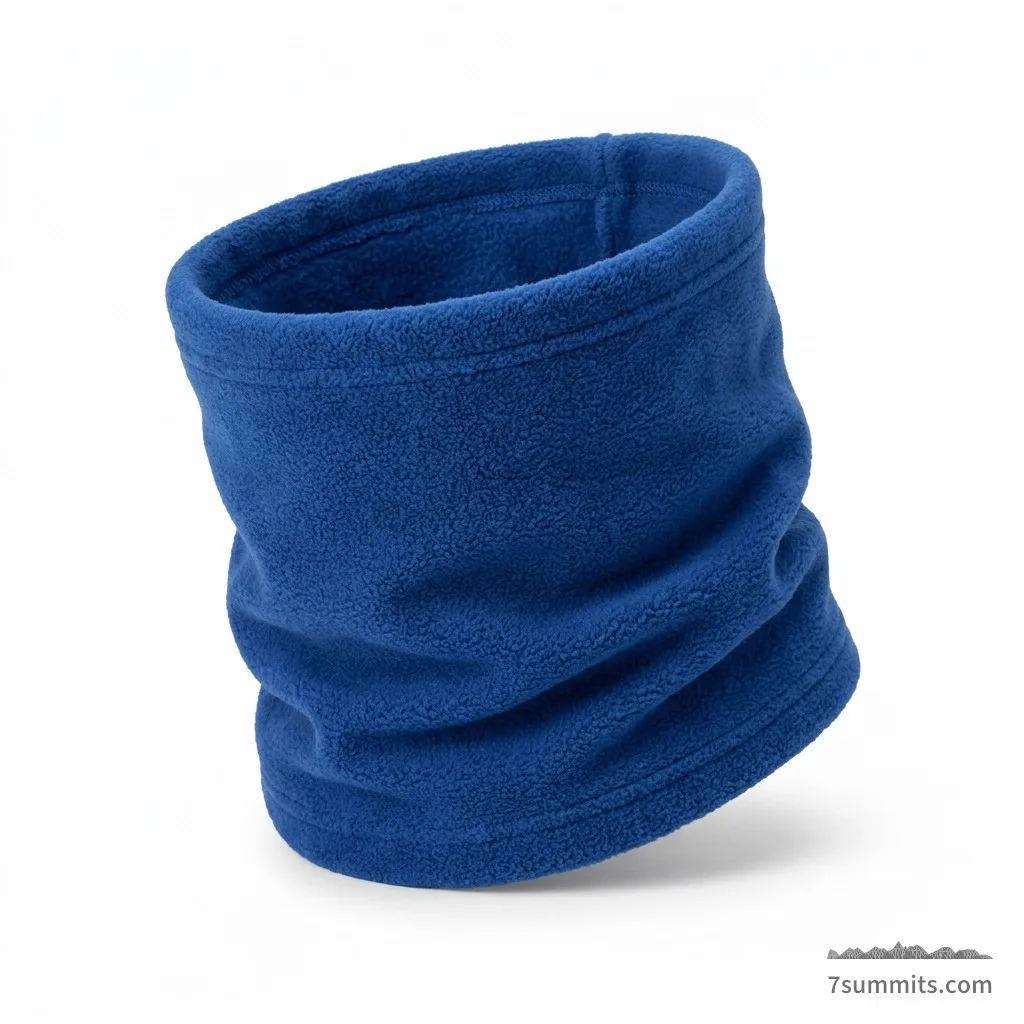 Neck gaiter or buff | Buff or neck gaiter, against sun low down and wind higher up |
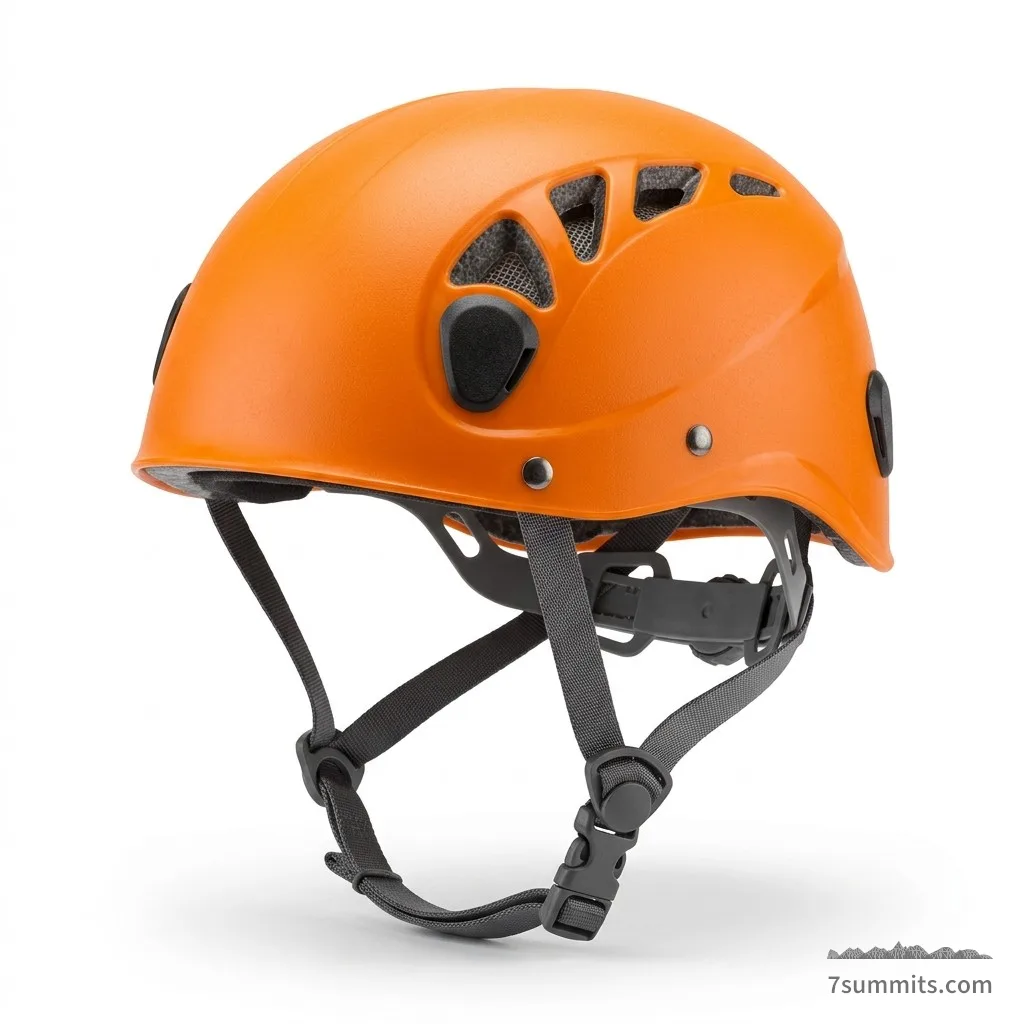 Climbing helmet | Most lists ask for one; check it fits over the warm hat |
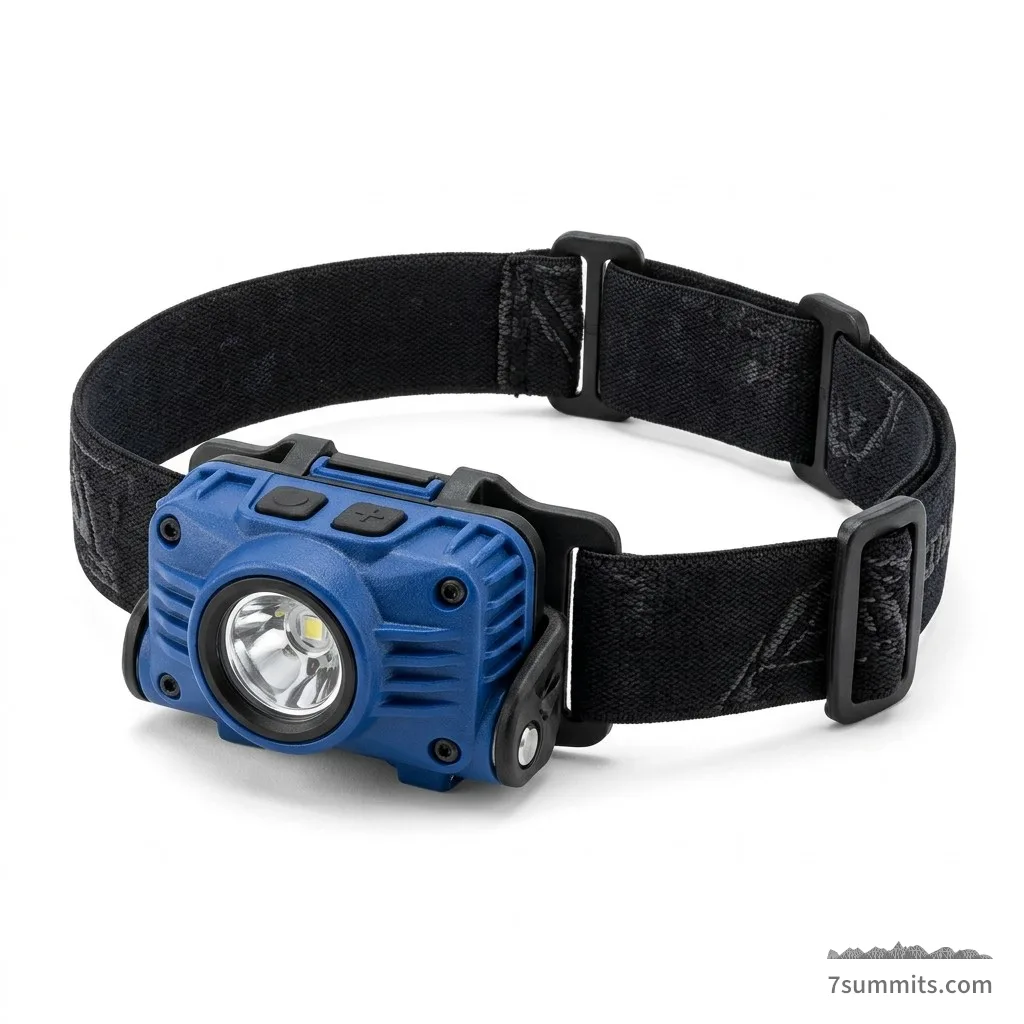 Headlamp (with spare batteries) | Summit day starts in the dark: a headlamp with batteries that work in the cold, and spare batteries |
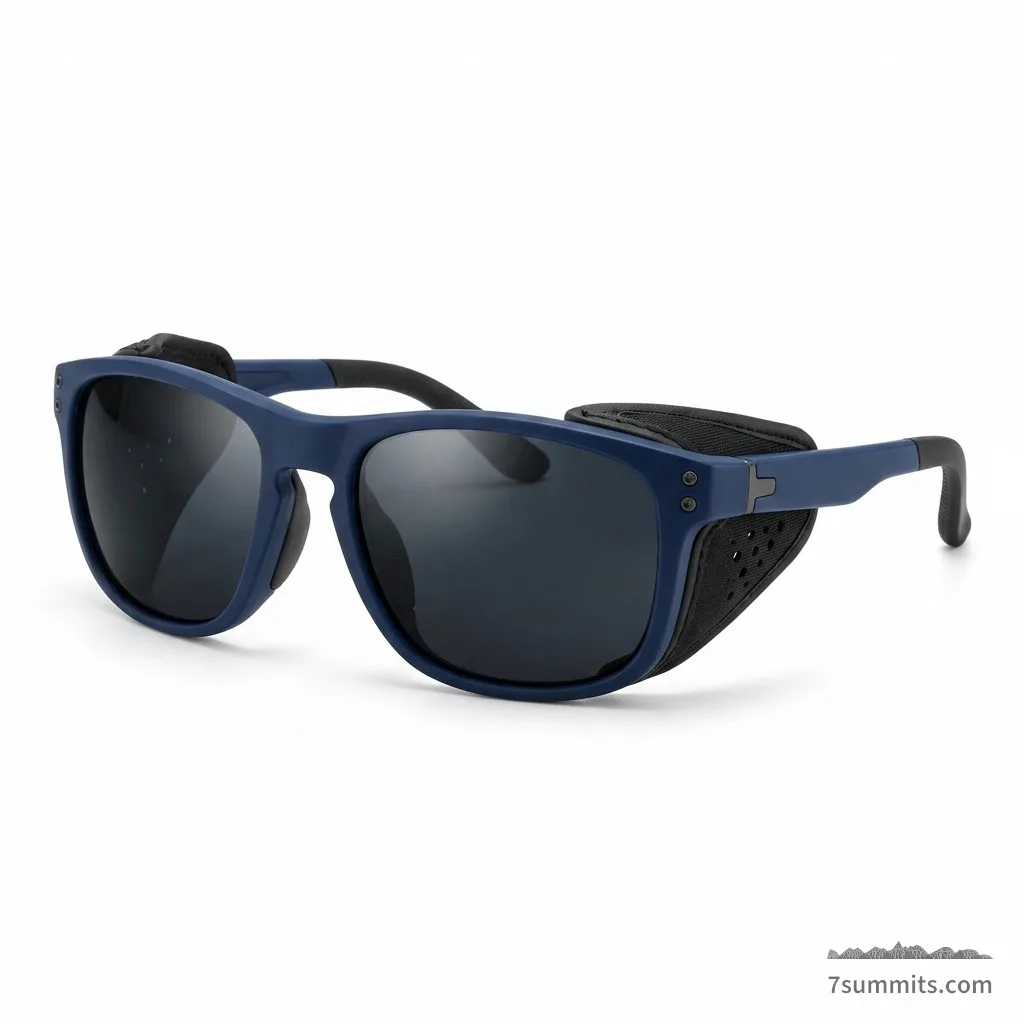 Glacier glasses | Filter category 4 with side shields and a nose guard (built in or clip-on); a second pair is optional: the goggles are the backup. If you need glasses to see: prescription lenses, or spare glasses and contacts |
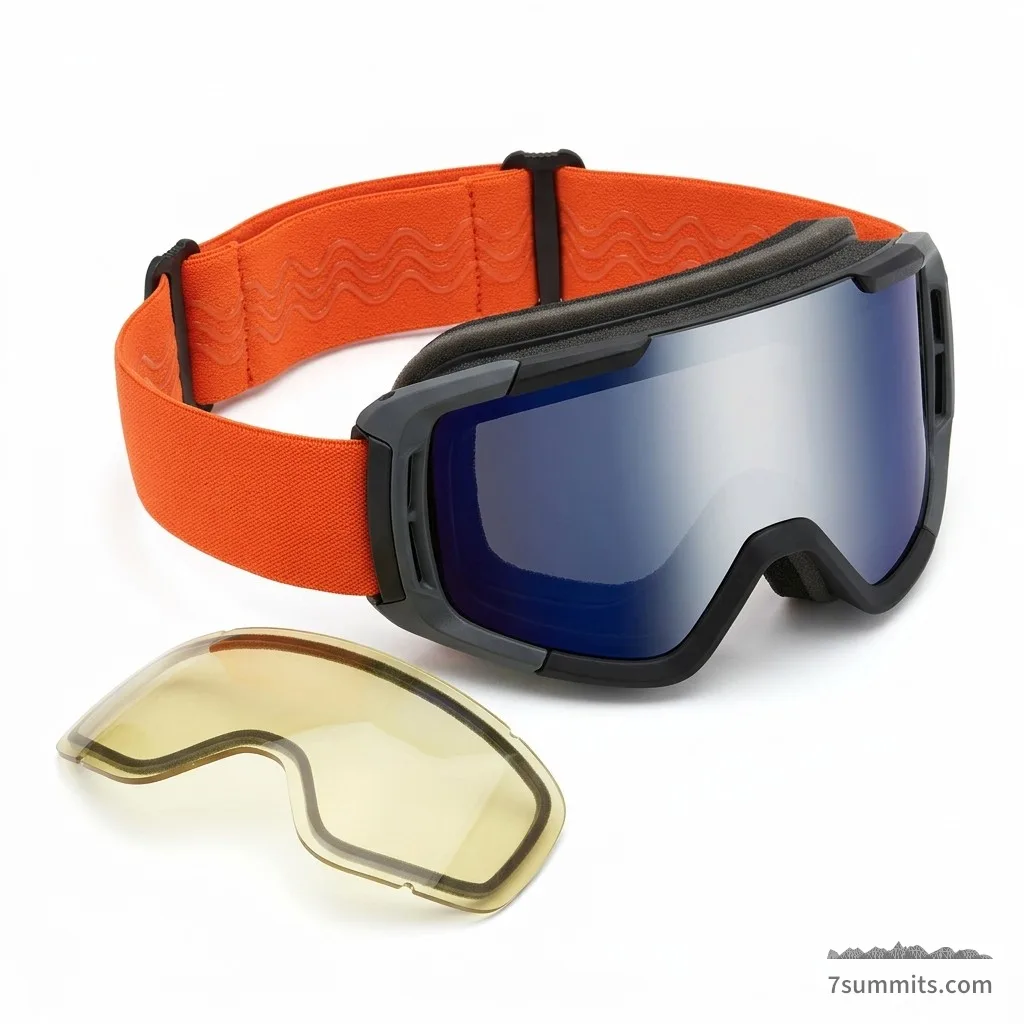 Goggles (with a spare lens) | Ski goggles for wind and the whiteout on summit day; a clear lens or clear glasses for the start in the dark |
| Gear | |
|---|---|
| Crampons | 12-point steel crampons fitted to your boots; rentable in Terskol and Azau |
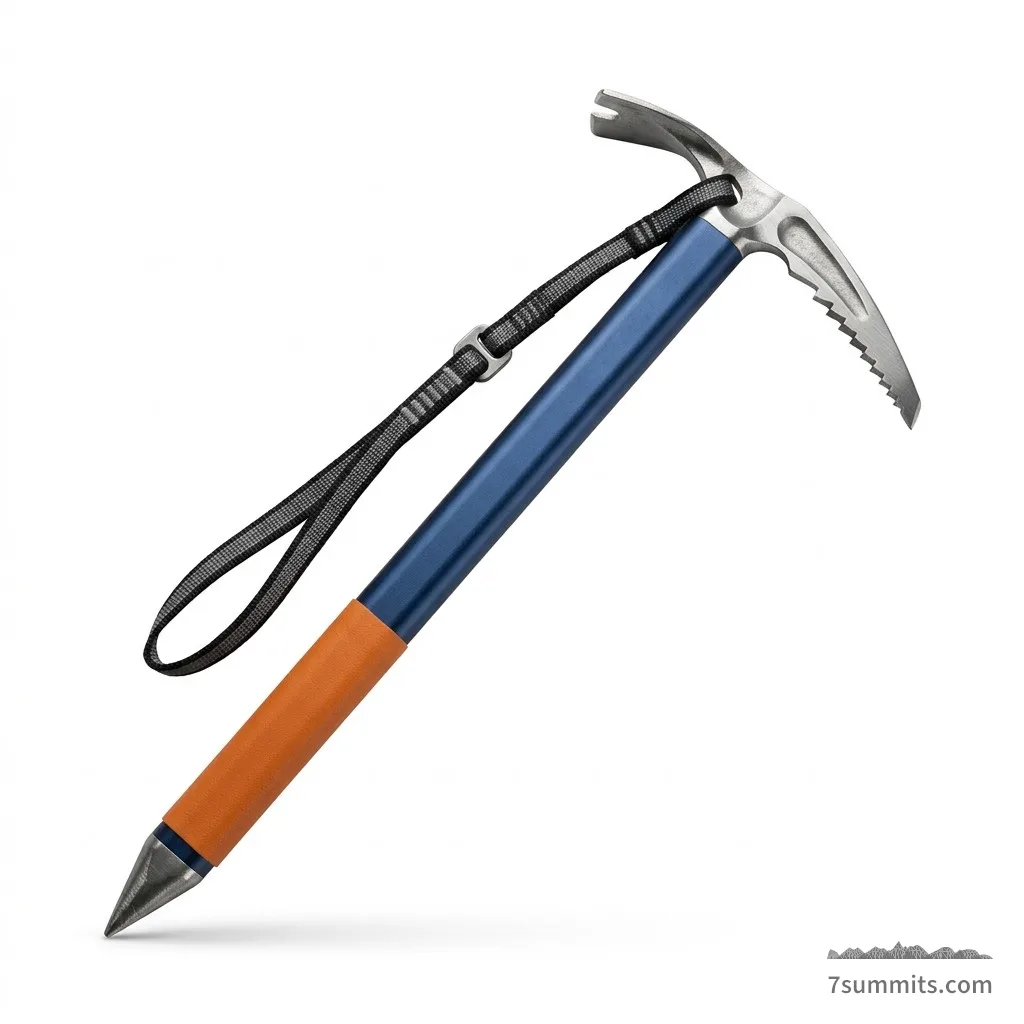 Ice axe | General mountaineering axe with a leash, for self-arrest on the traverse and the final slope |
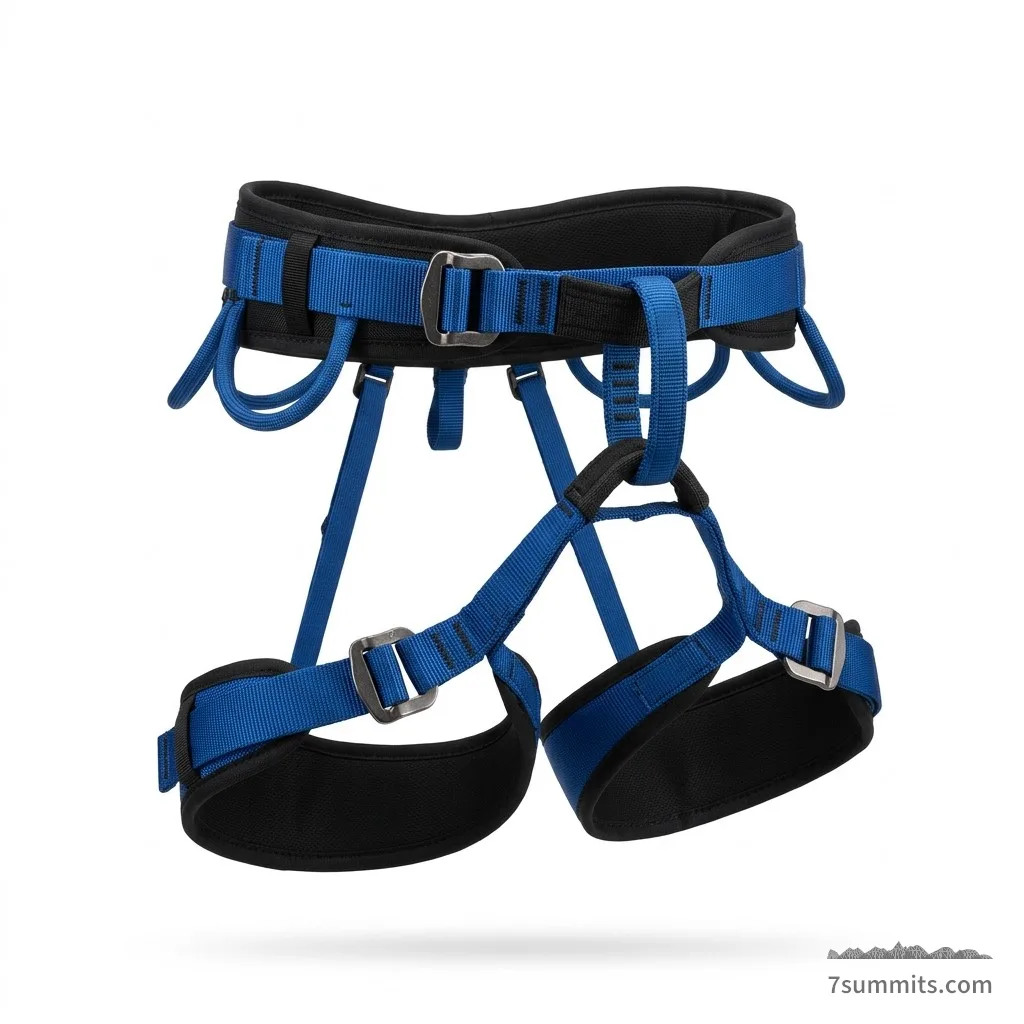 Climbing harness | Alpine harness with adjustable leg loops that goes on over your shell trousers |
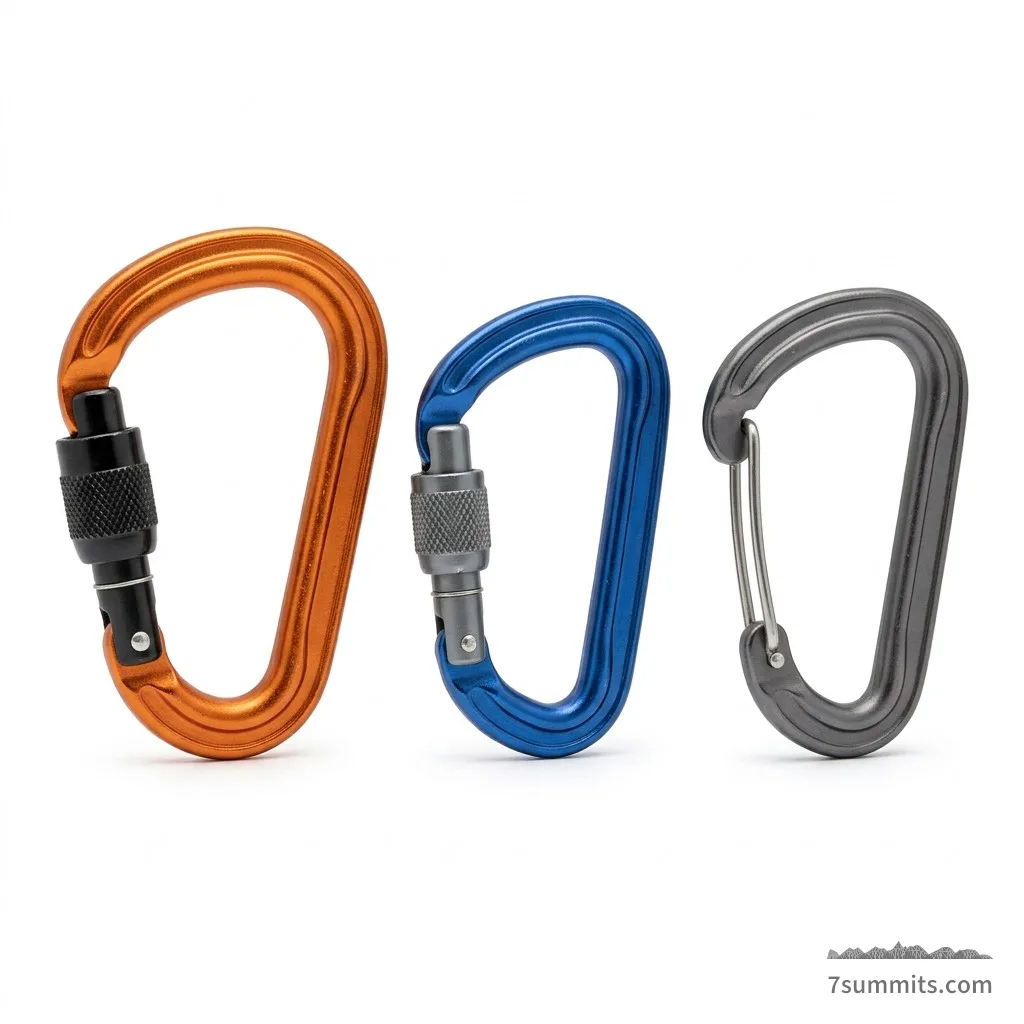 Carabiners (locking and non-locking) | Locking and non-locking, large enough to clip wearing mitts |
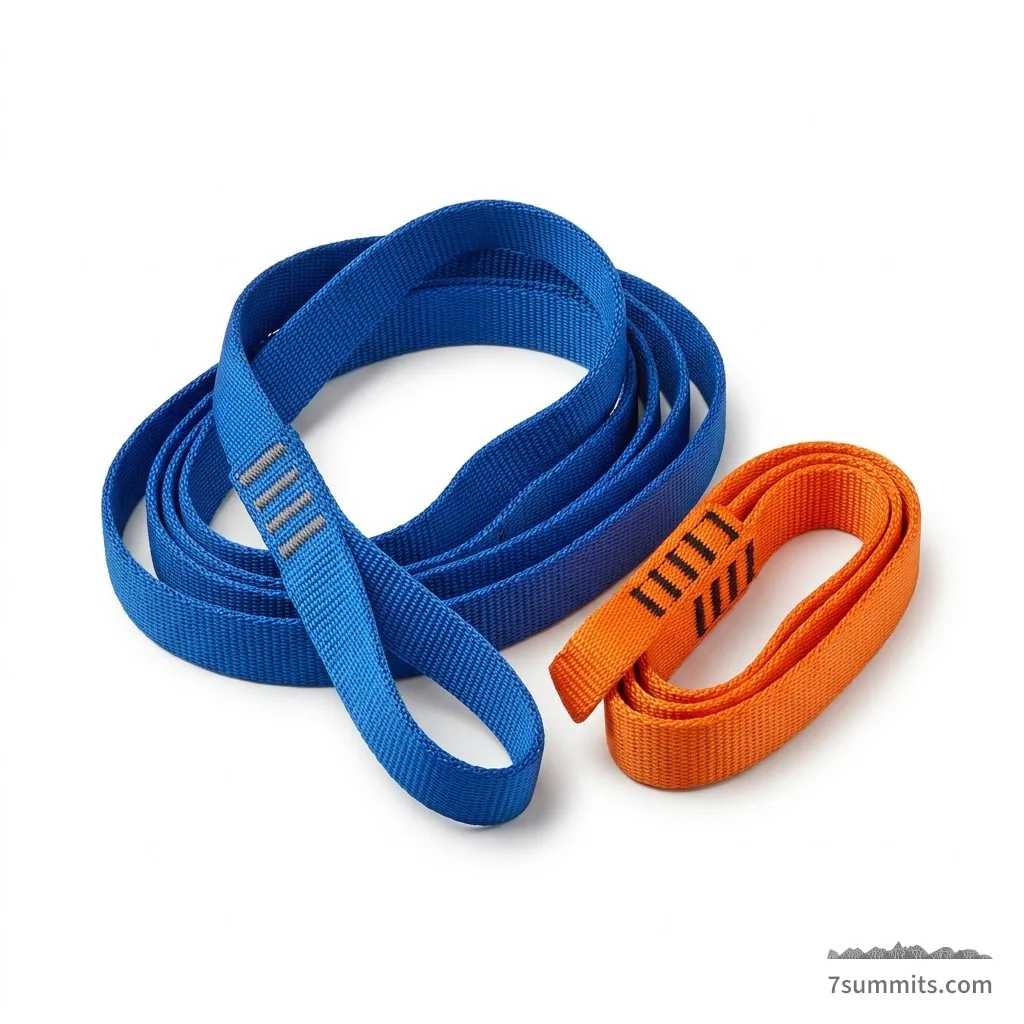 Slings and cowstails | A sewn sling and a cowstail to clip in where the team is roped or a line is fixed |
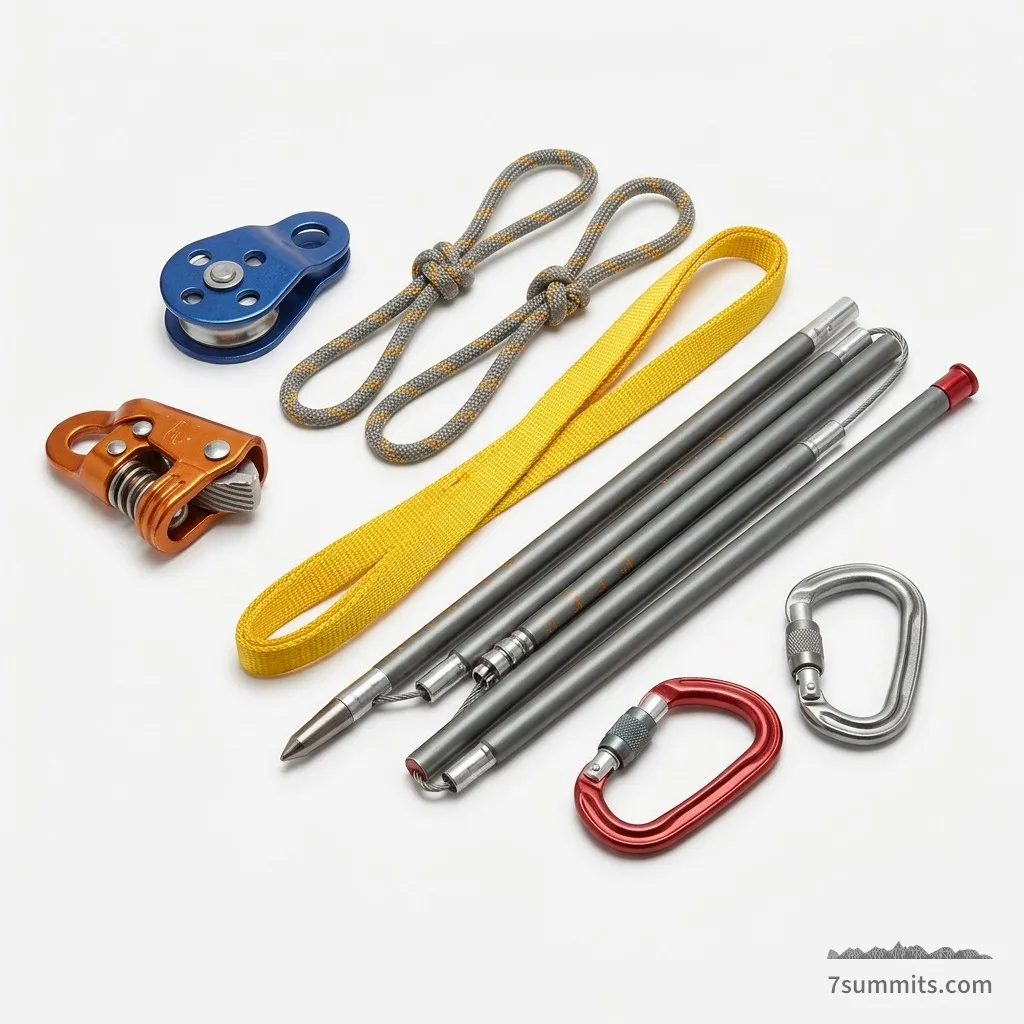 Crevasse rescue kit (pulley, prusiks, probe) | The team's: an independent team on the north side brings its own; on the ski programmes an avalanche probe is personal (IMG, RMI) |
| Trekking poles | Adjustable poles for the valley hikes, the acclimatization walks and the long descent |
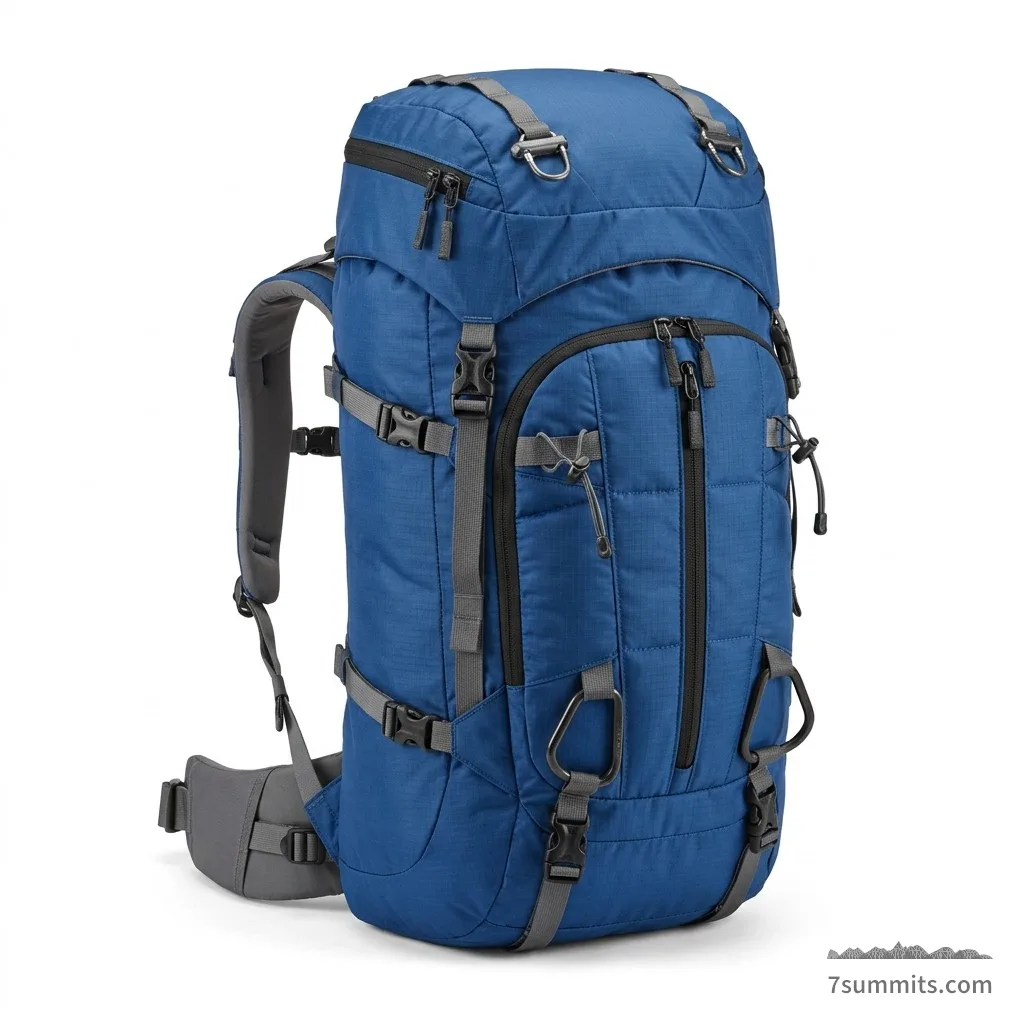 Expedition backpack | Camping or the north route: 75 L · tent, stove and food share (Adventure Alternative: "a 75 litre sack is necessary") South route with the huts: 40 to 60 L is enough: the duffel goes up on the lift |
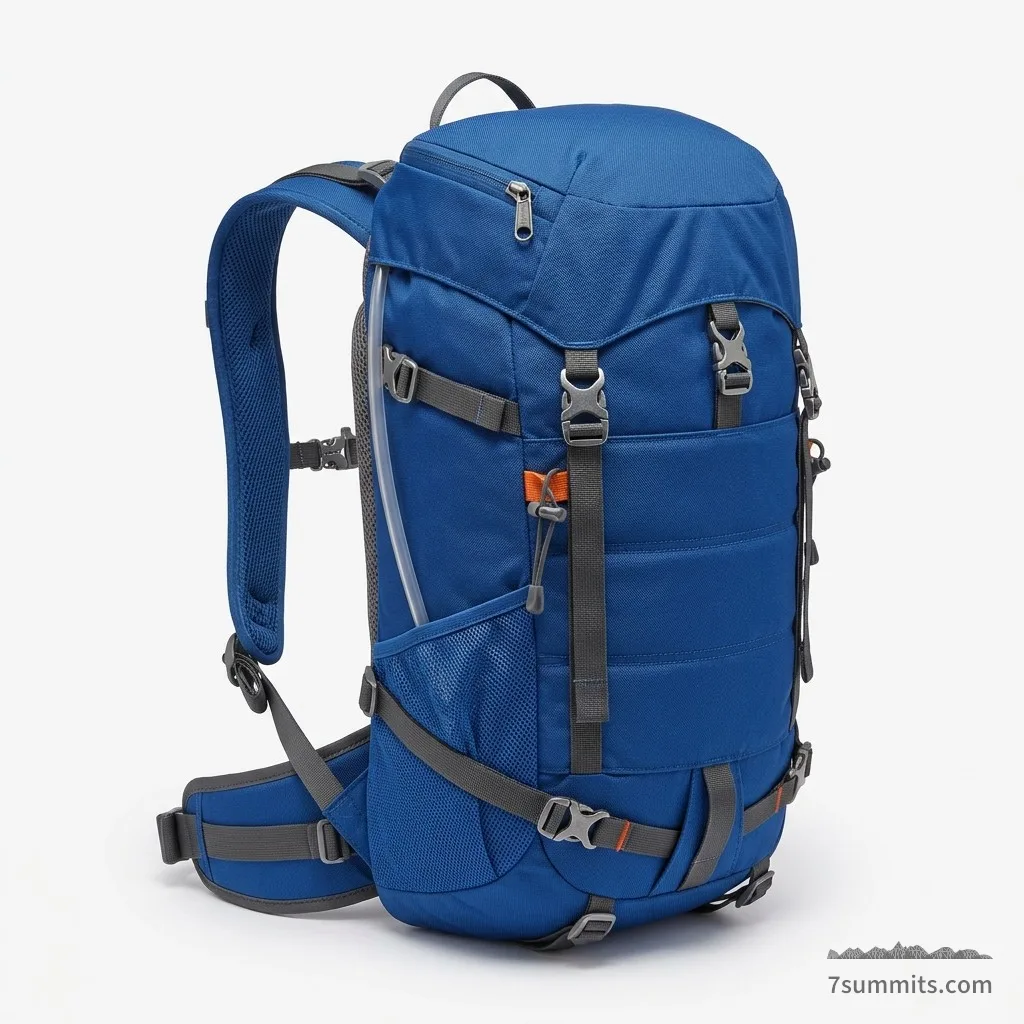 Daypack or summit pack | 30 to 45 L for summit day and the acclimatization walks; it doubles as the carry-on |
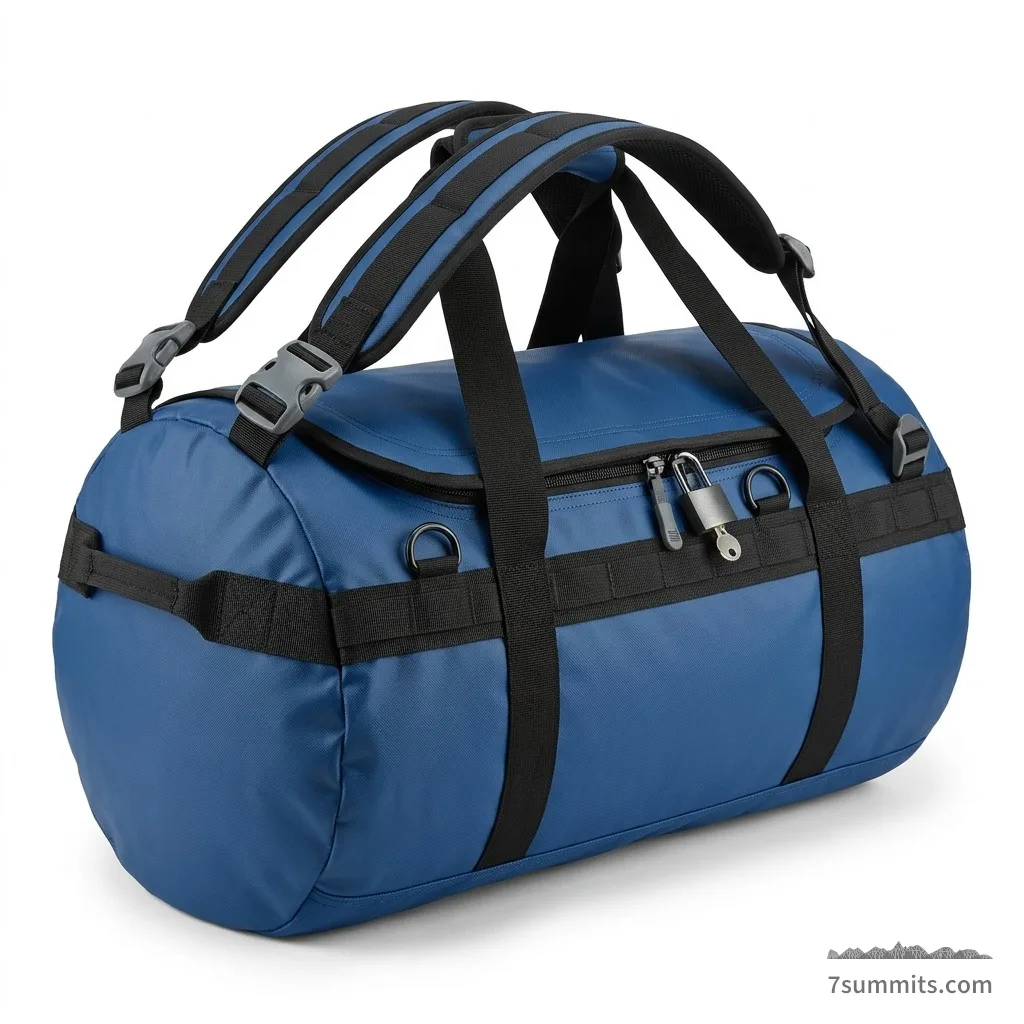 Expedition duffel (with cover and padlock) | To the huts or base camp: 100 L · lockable The hotel in Terskol or town: a small bag with town clothes |
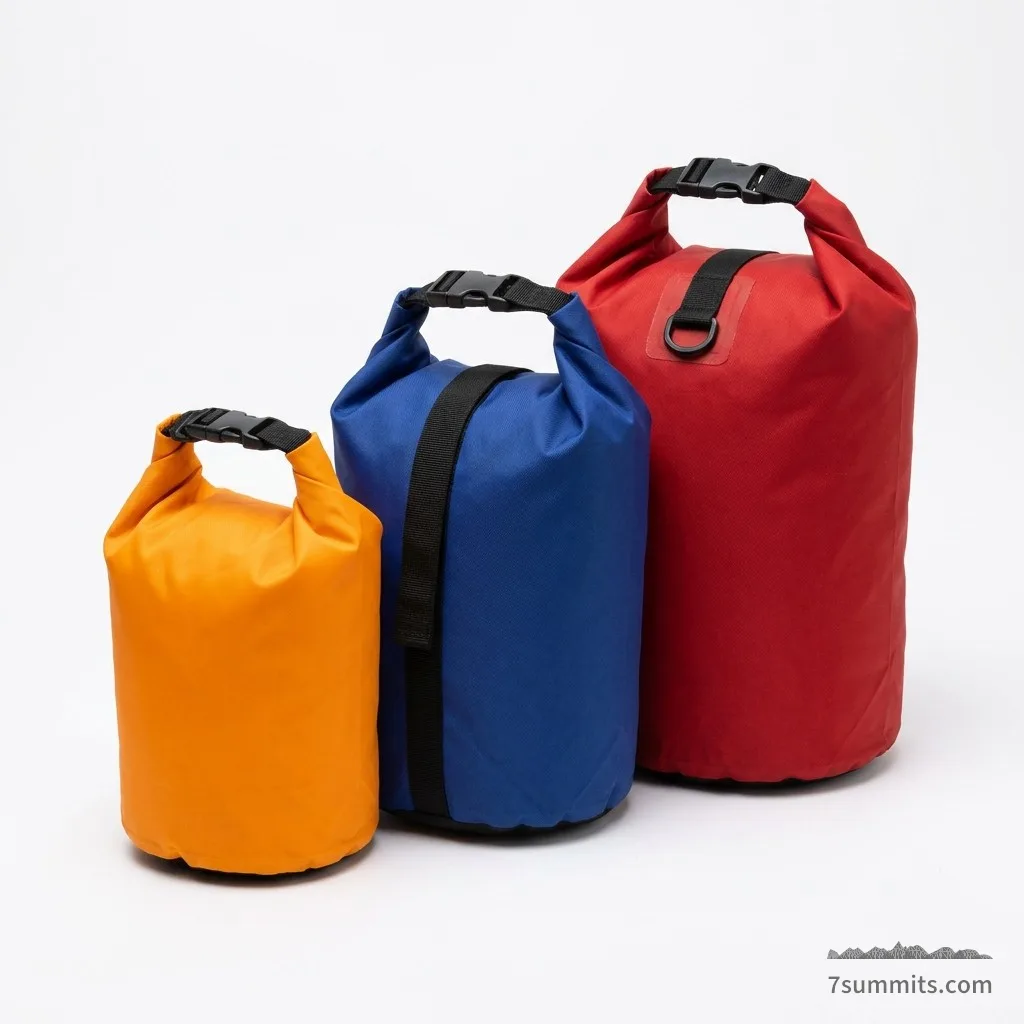 Dry bags, pack liner or rain cover | Stuff sacks to sort the duffel and compress the bag and parka; a dry bag or liner for the sleeping bag |
| Two-way radios | Your operator's; an independent team brings its own |
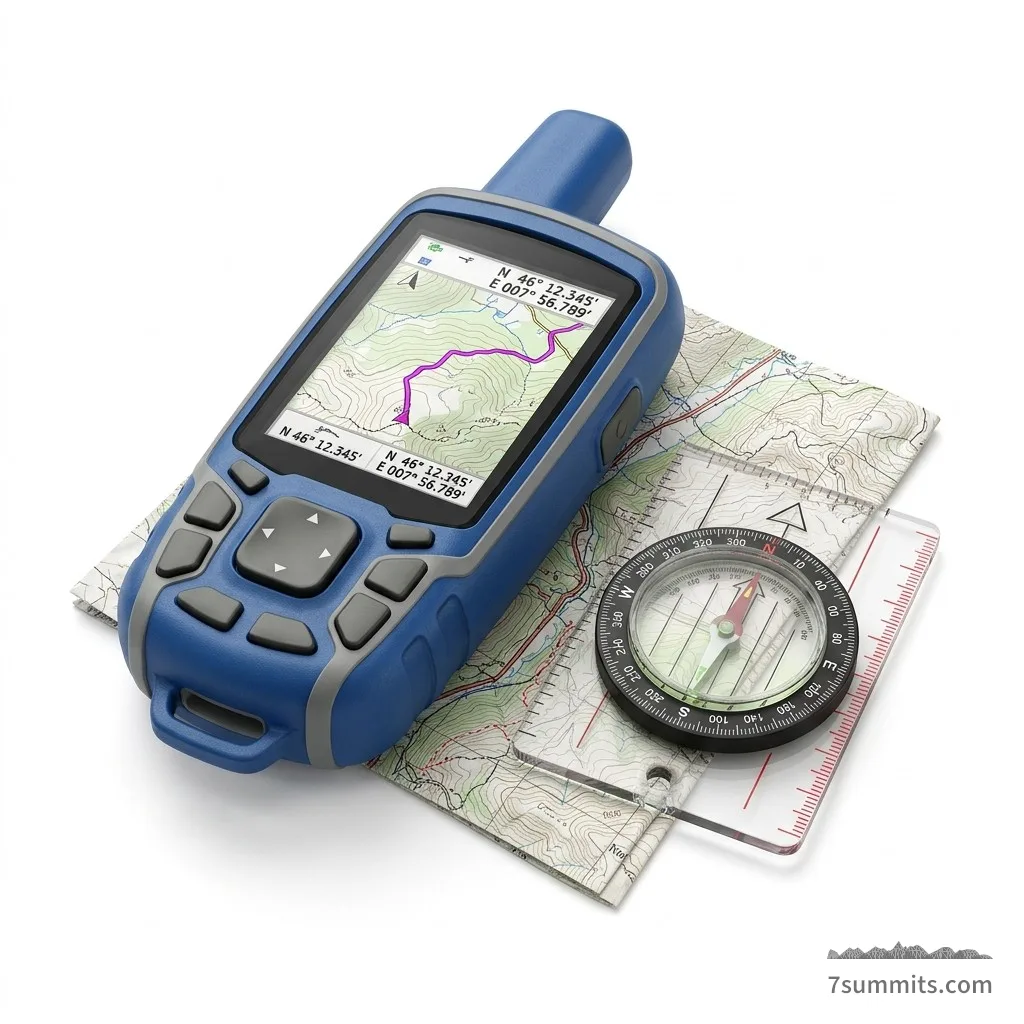 Map, compass, altimeter and GPS | An altimeter and a GPS you know how to use (a watch, a handheld, or a phone with offline maps and the route loaded): in a whiteout on the upper mountain you must find the way down yourself |
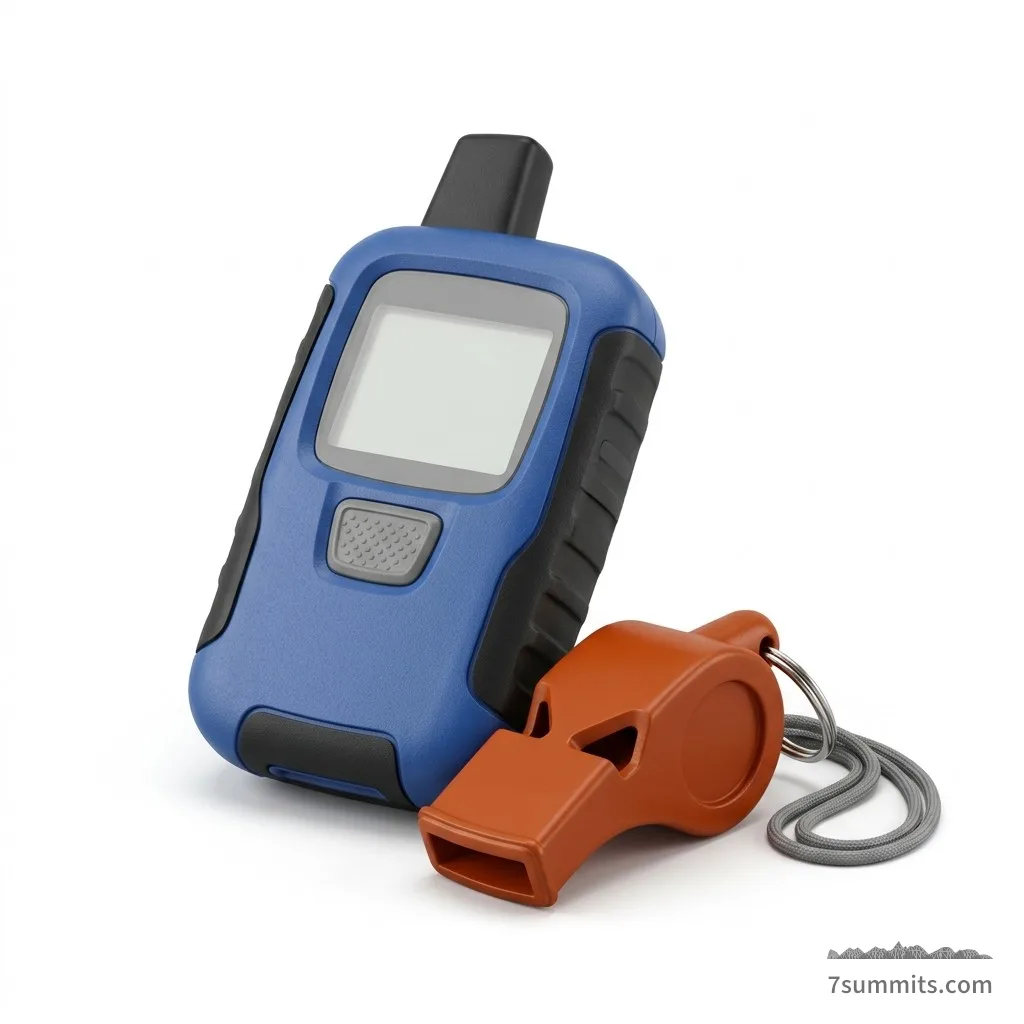 Phone, PLB or satellite messenger, signal mirror | A charged phone with a local SIM, to call 112 or the rescue service (MChS), and your route registered with the MChS before you go. A satellite messenger or satellite phone is allowed again: Decree 488, which from 1 May 2026 treated bringing one into Russia without a state licence as smuggling, applied for six months and lapsed at the end of October 2026. No replacement or extension was found, but the ban could be re-imposed, so check before you travel ⚖Government Decree No. 488 of 29 April 2026, in force from the day after official publication, banned for six months the import of radio-electronic devices that transmit to or receive from foreign communication satellites without a decision of the State Radio Frequency Commission, and added them to the list of strategically important goods, so carrying one in was smuggling under Article 226.1 of the Criminal Code; customs and the FSB enforced it. The six-month prohibition under point 1 ran out at the end of October 2026 and is no longer in force; no replacement or extension was found, but it could be re-imposed. Satellite phones (Iridium, Inmarsat) are named; an inReach messenger uses Iridium. Garmin lists Russia among the countries that "may regulate or prohibit the use or possession of a satellite communicator". Whether a 406 MHz PLB counts was not checked. SourceAlta-Soft, customs law news of 2026-05-04 — alta.ru; TKS, 2026-05-01 — tks.ru; Garmin support, updated 2026-06-22 — support.garmin.com; text of the decree on Garant — garant.ru |
| Passport, visa, tickets, certificates and money | Passport and visa, the migration card, the insurance certificate, cash, and in the border zone a border-zone pass (your operator arranges it) ⚖In the border zone (the 5 km strip along the Georgian border) you must carry your passport and a border-zone pass, which takes up to 30 working days for a foreigner; on the listed places outside the strip (Cheget, lake Donguz-Orun, the Terskol hikes) a passport. Elbrus itself is outside the zone: it matters only if an acclimatization day goes up the Adyl-Su or Adyr-Su gorge or beyond Cheget's top lift station. SourceFSB Border Directorate for Kabardino-Balkaria, notice of 2025-03-24 — xn----7sbablnnmsiu1dzd9c.xn--p1ai; the Elbrus resort's page on the border zone — resort-elbrus.ru |
| Travel and rescue insurance | Mountaineering cover to 5,642 m that names rescue and a helicopter evacuation, valid in Russia: read the policy; some operators include or sell one, an independent climber arranges it |
| Camp | |
|---|---|
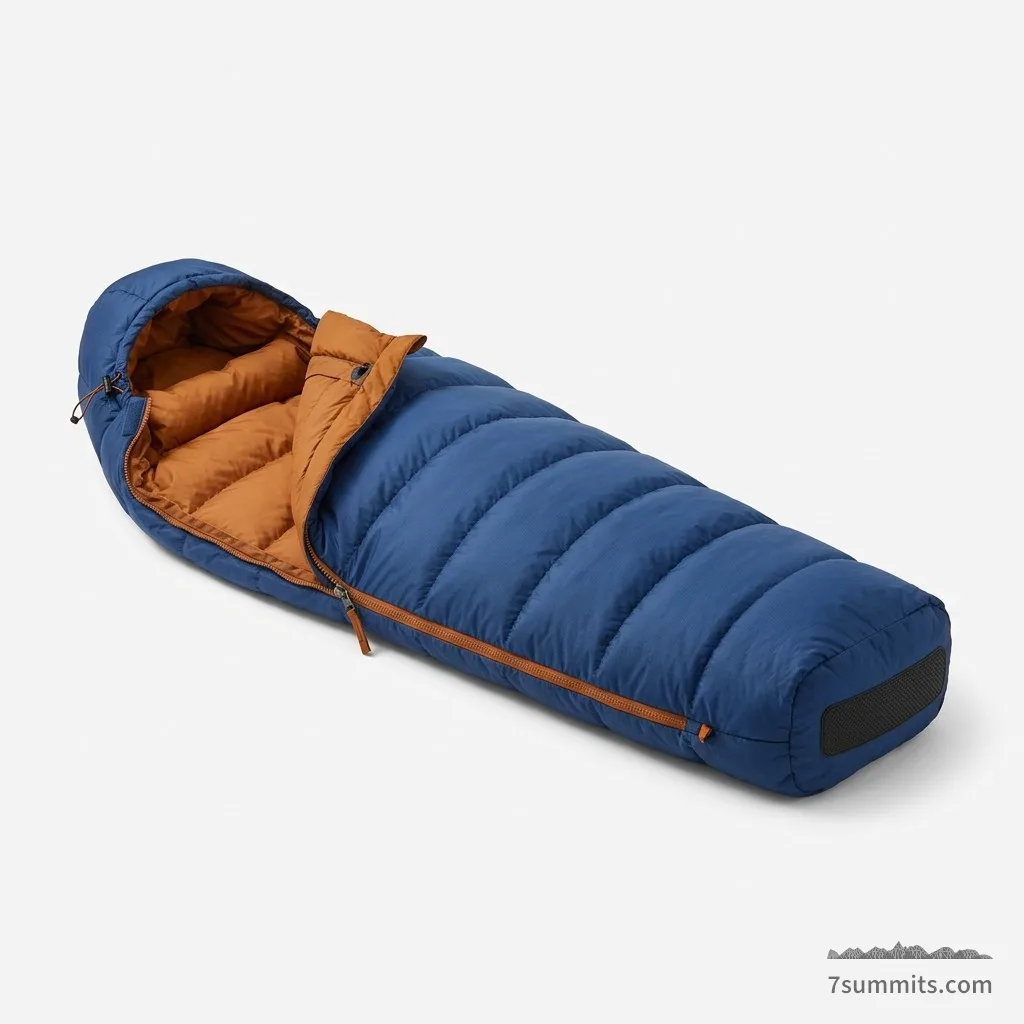 Sleeping bag | In a heated hut (south route): −10 to 0 °C comfort (14 to 32 °F) · some operators supply bedding (Alpine Ascents: "Do not bring a sleeping bag"): ask before you pack one In a tent (north route, or camping on the south): −20 to −10 °C comfort (−4 to 14 °F) · you sleep on snow at 3,700 to 4,100 m |
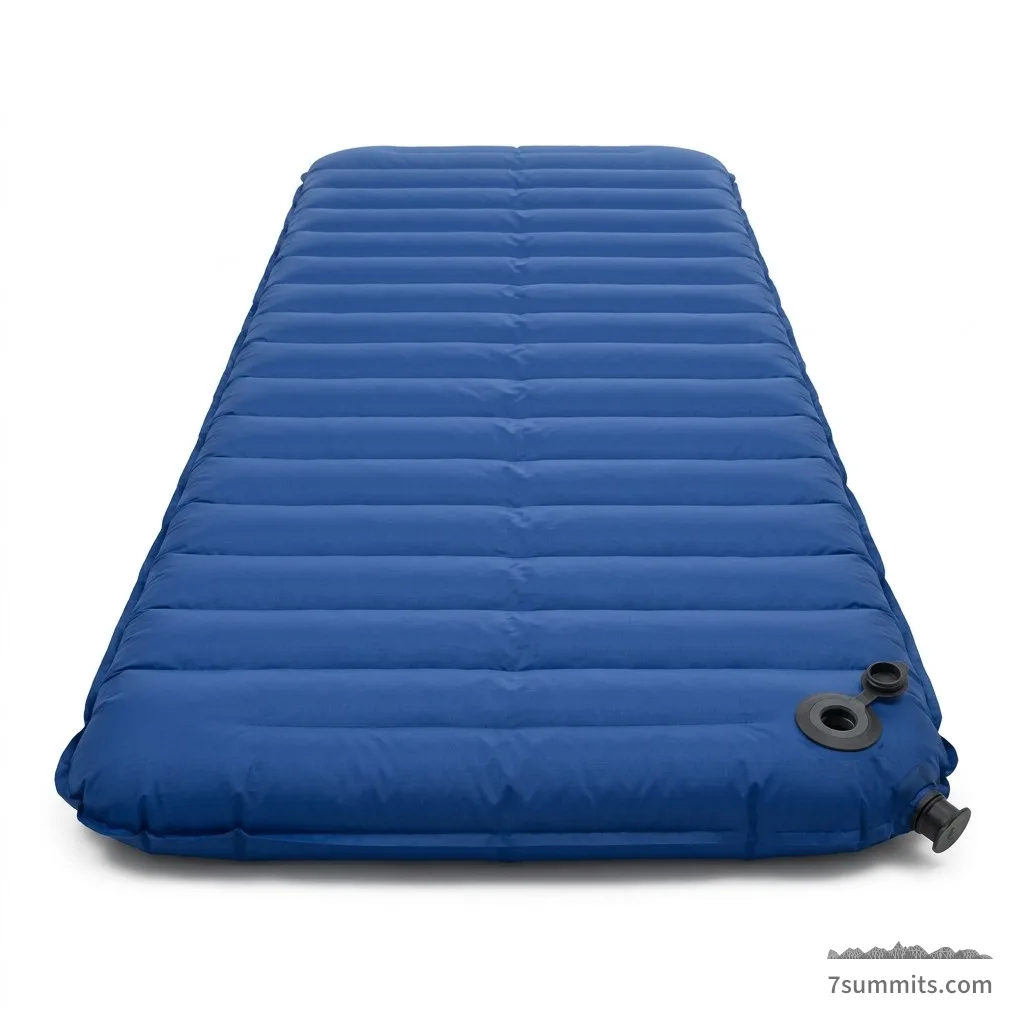 Insulated sleeping pad | In a hut: most have beds or mattresses, askoptional In a tent: full-length inflatable, high R-value, on top of the foam mat |
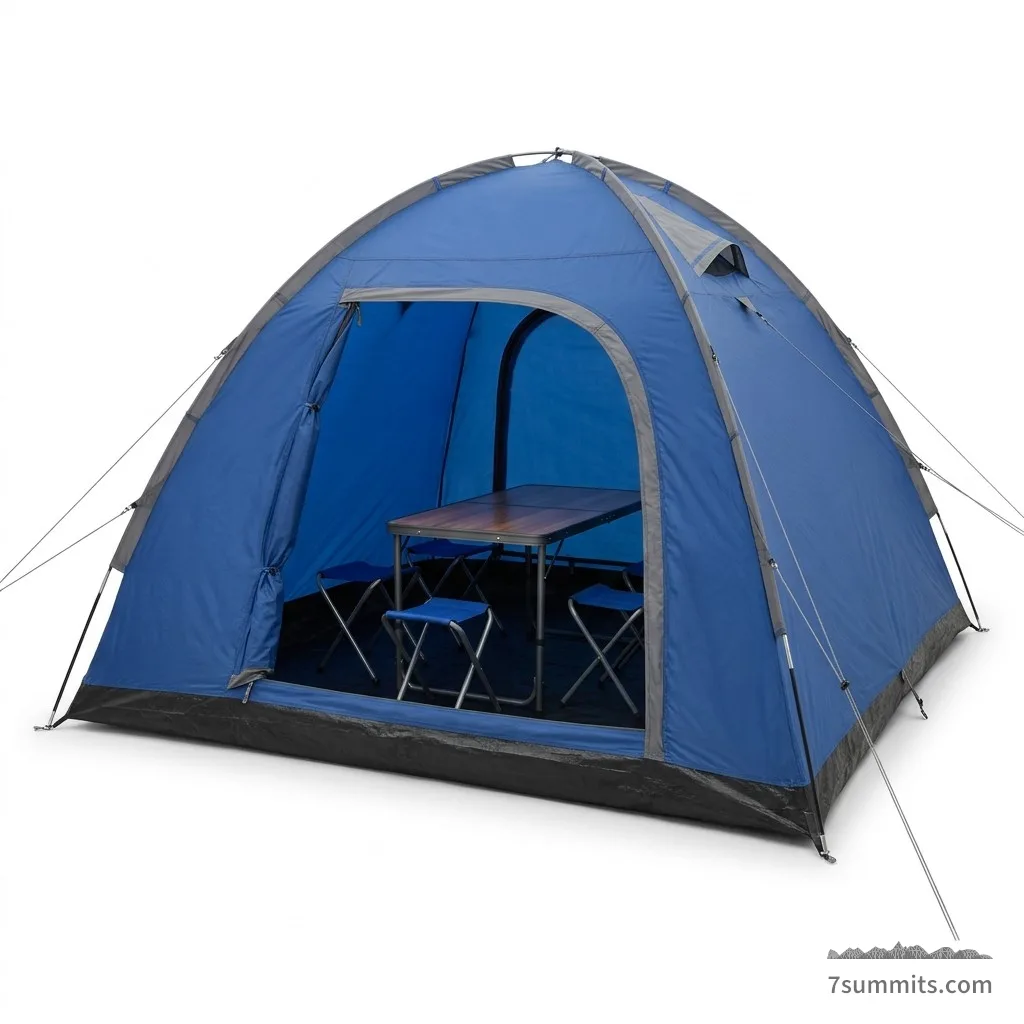 Kitchen or mess tent | Camping with an operator: its dining tent at base camp; the huts have a dining room; an independent team cooks in the tent porch |
| Snow shovel and snow saw | Camping: a snow shovel per tent, for the platform and to dig out after snowfall; your operator's on a guided climb, your own if independent |
| Water bottles or bladder (total capacity, with insulating covers) | Wide-mouth bottles, 2 L in total, with insulated covers; no bladder on summit day: the hose freezes |
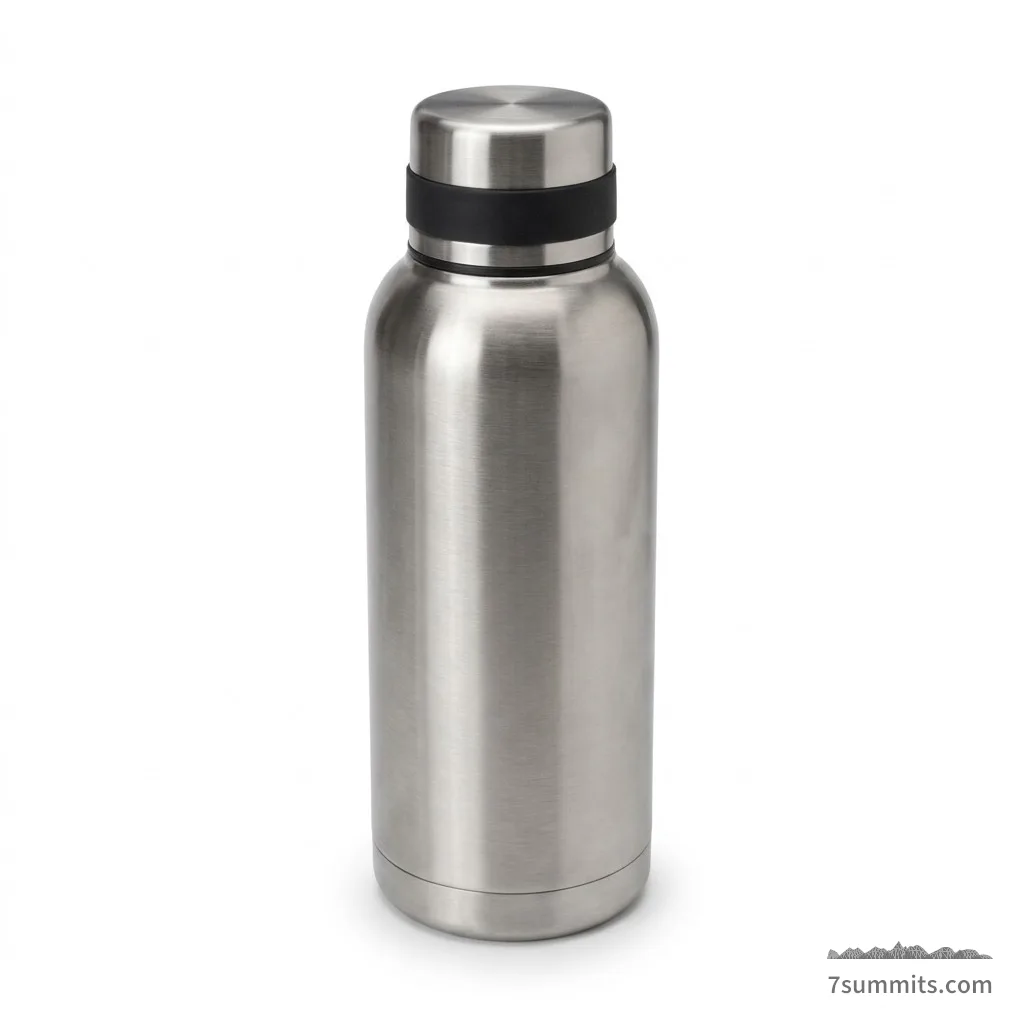 Insulated flask | 1 L vacuum flask for summit day |
| Stove (with lighters and matches) | Guided: your operator's, and the hut kitchens cook · Camping independently: your own gas stove, for cooking and melting all your water; one per tent |
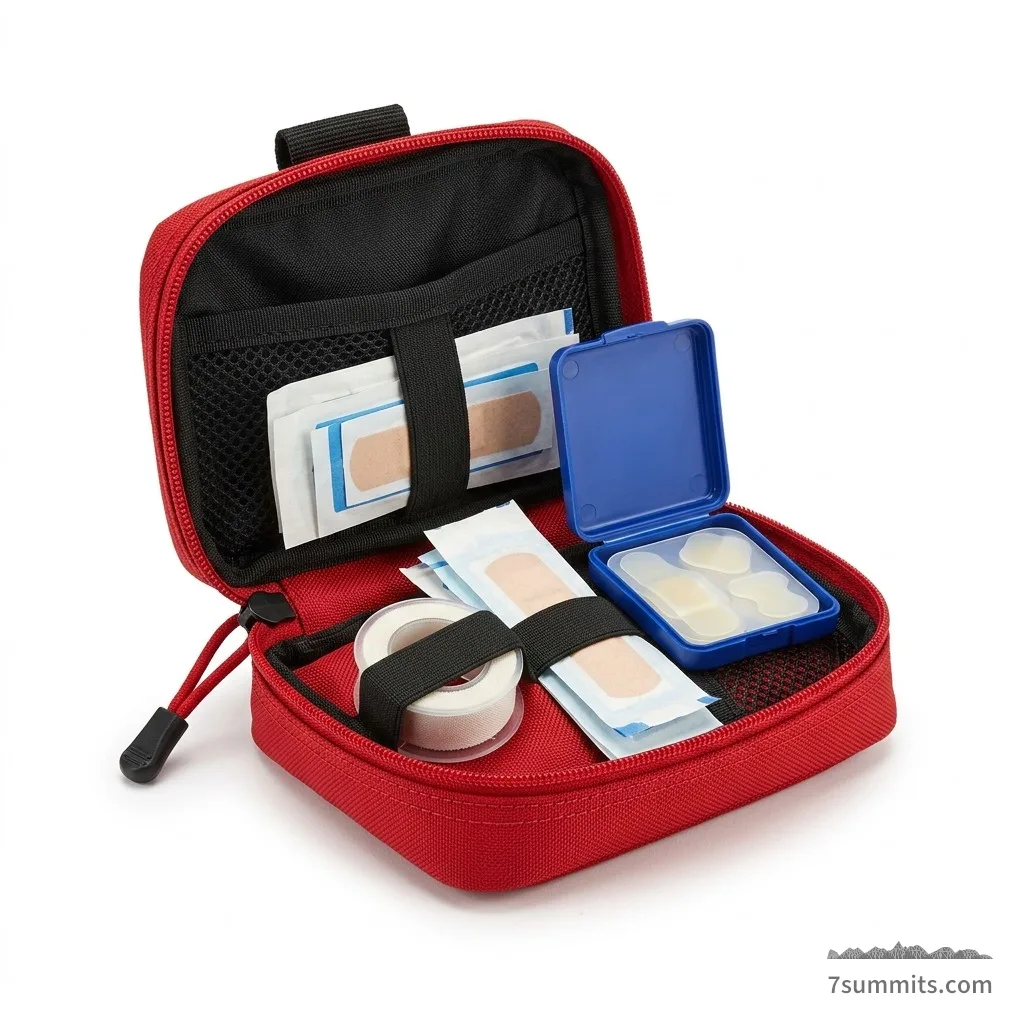 First-aid kit (with blister and dental repair) | A personal kit you can treat yourself with: blister care, painkillers, your altitude medication, whatever the guides also carry |
| Personal medication | Consult your doctor. |
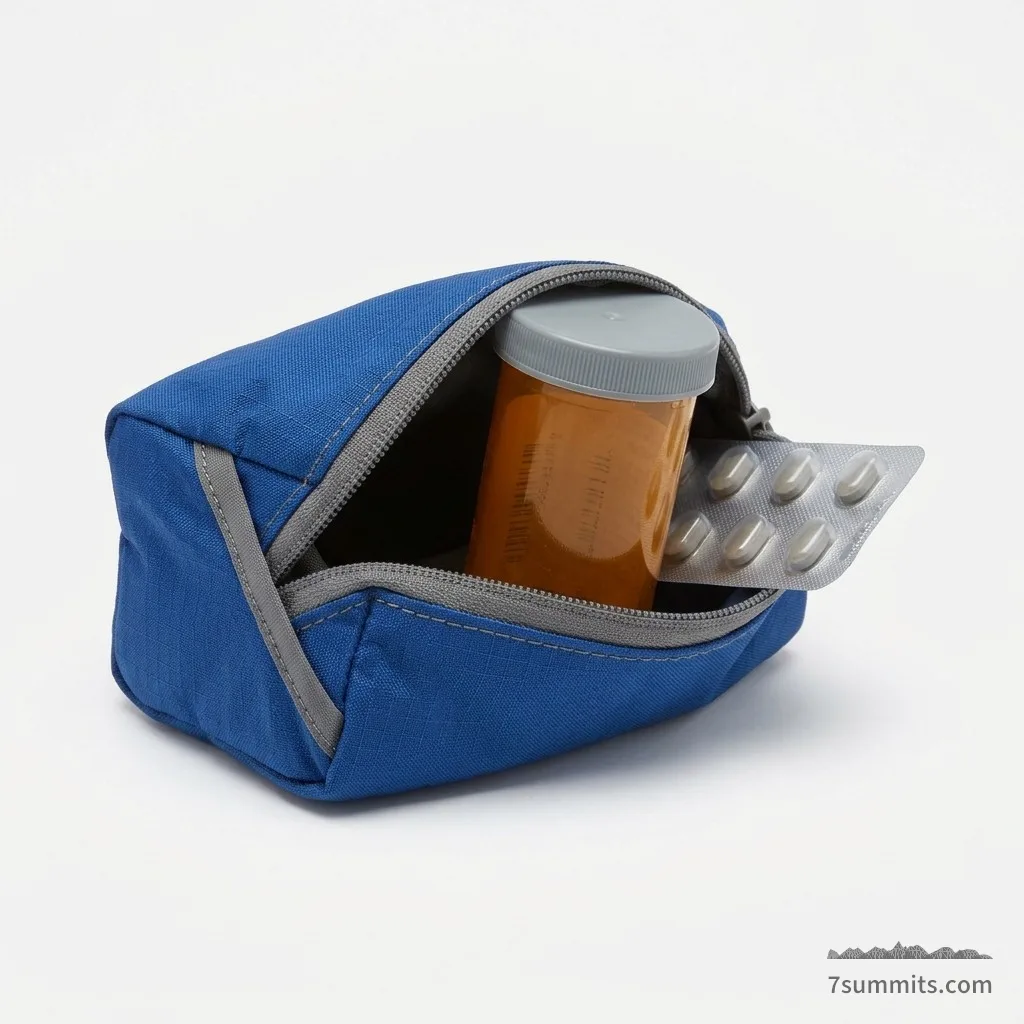 Altitude and travel medication (consult your doctor) | Consult your doctor. |
| Sunscreen and lip balm | SPF 50 sunscreen and lip balm with SPF; the snow reflects it back at you |
| Wash kit, wipes, toilet paper and rubbish bags | Wet wipes, hand sanitiser, toilet paper, a small towel; a bag for your own rubbish: everything you bring into the park comes out with you ⚖The national park's rule is «Принес — забери с собой!», you brought it, take it away: carry a bag for your own rubbish, leave it only in the bins provided, never bury or burn it. Fined under Article 8.39 of the Code of Administrative Offences. SourcePrielbrusye National Park, «Обращение с отходами» (Internet Archive copy of 2024-10-08; the live site refuses automated reads) — эльбруспарк.рф; the park's regulation, Minprirody Order No. 73 of 2015-02-25, para. 10 — legalacts.ru |
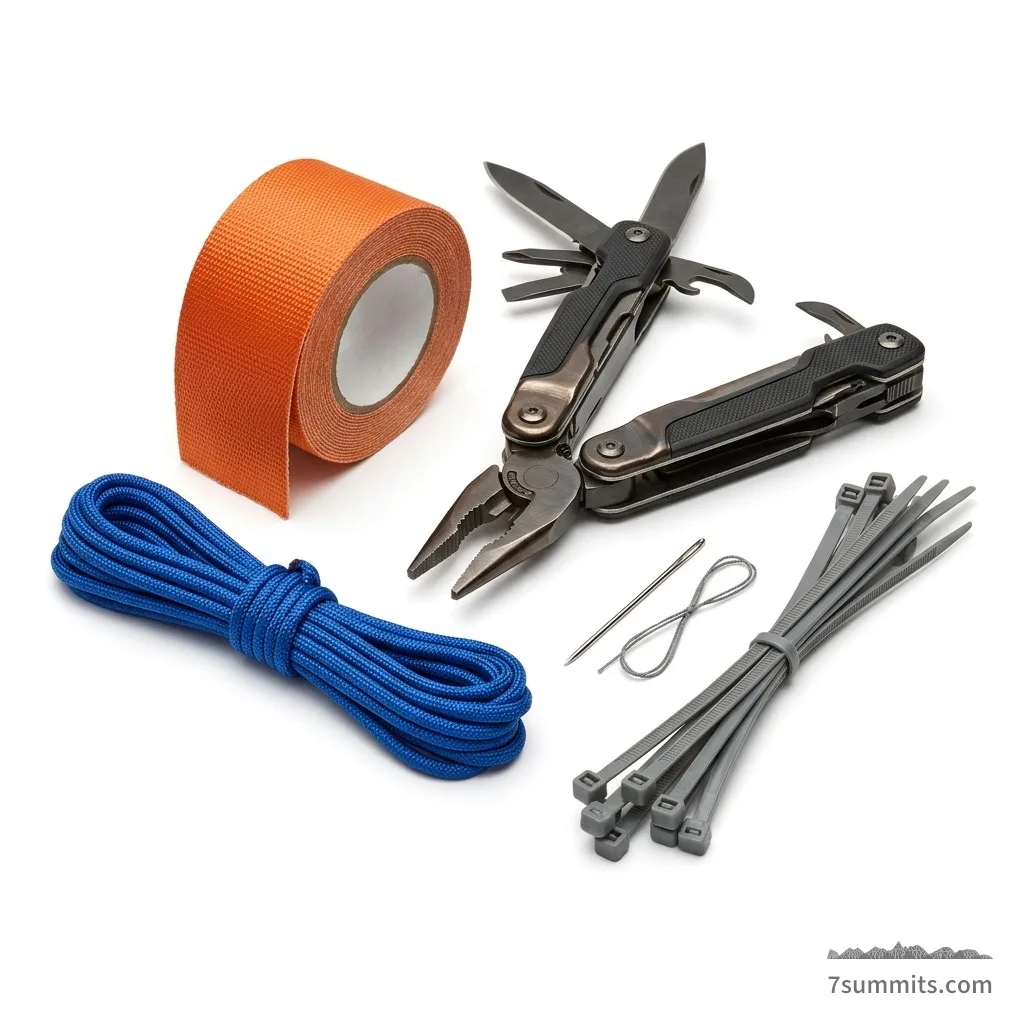 Repair kit and spares | Tape, a needle, a knife, a mat patch kit, spare crampon parts, and a tent-pole splint if you camp |
Optional
| Clothing | |
|---|---|
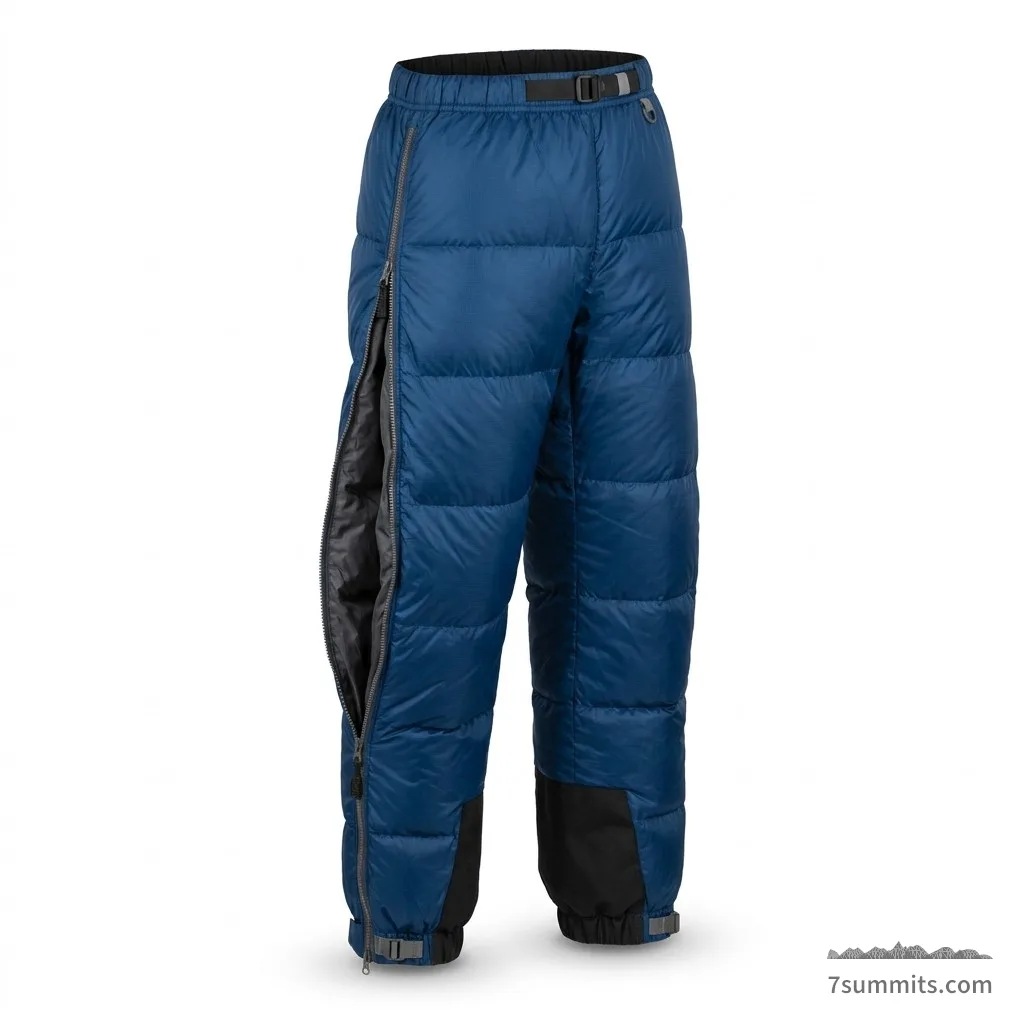 Insulated trousers or bibs | Down or synthetic trousers with full-length side zips for summit day, if you run cold: most lists rely on fleece or softshell under the hardshell |
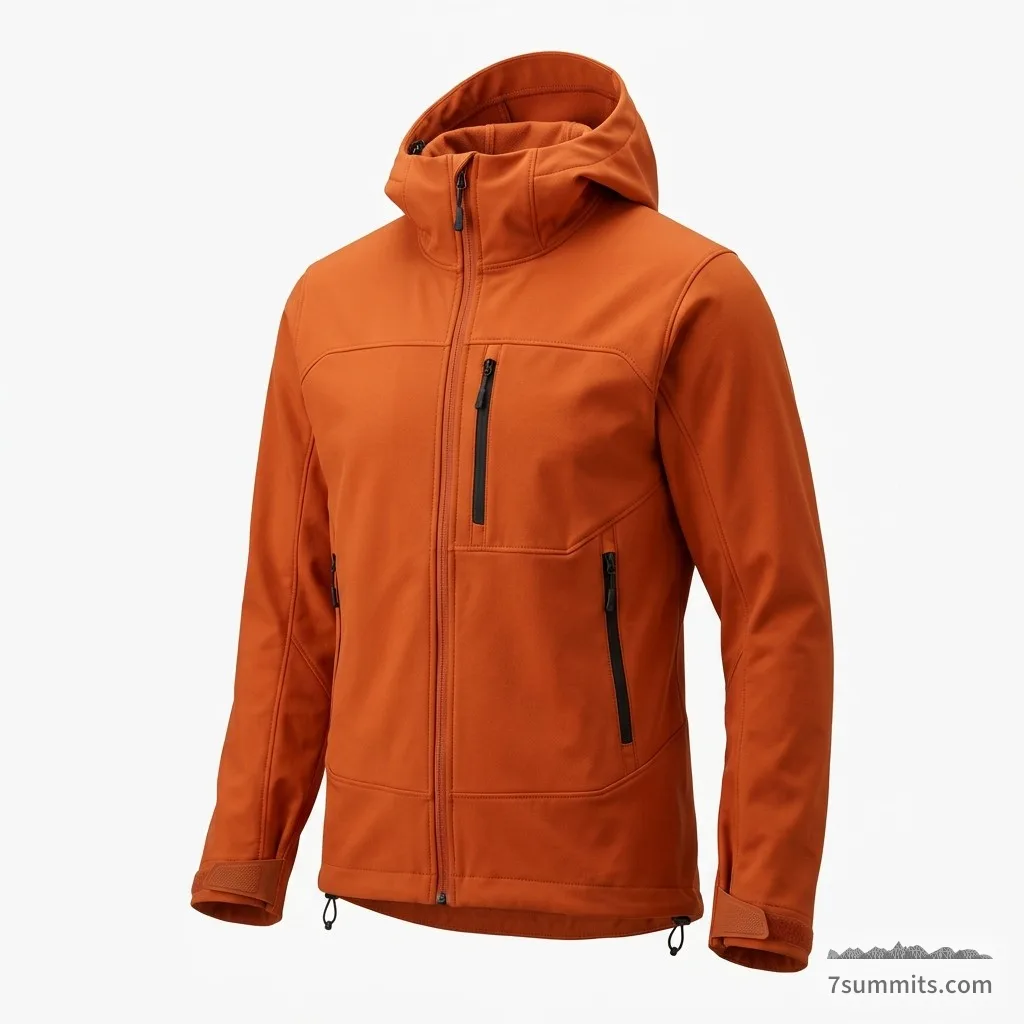 Softshell jacket | A windproof softshell for the valley and windy acclimatization days |
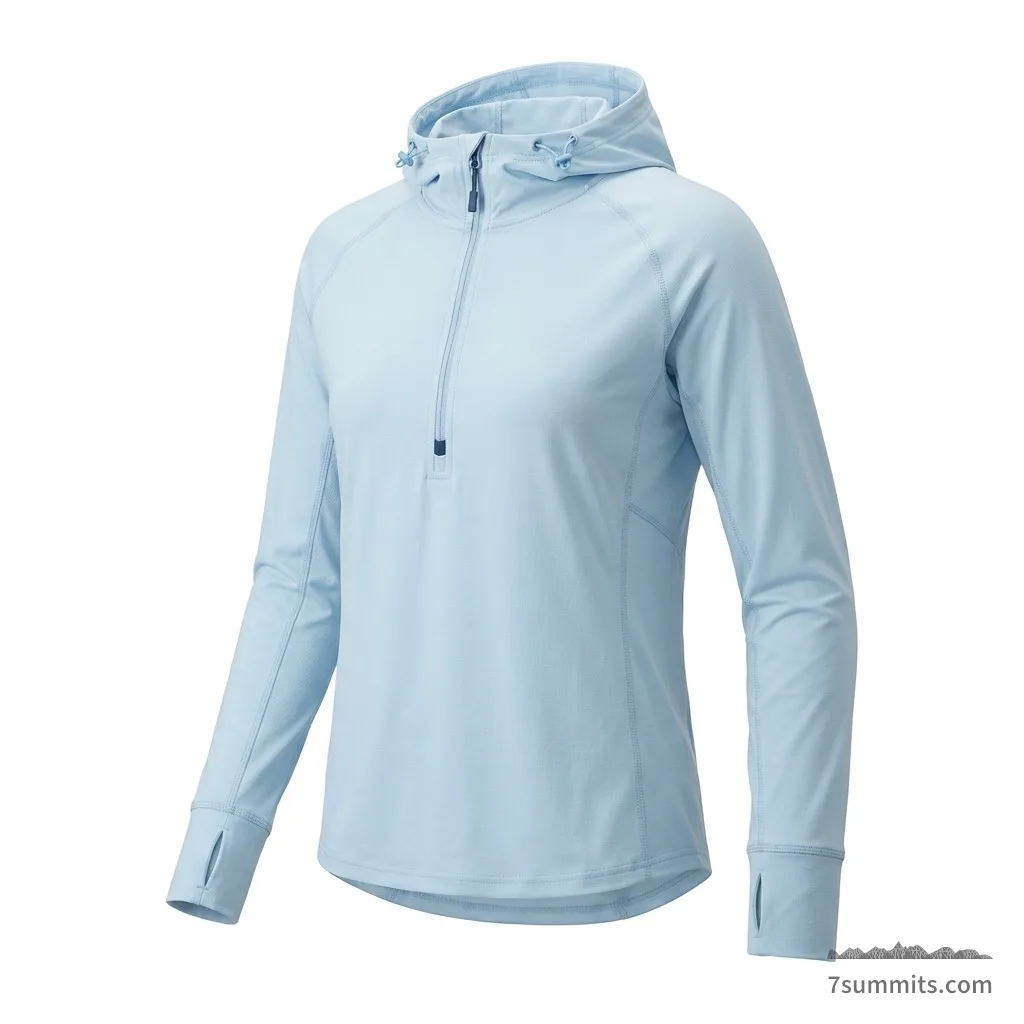 Sun shirt (light, long-sleeved) | T-shirts and a light long-sleeved shirt for the valley |
| Head, hands & feet | |
|---|---|
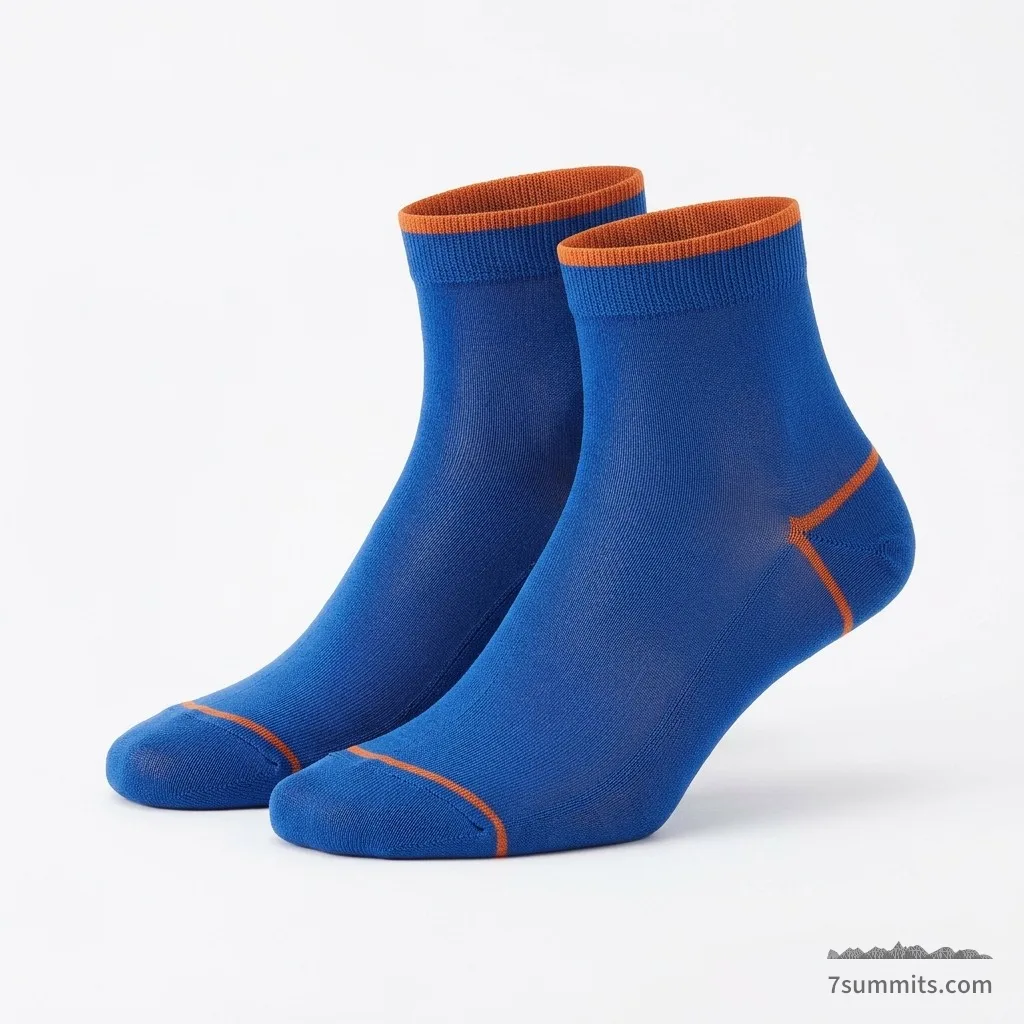 Liner socks (or vapour-barrier socks) | Thin liners under the warm socks, or vapour-barrier socks if your feet run cold |
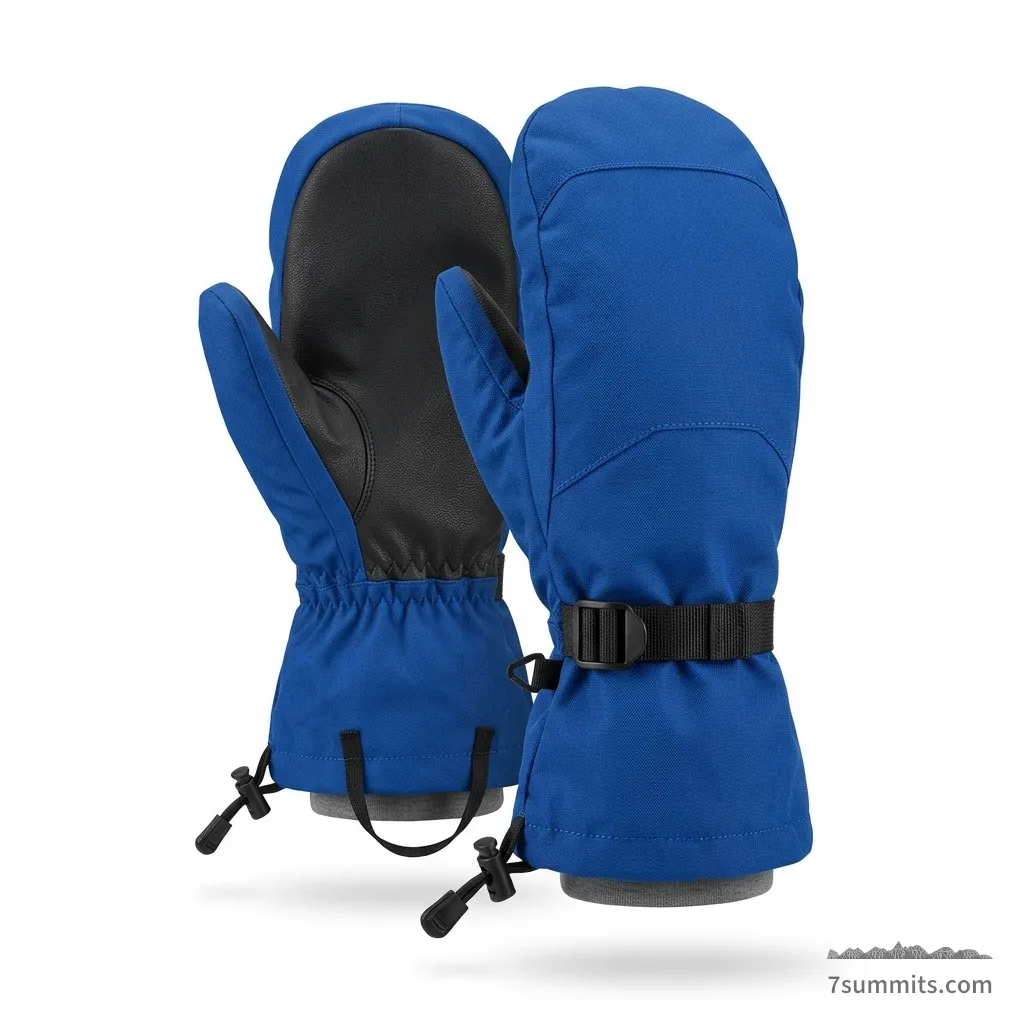 Shell over-mitts | Shell mitts over the warm gloves; the expedition mitts already have a shell |
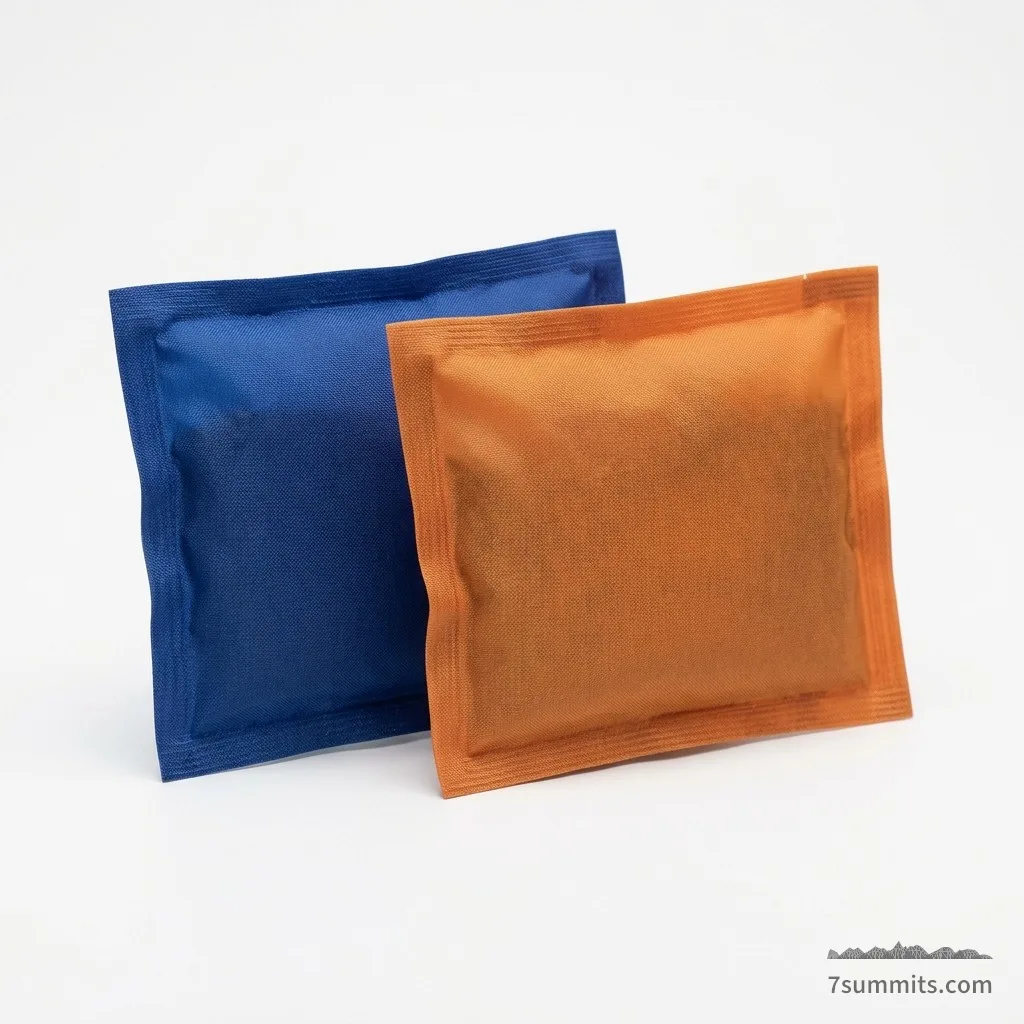 Chemical hand warmers | Chemical warmers for summit day, in the mitts and the boots |
| Gear | |
|---|---|
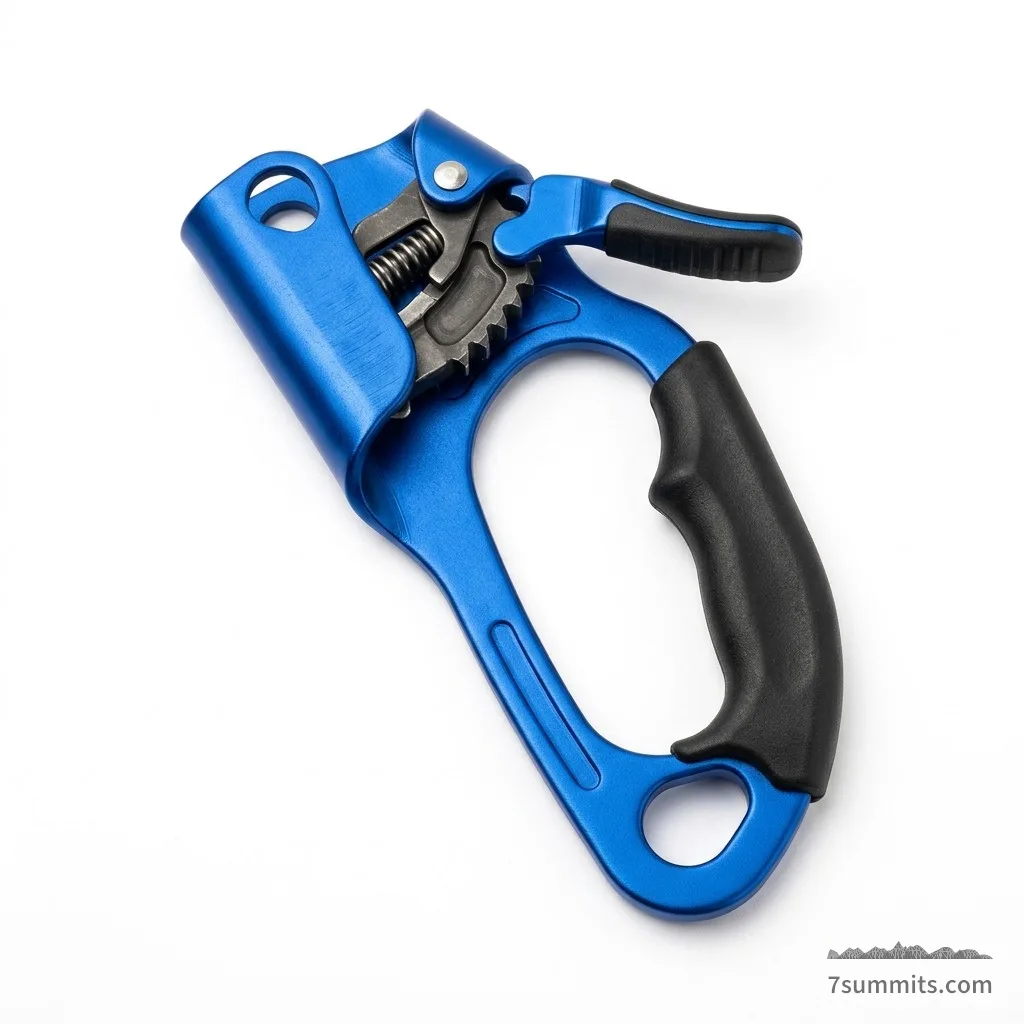 Ascender (jumar) | Only where the route has fixed lines: AlexClimb's west route and traverse, SummitClimb; ask your operator |
| Prusik loops and accessory cord | 6 mm accessory cord for a prusik: ask your operator |
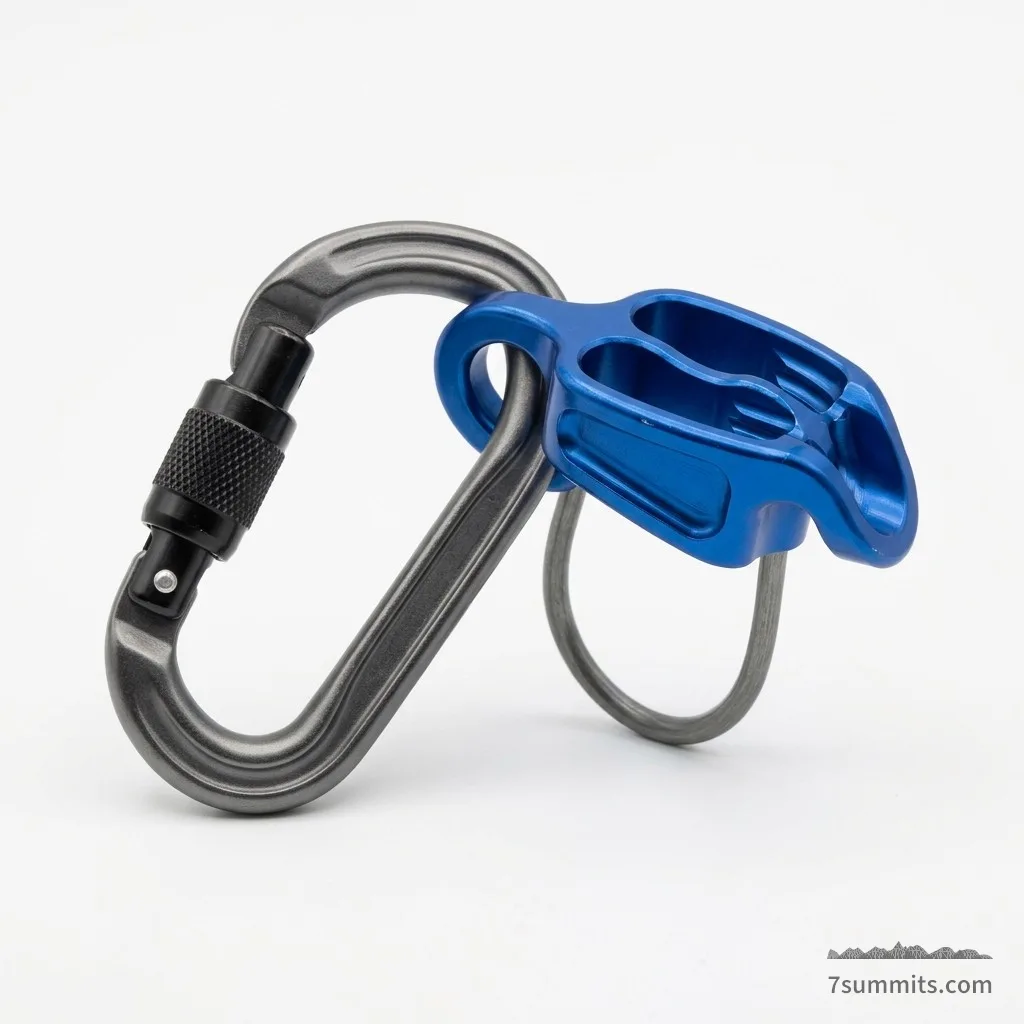 Belay or rappel device | Ask your operator: a figure-8 for the routes with fixed lines (SummitClimb: "tube style devices, i.e. ATC will not work on fixed lines") |
| Snowshoes or skis | Ski programmes only: touring skis or a splitboard with skins; the climb itself is on foot |
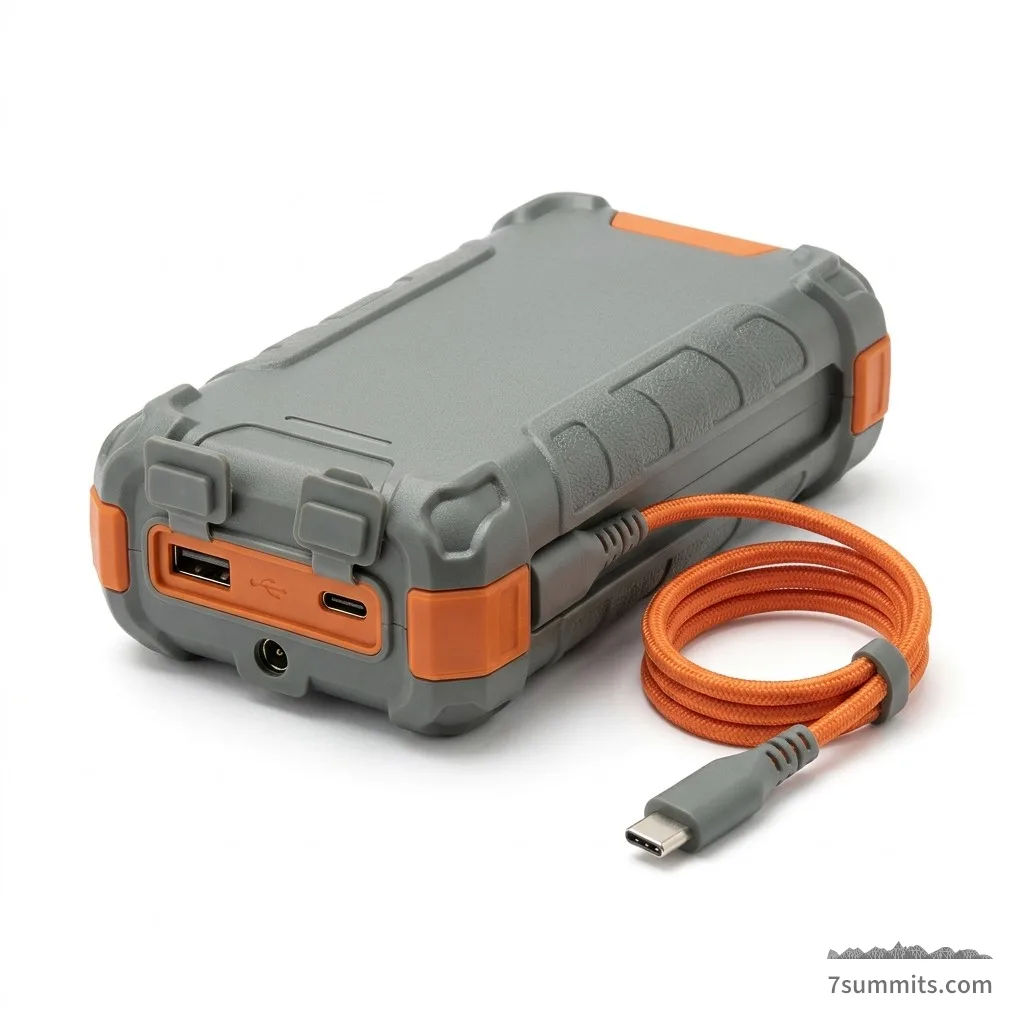 Power bank (or solar panel) | A power bank for summit day and the north route; most south-route huts have power, and plug adapters (types C and F, 220 V) |
| Camp | |
|---|---|
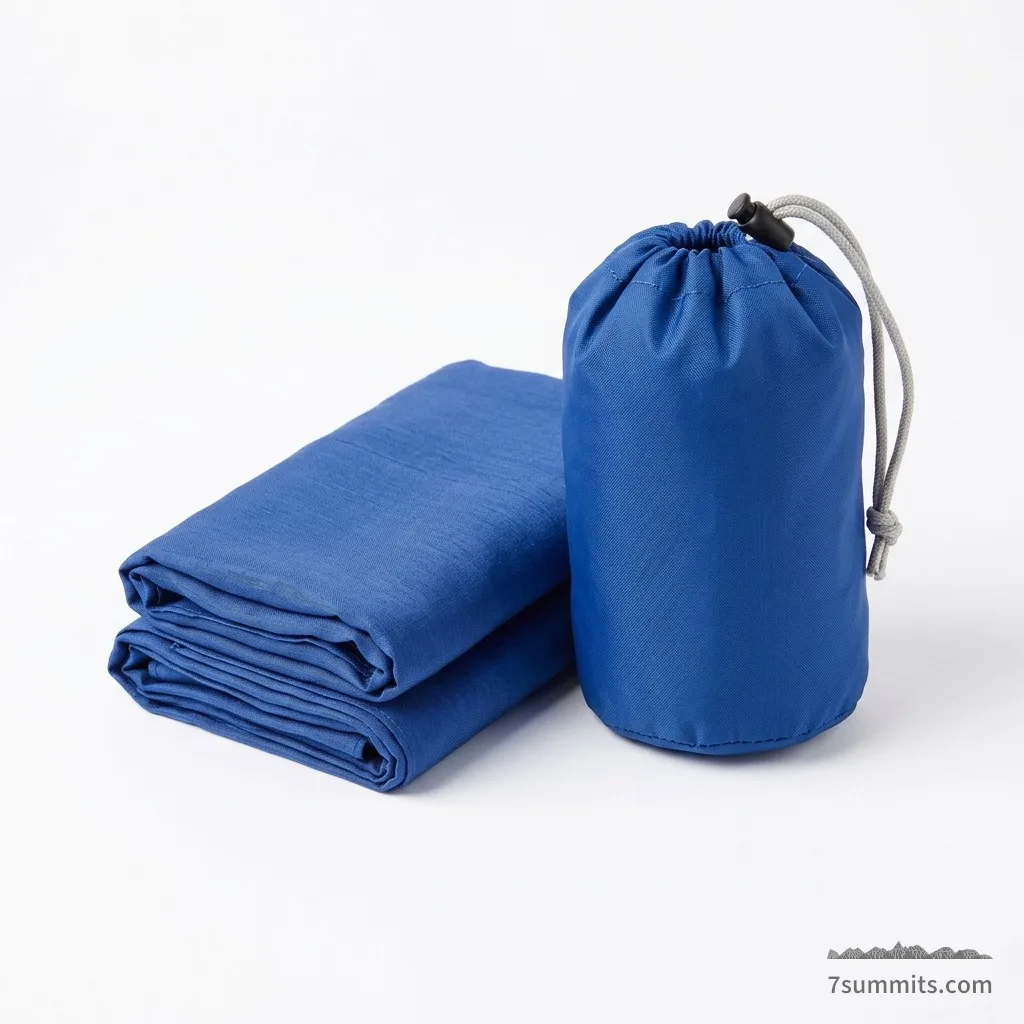 Sleeping-bag liner (thermal or vapour-barrier) | Silk or fleece: keeps the bag clean and adds a little warmth, or a hut's blanket |
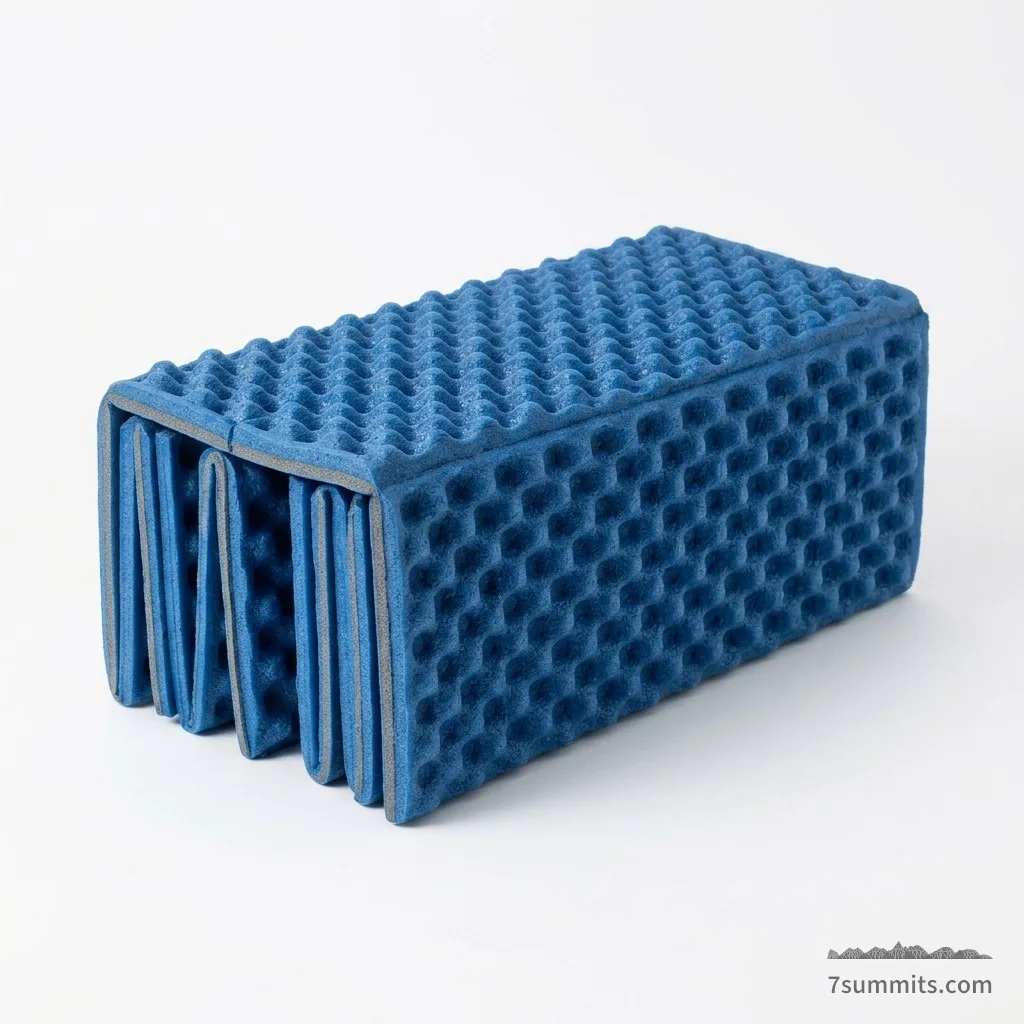 Closed-cell foam mat (second mat) | In a tent: needed: under the inflatable on the snow In a hut: a sit mat is a comfortoptional |
| Survival bag or emergency shelter | Climbing independently: a light emergency bivy sack for summit day; you are hours from the huts, the whiteout is the classic Elbrus accident, and nobody else carries one for you |
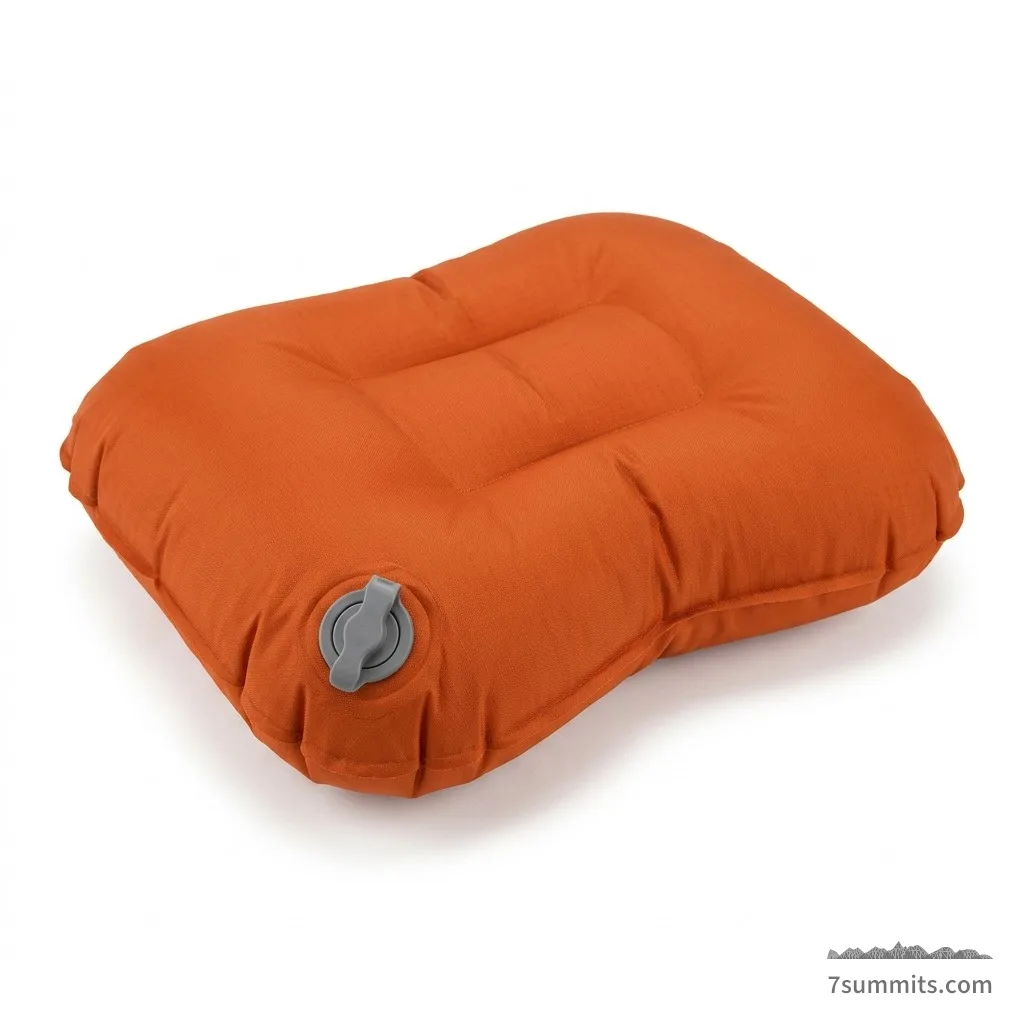 Pillow | Inflatable, or a pillowcase you stuff with the down jacket; the huts often have one |
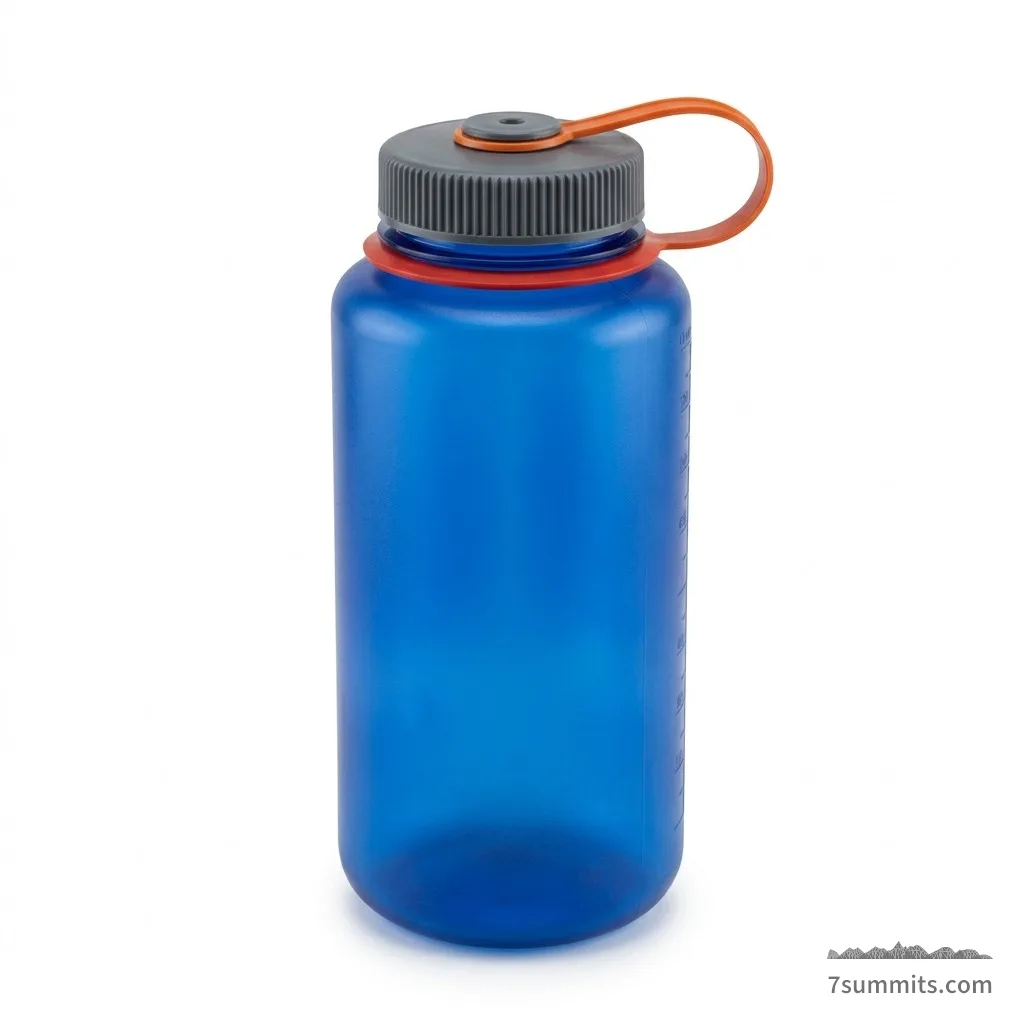 Pee bottle | For nights in the hut or tent: the outhouse is a cold walk; a funnel for women |
| Water treatment | Tablets or a UV pen for stream water in the valley; on the mountain you melt snow and boil it: the huts do it for you, in a tent you do |
| Pots, cup, bowl and spoon | In a hut: your own mug, bowl and spoon where your operator asks · Camping independently: a pot to melt snow, plus your own mug, bowl and spoon |
| Insect repellent | For the valley in summer only |
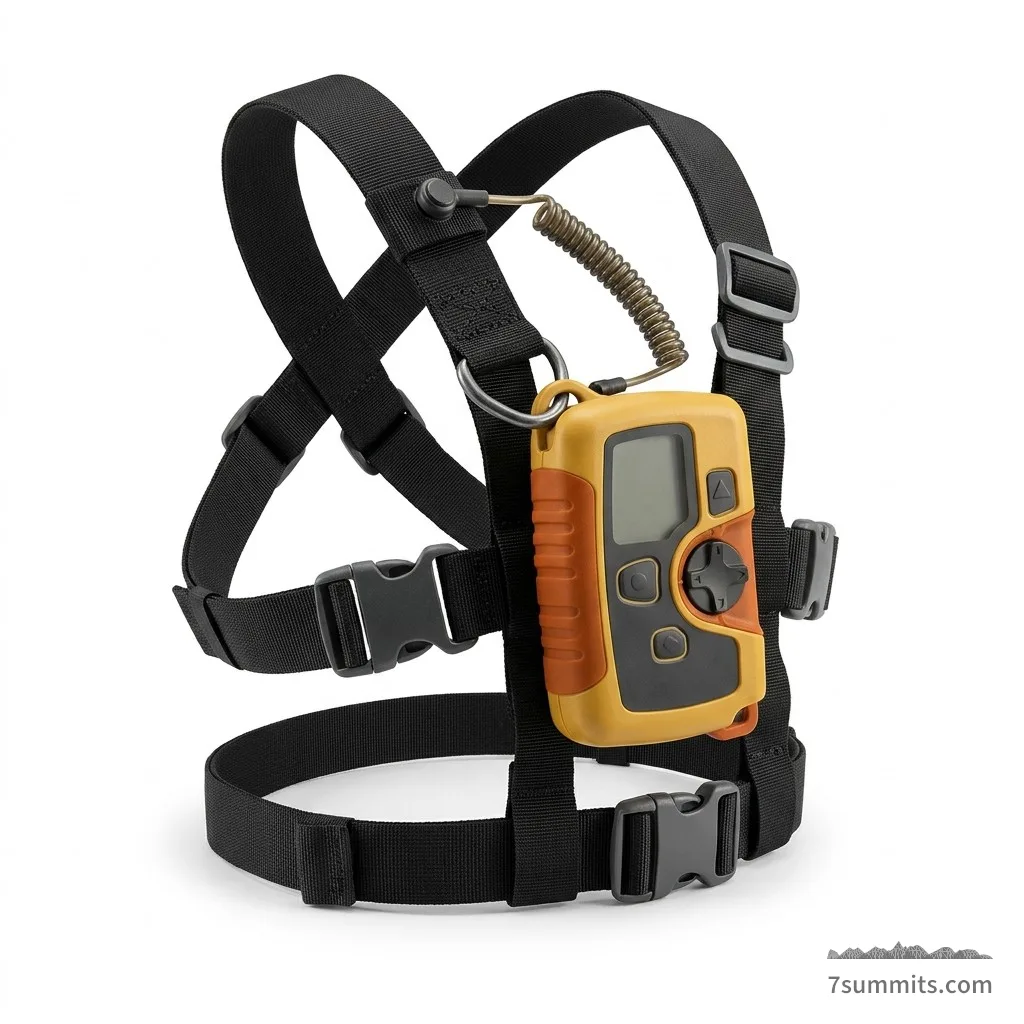 Avalanche transceiver | Ski programmes only (IMG, RMI: "with fresh batteries"): ask your operator |
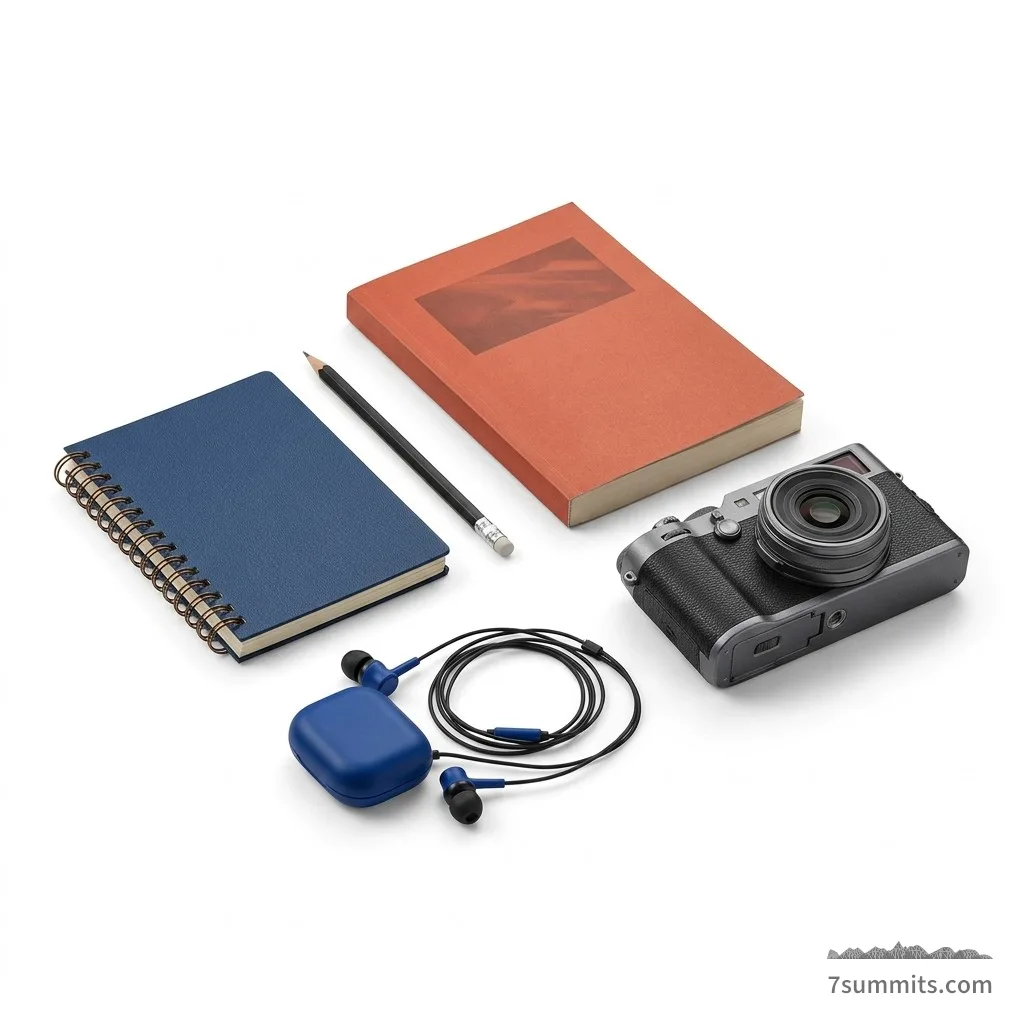 Camera, book, cards, notebook | Camera, a book, cards; weather days in the hut are long |
| Umbrella or rain poncho | A light rain poncho for the valley: summer showers are common (AlexClimb, Alpindustria) |
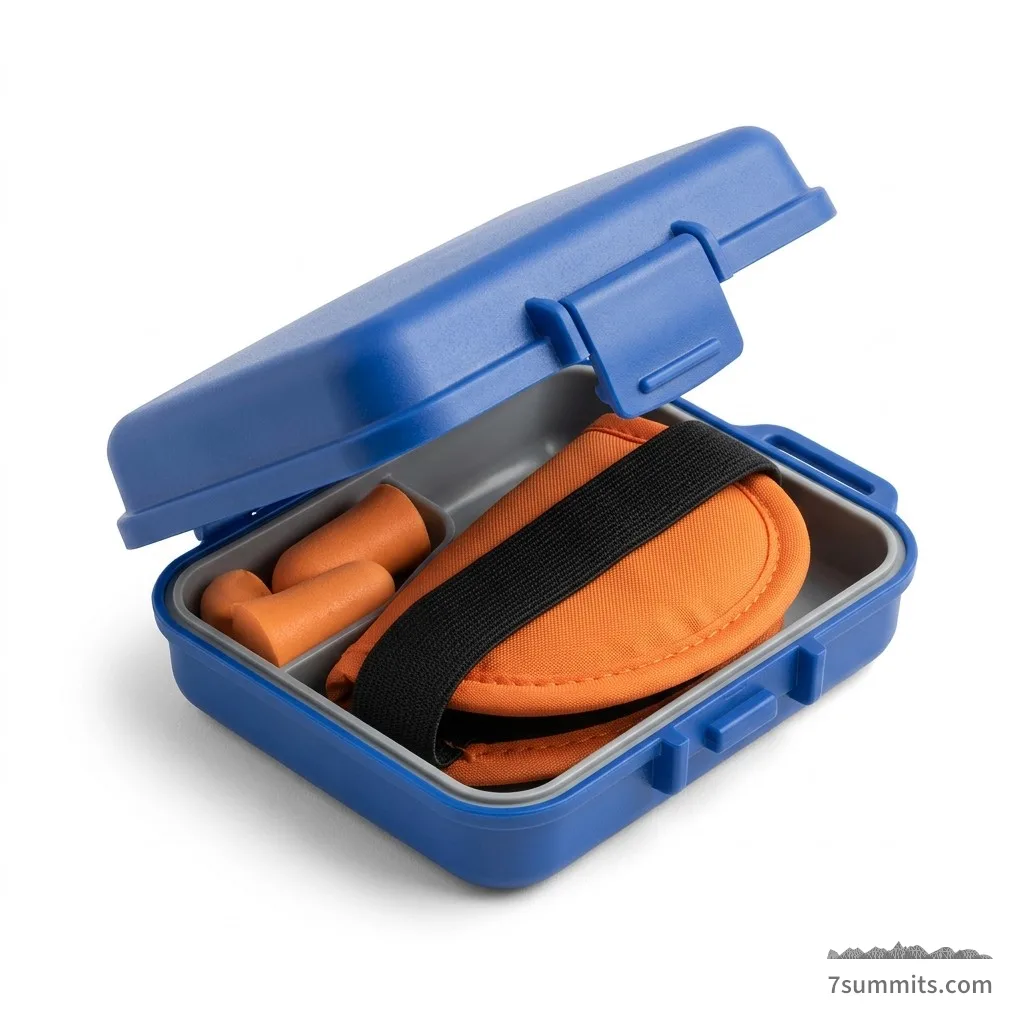 Earplugs and eye mask | The huts are shared rooms: earplugs, and an eye mask |
Team equipment
On a guided climb your operator brings these; an independent team brings its own.
| Gear | |
|---|---|
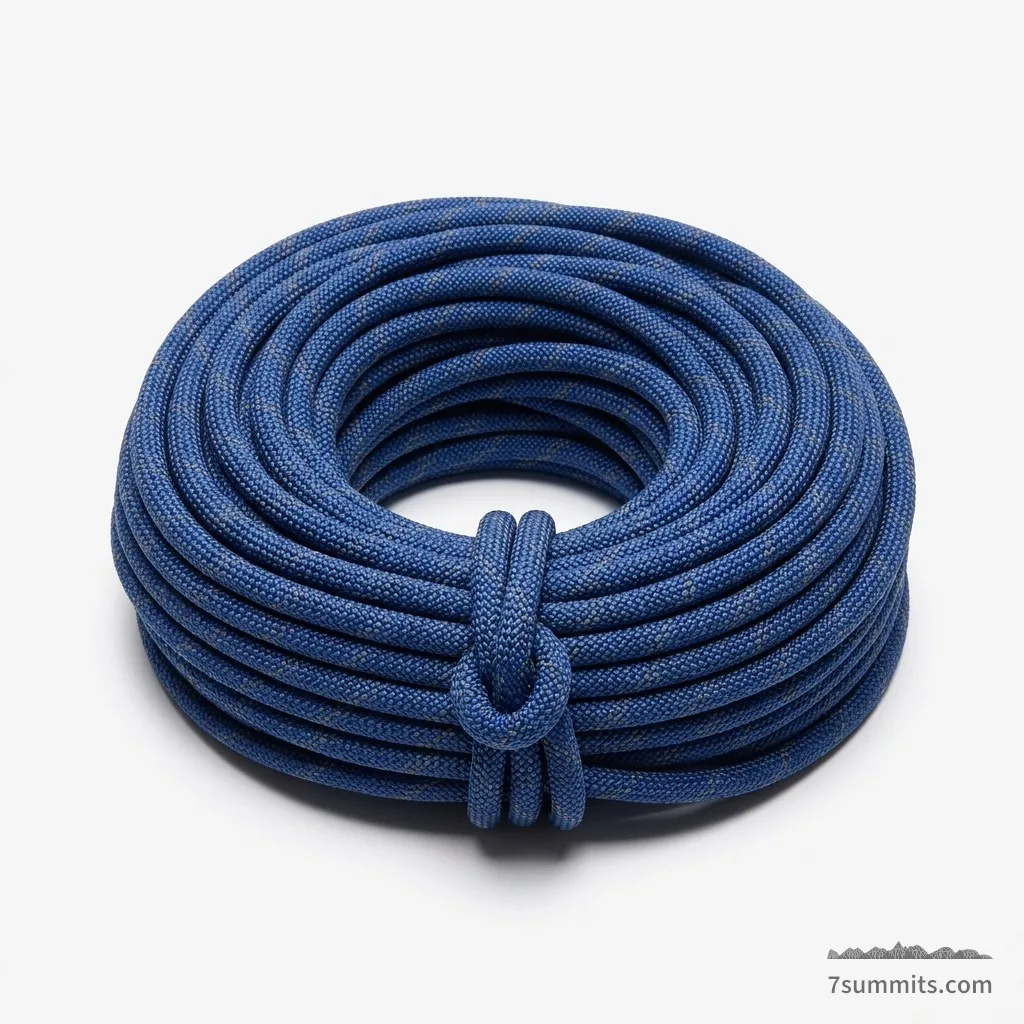 Rope (glacier travel, fixed-line spares) | Your operator's ropes; an independent team brings its own for the glacier: the north side above the high camp is crevassed |
| Snow and ice protection | The team's ice screws and anchors |
| Camp | |
|---|---|
| Tent (with snow stakes where the ground is snow) | In a hut (south route): none: you sleep in the huts or barrelsoptional Camping: a four-season tent with snow stakes; your operator's, or your own if independent: only where camping is allowed ⚖Tents only where camping is provided for: the park's regulation forbids setting up tourist camps and lighting fires "outside the places specially set aside for them". Ask the park or the MChS unit in Terskol where that is before you pitch. SourceMinprirody Order No. 73 of 2015-02-25 (Положение о национальном парке «Приэльбрусье»), para. 10(16) — legalacts.ru |
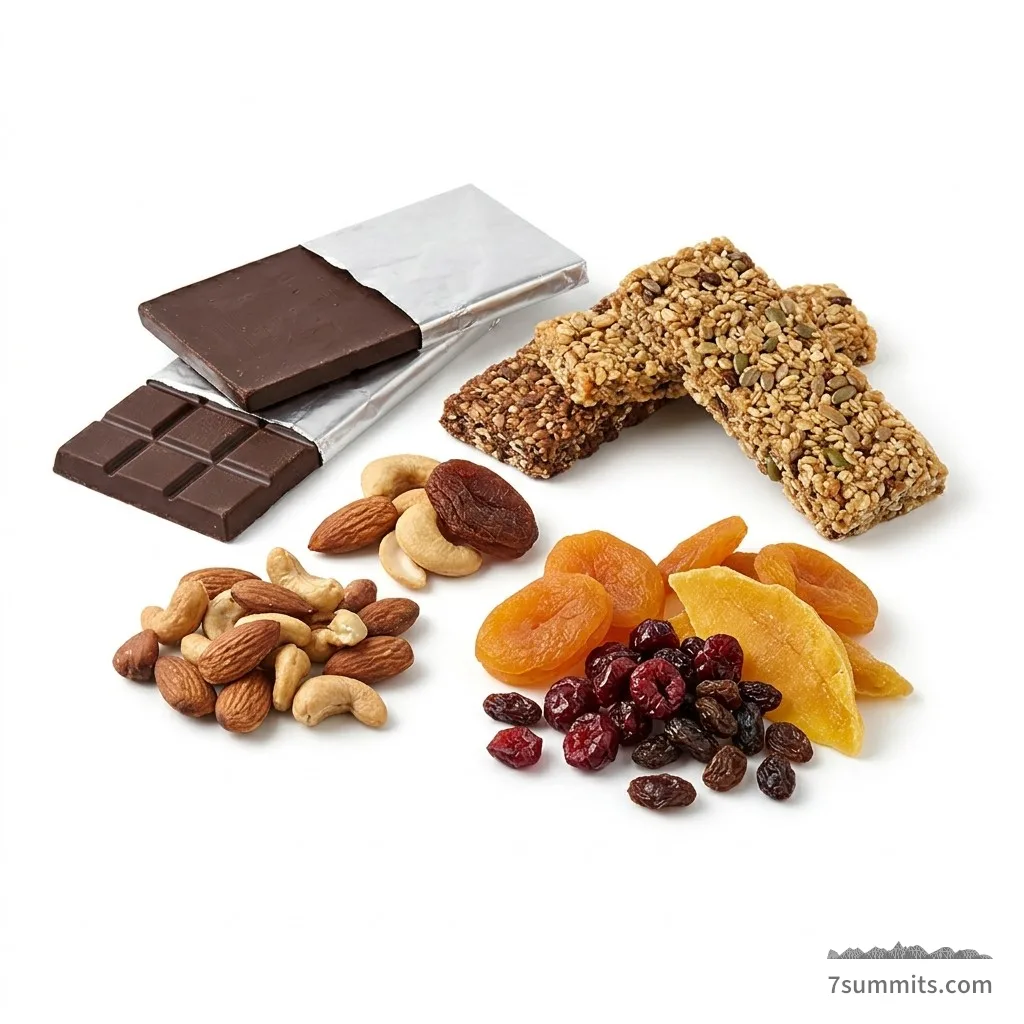 Food and snacks | Guided: meals are the operator's on most programmes, but on some the valley meals or lunches are yours; check · Independent: all yours, bought in Terskol or brought; bring your summit-day snacks and drink powders |
| Stove fuel | Guided: your operator's · Camping independently: gas canisters bought locally (you cannot fly with them); empty canisters come down with you |