








Iranian mountaineer Parvaneh Kazemi spoke at the Set de Cim festival in Gandia, Valencia, and gave an interview to Cadena SER's Hoy por Hoy Gandia. The station describes her as the first woman to reach the summits of Everest and Lhotse in the same season. In the interview she said the hardest climb was not either mountain but the opposition she met at home.
Parvaneh Kazemi, an Iranian mountaineer, was one of the speakers at the Set de Cim festival in Gandia, in the Valencian Community, and afterwards gave an interview to Cadena SER's local morning programme Hoy por Hoy Gandia. Multiple Spanish outlets covering the festival describe her as the first woman to reach the summits of Everest and Lhotse in the same week, in 2012. The written piece is on Cadena SER and the recording is indexed on the station's audio archive.
What she told the programme
Asked about the climb, Kazemi did not lead with altitude. The biggest mountain she had to climb, she said, was neither Everest nor Lhotse. It was facing a society that told her constantly that a woman was not capable of it. She added that she did it, and that she did it alone.
She also described the part of a high climb that nobody films. There are moments, she said, when your mind starts asking what exactly you are doing at that height. She kept going anyway, and finished.
The programme's own framing is that Kazemi became a reference point for feminism without setting out to be one, and a lesson for the people who underestimated her. That reading belongs to Cadena SER rather than to Kazemi, who in the quoted passages talks about the opposition itself and not about what it made her into.
The festival
Set de Cim ran as three sessions from 28 to 30 September, Monday to Wednesday, at the Teatre Serrano in Gandia. Cadena SER describes it as a meeting point for people who care about the mountains and the outdoors, bringing together names from mountaineering, from climbing, and from the film side of high-altitude expeditions. Kazemi appeared as one of the speakers.
That combination is the standard shape of a European mountain festival in autumn: an evening of talks, an evening of films, and an audience that is mostly local. It is also where a lot of climbing history actually gets told first, in a regional theatre, in front of a few hundred people, long before any of it is written down in English.
The Everest and Lhotse double
The claim reported around the festival is specific: both summits, same week, first woman, in 2012. The exact dates of the two summit pushes are not given in the coverage.
We think a record line is worth more when the dates travel with it. A phrase like "first woman to" moves very quickly between outlets, and the exact summit dates that would let anyone check it usually stay behind. That is not a criticism of Kazemi, who was answering questions on a radio programme about her own experience. It is simply the reason we are reporting the claim as the coverage's wording, and leaving the precise dates open.
What is easy to say is why the double is attempted at all. Everest and Lhotse share much of their approach, and a climber already acclimatized and already high on the mountain is in the best position they will ever be in to add the second summit. The practical detail of the route, the camps and the timing is in the Everest guide, which is a better place to read it than a news post.
Where this sits on this site
7summits.com keeps the list of everyone who has completed the 7 summits, and an Everest and Lhotse double in one season is a different achievement from that list. The two overlap at exactly one mountain. A climber who has stood on Everest has the hardest of the 7 summits behind them in altitude terms, and nothing else in the set is at that height.
For readers who are working out what any of this means for their own plans, the 7 summits challenge page explains what the set is and where the two versions of it differ. The statistics page covers what the record shows about who finishes and in what order. Anyone thinking about the altitude side of it should start with the FAQ, which covers acclimatization and the warning signs that matter, and then talk to a doctor who knows the subject.
What is confirmed and what is not
Confirmed by the Cadena SER report and other coverage of the festival: Kazemi spoke at Set de Cim in Gandia, the festival ran across three sessions from 28 to 30 September at the Teatre Serrano, and she gave an interview to Hoy por Hoy Gandia in which she described the social opposition she faced as the harder climb.
The exact summit dates of the 2012 Everest and Lhotse climbs are not given in the report, and neither is the context of the word she used for climbing alone, which in Spanish can mean without a partner or without organized support. Those stay open here until a source with the dates in it turns up.
The Spanish-language interview is short and worth listening to in full if you read or understand Spanish. The audio page carries the segment alongside the rest of that week's Gandia morning output.
This story is part of This week on the 7 summits: 28 September – 4 October 2026, the week's news in brief.
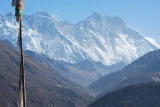
Header photograph: Mt Everest and Lhotse - panoramio.jpg by ambo kangaroo, CC BY-SA 3.0 (licence), via Wikimedia Commons.