







#104: Francis Slakey


Peaks climbed

Journey
Carstensz Pyramid list (Messner): #76
7summits journey
7summits timeline
Books & films by Francis Slakey
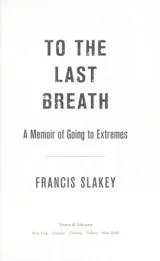
A journey to the most extreme points on Earth and deep inside the human spirit Before Georgetown physics professor Francis Slakey decided to climb the highest mountain on every… Read more →: To the Last Breath
Books & films about Francis Slakey
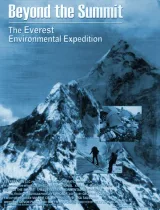
National Geographic documentary (narrated by Sharon Stone) about Slakey's unguided environmental Everest expedition.
Finisher badge

Biography
Francis Slakey is an American physicist, science-policy specialist and author. He was born on 3 August 1963 in the United States and holds a PhD in physics, earned in 1992 from the University of Illinois at Urbana-Champaign, where his research focused on the optical properties of high-temperature superconductors.
Climbing career
Slakey climbed the highest peak on every continent between 1997 and 2002, completing the round with Carstensz Pyramid. He reached the top of Everest in 2000 on an unguided expedition that hauled 700 spent oxygen bottles and a half-ton of trash off the mountain. That 2000 Everest Environmental Expedition was the subject of the documentary "Beyond the Summit."
Beyond the 7 summits, Slakey set out to surf a wave on every ocean, a project that took roughly 12 years to complete alongside his mountaineering. He has described himself as the first person in history to both climb the highest mountain on every continent and surf every ocean. His travels for the project included hitchhiking across Central Asia, living with Masai communities in East Africa, climbing the granite face of El Capitan in Yosemite, and skiing in Antarctica.
He wrote about the journey in the memoir "To the Last Breath: A Story of Going to Extremes," published by Simon & Schuster in 2012. In the book he traces how the expeditions changed his outlook on life and relationships, describing an early self-portrait as someone who had shut himself off from other people.
Academic and policy career
Slakey has taught as the Upjohn Lecturer on Physics and Public Policy at Georgetown University, where he was also co-director of the Program on Science in the Public Interest. At the American Physical Society he has served as associate director of public affairs and later as chief external affairs officer, overseeing government affairs, international affairs, public engagement and development. His technical publications have received more than 500 citations, and he has written on science policy for outlets including Scientific American and HuffPost.