








#69: Yong-Feng Wang


Peaks climbed

Journey
Carstensz Pyramid list (Messner): #53
* Estimated date, duration, or age: only the year (or year and month) was recorded; the exact day is unknown.
7summits journey
7summits timeline
Books & films by Yong-Feng Wang
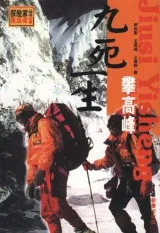
本书记述了作者征服世界最高峰的经历和他们团结一致战胜艰难困苦的感人故事。
Finisher badge

Biography
Early life and introduction to climbing
Wang Yongfeng was born in 1963 in Jining, in what is now Ulanqab, Inner Mongolia. In 1980 he enrolled at the Wuhan College of Geology. In 1984 he joined the college's mountaineering team together with a fellow student, Li Zhixin. That same year the team climbed Anyemaqen, in Qinghai province, and reached the summit.
Everest
In 1988 Wang and Li took part in a joint Chinese-Japanese-Nepalese expedition that attempted to cross Everest from both sides at once. Li Zhixin climbed from the north side and reached the summit. Wang climbed the south col route and turned back before reaching the top.
In 1993 Wang returned to Everest with a joint expedition from mainland China and Taiwan and reached the summit on 5 May. Short of oxygen after a teammate used up his supply, he lost the sight in his right eye soon after leaving the top camp at 8,680 metres, but kept climbing. On the descent he lost contact with his team for 28 hours before reaching them alive; frostbite later cost him three toes on his right foot.
He summited Everest twice more: on 24 May 2007, leading a Chinese amateur expedition, and on 8 May 2008 with the team that carried the Beijing Olympic torch to the top.
Completing the 7 summits and the poles
Wang and Li Zhixin went on to climb the highest peak of every continent, finishing with Carstensz Pyramid in 1999. As of 2020, sources described them as the only two Chinese climbers to have completed the 7 summits, and they became known in China as the "twin peaks of mountaineering". Wang also travelled on foot to the South Pole and the North Pole, completing the wider "7+2" challenge of the 7 summits plus both poles.
Later career
After his climbing expeditions, Wang became director of the International Affairs Department of the Chinese Mountaineering Association and captain of the Chinese national mountaineering team. He later became vice-chairman of the Chinese Mountaineering Association. As of March 2026 he was serving as a member of the 14th National Committee of the Chinese People's Political Consultative Conference, speaking publicly that month about the development of outdoor sports in China.
Image credits: © 中国新闻社 · CC BY 4.0 · Wikimedia Commons · modified