








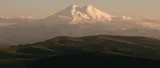

A 40-year-old climber and his 11-year-old son fell on the eastern slope of Elbrus during a descent. Twelve rescuers brought the injured father and the boy's body down to Terskol, where the man was passed to doctors. The emergency service in Kabardino-Balkaria says a safety rope gave way, and a formal check into the incident is open.
Twelve rescuers worked on the eastern slope of Elbrus to bring down a 40-year-old climber and the body of his 11-year-old son. Both were taken to Terskol, in the valley below the mountain. The man was handed over to doctors there. The account comes from the press service of the emergency ministry for Kabardino-Balkaria, reported by Piter.tv.
Father and son were found on the eastern slope the day before the evacuation, and the move down the mountain was held until morning. An investigative and operational group worked at the scene. A formal check into what happened is under way.
What is known about the fall
The fall happened during the descent. The preliminary account from the emergency service is that the pair's safety rope gave way. The father was left with multiple fractures. The boy did not survive. The same report gives 19 July as the date of the fall.
The report also states that, before setting out, the man did not heed warnings from other climbers the two met on the way. That is a preliminary finding and part of what the open check will test. We are not going to go further than that. Two people were on a slope, one of them a child, and the rest is for the investigators and the family.
Holding an evacuation until first light is an ordinary decision in mountain rescue, and we would not read the overnight wait as anything unusual. Ground teams moving an injured person on snow in the dark take on risk of their own, and a stretcher carry is slower and rougher than most people picture.
A rope between two people is not a handrail
This is the part worth saying to anyone reading who is planning Elbrus with a partner. A rope joining two people on an open snow slope does nothing on its own. It holds when someone can stop the load: a belay off a placed anchor, or an ice axe arrest in snow firm enough to take it. Without one of those, a slip is simply shared between the two people on the ends.
That matters most on the descent, which is when legs are tired and the snow has usually softened through the day. Going down is where parties on Elbrus most often get into trouble, and it is the half of the day that gets the least planning. If a rope is going to be used, the team needs to have agreed in advance what it is anchored to.
The emergency service's wording points to a rope failure rather than a slip that the rope could not hold. Which of those it was should come out of the check.
The mountain itself
Elbrus has two summits, and the eastern side of the mountain is a different proposition from the lift-served southern flank that most ascents use. The approaches, the normal lines and the descents are set out in our Elbrus guide, which is the better place for the detail than a news post. Anyone weighing up a guided trip can start from the operator list by peak.
Elbrus is reachable in a way that very few big mountains are. There is a cable car, there are snowcats, and a fit person can stand on the summit within days of arriving in the valley. None of that changes the weather, the altitude or the slope angle above the saddle. The mountain is easy to get to and not easy to get off.
The same Piter.tv report mentions a separate death: a climber from St Petersburg who became unwell during an ascent of Elbrus and died before rescuers reached him. No date or further detail is given for that case.
Children on big mountains
Families ask us about this often, and the honest answer is that there is no single age line that makes a mountain safe. Altitude affects a young body differently from an adult one, and the warning signs are harder to read in a child who is tired, cold and trying to keep up with a parent. Our FAQ covers altitude illness and what to do about it, and that is where to start.
What we will say plainly is that the decision cannot be made from a trip report. It needs people who know the particular child, the particular route and the conditions on the day, and it needs a turnaround plan that someone is willing to use. The descent has to be part of that plan from the beginning, not the thing that happens after the summit photo.
Most people who go to Elbrus come home. The ones who get into difficulty are rarely undone by the climbing itself. They are caught by weather that arrives faster than expected, by altitude that was gained too quickly, or by a descent begun too late in the day with nothing left in reserve. Each of those is a planning decision made in the valley, days before anyone puts on crampons.
The check into this incident may change parts of the preliminary account, including the question of what the rope was attached to. What is settled is that an eleven-year-old boy died on Elbrus and his father was carried off the mountain with multiple fractures. Readers heading there this season can take the descent seriously, and can make sure that everyone in the party knows what the rope is for.