








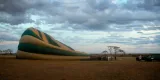

Inflating the balloon at dawn, Serengeti, Tanzania
Trips & expeditions
Should I go on safari before or after climbing Kilimanjaro?
Most people climb first and go on safari afterwards, because a safari is the easier way to rest sore legs. Going on safari first has a real advantage, though: two or three days in the highland parks let your body catch up with the time zone and the heat before the climb, and the Ngorongoro rim at 2,300 m7,546 ft gives a small head start on acclimatization.
Safari first
You start the climb rested rather than straight off a long flight. Jet lag from Europe is small; from North America it is a day or two.
Ngorongoro and the Serengeti's eastern plains sit between 1,500 and 2,300 m4,921 and 7,546 ft, a gentle first step in altitude.
A missed connection or delayed bag costs you a safari day, not a summit day.
Climb first
The safari becomes the reward, and the celebration.
A stomach upset picked up on safari does not cost you the climb.
If the climb runs long because someone in the group is sick, a safari afterwards is easier to shorten than a climb after a safari.
Either way
Allow at least one full night at the hotel between the two. Both are dusty, early-morning activities and the hour between them is not rest. The guide chapter Add a safari to your climb covers the parks, the lodges and what a safari costs.