








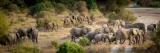

You have flown all the way to northern Tanzania, the same corner of Africa that holds the Serengeti, the Ngorongoro Crater and some of the best game-viewing on the planet. If you can spare the days, add a safari.
Why a Safari Makes Sense
Almost everyone who climbs Kilimanjaro thinks about tacking a safari onto the trip, and if you can spare the days and the money, you should. The same airport that flies you in for the mountain (Kilimanjaro International, between Moshi and Arusha) sits on the doorstep of the northern safari circuit, some of the richest wildlife country in Africa. It would be a shame to come all this way, climb the roof of Africa, and fly home without seeing a lion.
What a Safari Actually Looks Like
A safari here means driving out to the national parks and game-viewing from a 4×4 with a driver-guide (through Tarangire, Lake Manyara, the Ngorongoro Crater and the vast Serengeti) and sleeping in campsites, tented camps or lodges along the way. Each park has its own character: Tarangire is famous for its elephant herds and baobab-studded landscape; Ngorongoro is a collapsed volcanic caldera sheltering one of the densest concentrations of wildlife on earth; and the Serengeti is simply one of the greatest wildlife spectacles anywhere, particularly during the Great Migration of wildebeest and zebra.
It is the complete opposite of the climb: no effort at all, early starts, long slow days in the vehicle, and a lot of patient watching and waiting for animals to do something. After a week of walking uphill in the cold, being driven around the plains with a cold drink in your hand is not a bad way to recover. Your driver-guide will do all the work (reading the bush, tracking animals, positioning the vehicle for the best sightlines) so your only job is to look out the window and enjoy it.
Timing: Mountain First, Safari Second
Do the safari after the climb, not before. On the way up you want to arrive rested, adjusting to the heat and time zone, and not risk a stomach bug or wearing yourself down before summit night, so the mountain should come first and the safari should be the reward at the end.
The one exception is if you only have a day or two spare beforehand and want to shake off the jet lag; a gentle day at Arusha or Lake Manyara does no harm. But the bulk of any safari belongs after you are back down. Think of it as the carrot that pulls you through those hard nights on the upper mountain, you have already booked the game drives, so you had better get to the summit first.
Health on Safari: Malaria and Lowland Risks
One health point that catches climbers out: the mountain itself is above the mosquito line and is not malarial, but the safari lowlands (Arusha, the parks, Lake Manyara, the Serengeti) do carry malaria, and more so in the rainy seasons. If you are adding a safari you are spending extra nights down in that zone, so take your antimalarial tablets and cover up from dusk to dawn.
It is also worth being cautious about food and water in the first couple of days after descending. Your body has been under considerable stress on the mountain, and your immune system may be less resilient than usual. Stick to bottled water, eat at reputable lodges or camps, and give yourself a day to readjust before diving into bush campsites with unfamiliar food. The vaccinations and malaria section of the planning chapter covers everything you need in detail.
What This Section of the Guide Covers
This part of the guide walks through the whole thing: where to go and what you will actually see, the different ways to sleep and what a safari really costs (with the park fees laid out and the operators compared), a set of example itineraries from two to six days with rough prices, and how to stay safe around the animals.
And if you would rather end on a beach than in a vehicle, the island of Zanzibar is a short flight from Kilimanjaro or Arusha and makes an easy add-on (white sand, warm sea and spice-island history) either instead of a safari or after one. Many climbers find that combining all three (mountain, safari, and Zanzibar) over two to three weeks makes for one of the most complete and rewarding trips on the African continent.