








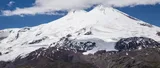

Video circulating since 2 November 2026 shows a large avalanche running down a slope on Mount Elbrus in the Russian Caucasus and covering part of a tourist complex. No official count of injuries or deaths had been issued by Russian authorities when TV Azteca published its reports, with damage assessment still under way. Elbrus is the 7 summits peak of Europe, and its south side carries lifts, huts and a busy winter resort.
A large avalanche came down a slope of Mount Elbrus in the Russian Caucasus and covered part of a tourist complex. Video of the slide began circulating on social media and was reported on 2 November 2026 by TV Azteca outlets in Mexico. The footage shows a mass of snow moving fast down the mountainside, throwing up a dense white cloud, and reaching buildings at the bottom of the slope.
No official figure for people injured, trapped or killed had been released when those reports were published. Rescue teams were assessing damage to the affected infrastructure. That is the whole of what the published accounts establish, and it is worth saying plainly for anyone with people on the mountain: a count is not the same as an absence of casualties, and the position may have moved since.
Nothing is loaded from YouTube until you press play.
What the video shows
The clip runs for a few seconds and is filmed from below and to the side. A wall of snow crosses the open slope, widens, and envelops part of the installations while residents and visitors watch. The TV Azteca Michoacán report describes it as striking and covering part of a local tourist complex. The TV Azteca Chiapas version gives the same sequence and notes how quickly the footage spread across platforms.
Neither report names the complex, gives a location on the mountain more precise than Elbrus, or states the date on which the avalanche itself happened. A viral clip and a confirmed event in a confirmed place are two separate things, and for now only the first is firmly established.
Why buildings sit under snow slopes on Elbrus
Elbrus is not a remote mountain. The southern approach is a developed ski area. A cable car system runs up from the Azau valley towards the Garabashi area, and the standard climbing route starts from huts and container accommodation on the glacier, well above the top lift station. That infrastructure is the reason Elbrus is the most accessible of the 7 summits, and the reason a snow slide can arrive at a building rather than at an empty hillside.
The practical effect for climbers is that the mountain is busy year round. Skiers use the lower slopes through the winter. Climbers appear from roughly May onwards, with the heaviest traffic in July and August. November sits between those seasons: the lifts are turning, new snow is loading the upper slopes, and the summit route is largely empty of guided groups. Details of the route, the huts and the normal climbing window are in our Elbrus guide.
Elbrus and the 7 summits
Elbrus, at 5,642 metres, is the highest mountain in Europe under the Caucasus definition of the continental boundary, and it appears on the Messner and Bass lists alike. That makes it one of the two peaks almost every candidate for the 7 summits climbs, whichever list they are following. For many people it is also the first of the seven, chosen because the climb is a long walk on snow rather than a technical ascent, and because it can be done inside a two week holiday.
That accessibility has always carried a cost in accidents. The summit plateau is exposed, the weather on Elbrus changes faster than its gentle profile suggests, and the normal route crosses ground where a lost track in poor visibility leads to steep terrain on either side. Altitude is the other constant: 5,642 metres is high enough to matter, and the lift access means a climber can be sleeping above 3,800 metres on day one. Our FAQ covers acclimatization and the warning signs worth knowing before anyone books.
What to treat as settled, and what to wait for
An avalanche that reaches occupied buildings is a different kind of event from one that runs out on an empty glacier, and the reporting so far is built on a widely shared video rather than on a statement from Russian emergency services. Two things are worth holding separately. The footage is real and shows snow covering part of a tourist facility on Elbrus. The scale of the consequences is not yet established in any account currently available.
Anyone with a trip booked to the south side this winter will want the Elbrus resort operator's own notices and the regional emergency ministry's bulletins, which are where lift closures and route restrictions are announced. Operators running the standard route will know within days whether the Garabashi huts and the cable car are affected. Our list of companies working on the mountain is on the operators page.
A note on resurfacing footage
Avalanche clips travel well and travel repeatedly. The same few seconds of snow swallowing a building can appear on three continents in a day, sometimes years after it was filmed, and the headline attached to it rarely carries a date for the event itself. The reports here are dated 2 November 2026 and treat the video as new. Where a precise date for the slide, a named complex or a casualty figure is wanted, the thing to look for is a statement from the authorities in Kabardino-Balkaria rather than another repost of the same clip.
For climbers reading this with Elbrus on a list, nothing here changes the shape of the mountain or the season. It is a reminder of something the south side makes easy to forget. The lifts, the cafés and the hotel beds sit beneath a very large snow slope, and that slope behaves like every other snow slope in the Caucasus.
This story is part of This week on the 7 summits: 2–8 November 2026, the week's news in brief.
Header photograph: Elbrus from Cheget.jpg by Dmitry A. Mottl, CC BY-SA 4.0 (licence), via Wikimedia Commons.