
Climbing Denali in short
- What it is: Denali (6,190 m20,308 ft) in Alaska, long known as Mount McKinley, is the highest mountain in North America and one of the 7 summits.
- How hard: Denali is second only to Everest in overall difficulty among the seven. There are no porters: you carry a pack and pull a sled up the West Buttress route, in cold that can reach −40.
- How long: Allow three to four weeks for Denali.
- When: The Denali season runs from May to early July.
- Permit: You must register with the park at least 60 days ahead. The fee for 2027 is US$475.
- Success: In a typical year about half of those who try Denali reach the summit.
- Elevation
- 6,190 m / 20,308 ft
- Summit of
- North America
- Location
- United States
- First ascent
- 1913
- Main route
- West Buttress
- Season
- May–Jun
- Trip length
- 17–21 days
- Typical cost
- from ~$9,000
Registration, fees and the rules on the mountain follow the National Park Service; this season's figures are on the Permits & costs page.
How hard is it to climb Denali?
Denali is one of the hardest of the 7 summits, and it should not be near the top of your list. At 6,190 m20,308 ft it is only a little higher than Kilimanjaro and much lower than Aconcagua, yet neither of those asks for comparable experience or effort.
From the moment you land on the glacier you melt every drop of water from snow. You cross large crevasses roped together. You carry a full pack and drag a sled, put up your own tent in freezing wind at the end of each day, and build snow walls so the storms do not blow it away. A pack of at least 20 kg plus a heavy sled is normal.
The National Park Service has counted every attempt since 1903: about 27,300 summits from about 52,800 attempts up to and including 2026, a success rate of 52%. About 1,000 climbers attempt Denali each year (943 in 2025). In a typical season about half reach the summit, and in a bad-weather year far fewer: 36% in 2025. Treat the climb as a severe examination. Planning your trip says what it takes, the introduction to the Denali guide places it among the seven, and the FAQ How hard is it to climb Denali? is the short version.
Why Denali feels higher and colder than 6,190 m20,308 ft
Denali lies further from the equator than any other of the 7 summits, close to the Arctic Circle. The atmosphere is thinner near the poles, so there is measurably less oxygen at 4,000 m13,123 ft on Denali than at 4,000 m13,123 ft on Kilimanjaro. For the body, the summit has been found equal to about 7,000 m22,966 ft near the equator.
The same latitude brings the cold. Overnight temperatures can fall to −40 (the same in Celsius and Fahrenheit) at camps as low as 4,000 m13,123 ft. In return, June has daylight almost around the clock, which takes much of the pressure off the timing of summit day.
Denali climbing routes: the West Buttress and the others
Almost everyone follows the West Buttress route, which Bradford Washburn opened in 1951: 922 of the 960 climbers registered in 2025, or 96%. It is technically the easiest way up, with no steep climbing and no river crossings, and it is the route this guide describes stage by stage.
Denali also has some of the hardest routes anywhere: the Cassin Ridge, the Messner Couloir and the huge North Face among them. The Karstens Ridge from the Muldrow Glacier, the pioneers' way, was once counted as similar in difficulty to the West Buttress. Since the glacier surged in 2021 the National Park Service describes it as substantially harder and more dangerous, and aircraft may not land there.
Choosing your route covers the alternatives for experienced climbers.
The Denali West Buttress route, camp by camp
| Stage | Height gained | Time |
|---|---|---|
| Flight from Talkeetna to Kahiltna Base Camp (2,200 m7,218 ft) | By ski-plane | About 30 minutes, after waiting for weather |
| Kahiltna Base Camp to Ski Hill | 175 m574 ft net | 3 to 6 hours |
| Ski Hill to Kahiltna Pass | 720 m2,362 ft | 2 to 5 hours |
| Kahiltna Pass to Motorcycle Hill | 300 m984 ft | 2 to 4 hours |
| Motorcycle Hill to Basin Camp (4,300 m14,108 ft) | 980 m3,215 ft | 4 to 8 hours |
| Basin Camp to High Camp (5,245 m17,208 ft) | 915 m3,002 ft | 3 to 8 hours |
| Summit day (6,190 m20,308 ft) | 950 m3,117 ft | 8 to 16 hours |
| Descent and return flight | About 4,000 m13,123 ft down | 2 to 4 days |
The first days are sled travel on the Kahiltna Glacier, over some of the biggest crevasses on the route. The stage to Basin Camp passes Windy Corner, one of the mountain's notorious spots. Basin Camp, at 4,300 m14,108 ft, is the real base camp, and the centre for medical help and rescue.
Above it comes the best climbing: the fixed lines of the Headwall and the exposed ridge of the West Buttress itself. Summit day starts with the traverse to Denali Pass, the most dangerous part of the route, then a long walk past the Football Field and a narrow final ridge. Most accidents happen on the descent, over snow bridges that have weakened since you came up.
Cache and carry on Denali: sleds, packs and double carries
You cannot climb Denali in one push. Most teams use cache and carry: carry part of the load to the next camp, bury it, come back down to sleep, and move up the next day. It splits loads that are too heavy to move at once, and it helps the body adapt to the height.
Low on the mountain the sled takes much of the weight. Packing and roping it so that it does not pull you into a crevasse, or overtake you on a slope, is a skill of its own. The cache-and-carry system explains the method, and Practical issues on the mountain covers the sled, night travel, camp craft and crevasse rescue.
Life on the glacier: camps, food, waste and weather on Denali
There are no camp crews or huts on Denali. National Park Service rangers are stationed at Kahiltna Base Camp and at Basin Camp, but every team builds and runs its own camp, and before digging one you probe the area for crevasses. Snow walls are cut from firm blocks and stacked around the tent. You depend on your team mates with your life, so know their strengths and weaknesses before you fly in.
Allow at least 4,000 calories a day. The fuel is white gas, ordered from the air taxi and collected at Kahiltna Base Camp. At High Camp water boils at about 83 °C181 °F, so food that only needs soaking saves fuel and time.
All human waste goes into a Clean Mountain Can, a plastic barrel of about 7 litres with a secure lid, in use since 2001. The rangers issue them, one for every two or three climbers, and below Basin Camp all solid waste is carried off the mountain.
The temperature range is huge. By day the glacier can feel like an oven, and when the wind rises or the sun goes you remember how close the Arctic is. In June the sun hardly sets, and in warm spells teams travel at night on the lower glacier, when the snow bridges are firmer. Doctors are present at Basin Camp during the season, but do not count on them for more than a check and some drugs. Practical issues on the mountain covers every one of these, with radios, roping the sled and crevasse rescue.
How long does it take to climb Denali, and when is the season?
A successful trip lasts about 18 days on average. Allow three to four weeks to have a real chance, because storms can pin a team in camp for days. The more spare days you have, the better your odds.
Faster is possible. Harry Kikstra reached the summit once in 11 days and once in 13, and both times the team carried supplies for three to four weeks and booked its flights to match. A few spare days spent seeing Alaska are better than giving up a climb because work at home is waiting. Most guided expeditions are sold as 17 to 21 days.
The flights are the days nobody can plan. The ski-plane from Talkeetna goes only in clear weather, and so does the flight back, so a team can wait several days in town at the start or on the glacier at the end. Book your flights home with that in mind.
The season starts in early May; April is too cold. Most summits are made in June, and most groups are off the mountain during July. Later in the summer the crevasses open and the snow bridges weaken, and the ski-planes can no longer land on the glacier.
Planning your trip covers the timing. The FAQ: How long does it take to climb Denali?
How much does it cost to climb Denali?
| Item | Cost per person |
|---|---|
| Mountaineering fee, 2027 season | US$475 (US$375 aged 24 or younger) |
| The same in 2026 | US$450 (US$350) |
| Park entrance fee | US$15 |
| Ski-plane from Talkeetna to the glacier and back, 2026 | About US$750 |
| Guided expedition, all in | About US$15,000 to 20,000 |
| Independent team, per person | A few thousand dollars |
RMI Expeditions charges US$13,500 for its 21-day West Buttress climb, and the other licensed companies are in the same range. A guided price usually includes the permit, the glacier flight, group gear and food on the mountain. An independent team pays the fees, the flight, food, fuel and sled hire.
On top come flights to Anchorage, stove fuel and sled hire, food, and all your technical gear. Denali is far cheaper than Everest, but the equipment for −40 is a large part of the bill if you do not own it yet. Cancel before 15 February of your climbing year and all but US$100 of the fee is refunded; after that nothing is.
Denali: Permits and costs has the current fees. The FAQs: How much does it cost to climb Denali? and what the 7 summits cost.
What Denali costs
- With a guided expedition
$12,900–$16,995 for the middle half of the 19 trips we researched.
The full range is $10,000–$23,830.
4 more are priced in other currencies and are not included here.
Each company’s own price, in the currency it quotes, read from its website. Prices change, so check with the company.
- Usually extra
- Preparation course (extra at 18 of the 28 companies that say)
- Organising it yourself
About $2,500–$3,500 on the mountain.
The $450 National Park Service fee, the ski plane from Talkeetna and back, three weeks of food and fuel, and lodging in Anchorage and Talkeetna.
Our estimate. International flights, gear and insurance are extra.
- Permits and fees
Denali climbing permit: the 60-day registration rule
You must register with the National Park Service at least 60 days before your start date, and the park enforces it. Miss it and the rangers offer the earliest date they can. There is one exception: seven days are enough when every climber in the team has already reached at least Kahiltna Pass on Denali or Mount Foraker since 1995. Registration is two steps: pay the fee online, then email the signed application to the Talkeetna rangers, who book you an appointment.
You collect the permit in person at the Walter Harper Talkeetna Ranger Station, at an orientation you must attend, and you cannot fly to the glacier without it. There you are also given a Clean Mountain Can, in which all human waste is carried off the mountain. Solo climbing is strongly discouraged and needs an extra form.
The fee is not rescue insurance. Rescue is at the park's discretion, you may be billed for an evacuation, and being rescued ends your permit. Helicopters cannot fly in storms. Denali: Permits and costs has the detail and the narrow seven-day exception, and the FAQ How far ahead do I need to register for Denali? the short version. Insure for rescue and medical costs above 6,000 m19,685 ft (travel insurance).
Can I climb Denali without a guide? The seven licensed guide companies
Yes. You are not obliged to take a guide, and about two thirds of Denali climbers go without one. A team on its own does its own navigation, flights, cooking, supplies and rescue. Unless you have climbed above 4,000 m13,123 ft, camped in winter and run an expedition, hire a guide, and get more experience on other mountains first.
Only seven companies are licensed by the Park Service to guide on Denali: Alaska Mountaineering School, Alpine Ascents International, American Alpine Institute, International Mountain Guides, Mountain Trip, NOLS and RMI Expeditions. Any other company selling a Denali climb is placing you with one of these seven, though it can send its own guides along as well. Unlicensed guided groups can be removed from the mountain.
Denali operators lists the seven and who sells places with them. The FAQs: Should I climb Denali guided or independently, and who may guide it? and Can I climb each of the 7 summits without a local guide?
What experience and training do I need for Denali?
Before you fly to Talkeetna you should have mastered winter camping, crevasse rescue, rope management and looking after yourself in a hostile place. You will learn a lot on Denali, but it is the wrong place to start learning.
The climbers who try Denali are generally more experienced than those on Aconcagua or Kilimanjaro, and the mountain still turns half of them back. What counts is experience of cold, of glacier travel and of carrying loads, the patience to wait for weather, and a team that works. A guide does not replace that experience: on a guided climb too, you are expected to look after yourself.
Train to carry a pack of 20 kg or more while pulling a sled, for many days. Heart and lungs come first, then the strength for the loads. Expect to lose weight on the mountain. Fitness, heart rate and load carrying has the method, and Planning and preparation lists every planning chapter.
The FAQs: What experience do I need before climbing Denali?, How do you train for the 7 summits?, What does a training plan look like? and Which skills do the 7 summits need?
Altitude sickness, frostbite and health on Denali
At 6,000 m19,685 ft the air pressure is about 45% of that at sea level, and on Denali the body feels it as higher still. Acute mountain sickness (AMS) is the early warning: headache, nausea, poor sleep. The guide gives a points system for judging it, and explains its two dangerous forms, fluid on the lungs (HAPE) and on the brain (HACE), pulse oximeters and Diamox (Altitude effects).
Cold is the other threat. Frostbite, dehydration, and sunburn and snow blindness from the glare are all common (Other health issues). The FAQs: What are HAPE and HACE?, How do you train to prevent altitude sickness? and What should I eat and drink at high altitude?
The dangers of climbing Denali, and when to turn around
The West Buttress is often underestimated because it is called non-technical. Accidents happen every year, some fatal. Most of them happen on the traverse to Denali Pass on summit day, and on the way down. Fewer climbers die on Denali than on Aconcagua, and the climbers here are generally more experienced.
Some groups agree a fixed turnaround time. We disagree: a fixed time can be a dangerous thing. Weather and the condition of your team should decide. If the weather turns at eight in the morning, go down, wherever you are. As a guide: if you reach the top of Denali Pass six hours after leaving High Camp, you will be slower still above it, so draw the obvious conclusion. In June the long daylight makes the clock matter less than anywhere else; the weather matters more.
Danger, death and turnaround sets it out in full.
What gear do I need for climbing Denali?
The Denali gear list has every personal and team item. The gear that sets Denali apart: a sled, skis or snowshoes (flotation), mountaineering boots with overboots, a sleeping bag for −40, a storm-proof tent, a shovel and snow saw for the walls, a stove and fuel to melt all your water, a crevasse rescue kit, a harness and an ascender for the fixed lines, crampons, an ice axe, expedition mitts and glacier glasses.
Equipment and packing explains the choices, with a checklist for the months before. See also Which gear works on more than one of the 7 summits? and Which stove and fuel work best at high altitude?
How to get to Denali: Anchorage, Talkeetna and the flight to the glacier
You will most likely fly to Anchorage. From there you travel to the small town of Talkeetna, where the rangers hold the orientation and the air taxis are based. Three companies are authorised to fly climbers onto the glacier: K2 Aviation, Talkeetna Air Taxi and Sheldon Air Service. The luggage allowance is normally about 57 kg (125 lb) a person.
The flight takes about half an hour over the Alaska Range, and you may wait a day or more for weather before it goes (Getting to Kahiltna Base Camp). Check your airline's baggage allowance too: excess baggage can cost more than buying supplies in Alaska. Alaska, the 49th State has the practicalities, and Denali National Park describes the park and its wildlife.
Denali or Mount McKinley: the mountain and its history
Denali means "the Great One", or "the High One", in the Koyukon Athabaskan language, and it has been Alaska's official name since 1975. The United States federal government called it Mount McKinley from 1917, changed to Denali in 2015, and changed back by executive order in January 2025. The national park has stayed Denali National Park and Preserve throughout, and climbers, guides and the rangers in Talkeetna call the mountain Denali (Is Mount McKinley the same as Denali?).
A claim to have climbed it in 1906, by Dr Frederick Cook, was later widely questioned. Hudson Stuck, Harry Karstens, Walter Harper and Robert Tatum made the first ascent of the true summit on 7 June 1913, by the Muldrow Glacier. Harper, an Alaska Native, was the first of them on top. In 1951 Bradford Washburn and seven others opened the West Buttress route, the way most people climb today.
History of the mountain tells it in full, and Background information opens the section. The FAQ How many people have climbed Denali? has the numbers.
Denali questions
About this Denali climbing guide
The Denali guide grew out of 7 summits finisher Harry Kikstra's printed guidebook, Denali: Summit of North America (Rucksack Readers, 2006), and has since been expanded and brought up to date. Harry has climbed and summited Denali twice. 7summits.com ran expeditions to the 7 summits for more than twenty years.
Every chapter is on a review schedule, and the permit page is checked against the National Park Service's own pages. Sources and credits lists the maps, books and services, the table of contents and the index reach every chapter, and the books worth reading first are on Denali books and films.
Climbing guide
Read before you go

 Accidental Adventurer: Memoir of the First Woman to Climb Mount McKinleyBarbara Washburn · 2001
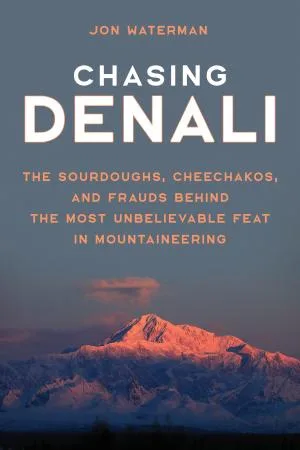 Chasing Denali: The Sourdoughs, Cheechakos, and Frauds behind the Most Unbelievable Feat in MountaineeringJonathan Waterman · 2018