








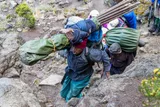

Tanzania's Ministry of Natural Resources and Tourism says it will introduce a grading and certification system for tour guides and porters, with pay aligned to the grade held. The plan was announced at the close of a nine-day course for more than 300 guides and porters at the College of African Wildlife Management, Mweka, near Kilimanjaro. The training was aimed at preparing service providers for the 2027 Africa Cup of Nations, which Tanzania co-hosts with Kenya and Uganda.
Tanzania intends to introduce a grading and certification system for tour guides and porters. The plan was announced at the College of African Wildlife Management, Mweka, at the closing ceremony of a nine-day training course for more than 300 guides and porters. The Daily News reported the announcement.
The speech came from Dr Ashatu Kijaji, Minister for Natural Resources and Tourism, and was read on her behalf by the Deputy Permanent Secretary, Nkoba Mabula. The stated aim is clearer performance standards and accountability across tourism services. Grading would give a framework for assessing what guides and porters can actually do, and for recognising it formally.
What is proposed
The college has started work on grading guides and porters by knowledge and experience. Its Rector, Professor Julius Nyahongo, said pay would be aligned with the grade and certification a person holds. That is the part of the proposal that matters most on Kilimanjaro, where wages and tipping have long been settled informally between operators, crews and clients.
No start date, fee, grade structure or enforcement mechanism was given in the report. It is also not stated whether the system would be compulsory for work inside Kilimanjaro National Park, or whether it would sit alongside existing park and operator requirements.
The ministry's Director of Training and Research, Dr Edward Kohi, said the nine-day course involved more than 300 male and female guides and porters. The course was organised to prepare tourism service providers for the 2027 Africa Cup of Nations, which Tanzania will co-host with Kenya and Uganda. Kijaji said the country is targeting eight million inbound visits a year by 2030.
Who spoke for the workforce
Paul Joshua, Vice-Chairman of the Tour Guides Association, welcomed the training and said it would push guides to widen their knowledge. Mohamed Mkoma, Chairman of the Porters Association, called the timing right, pointing to the number of people entering the profession and the need to keep service quality up as that happens.
Those two statements are the only direct comment from guide and porter representatives in the report. Neither association is quoted on how grading would be assessed, who would pay for certification, or what happens to an experienced porter who has never held a certificate.
Nyahongo said the grading initiative was inspired by President Samia Suluhu Hassan's work promoting Tanzanian tourism through the Royal Tour film. The college has given the President the status of 'Grade One Alpha Guide' in recognition of that.
Why this matters to anyone booking a climb
Kilimanjaro is the only one of the 7 summits where a large paid crew is standard for an ordinary client. A typical group walks with cooks, porters and assistant guides, and the ratio of staff to climbers is high. Pay, load limits and conditions for that crew have been the subject of campaigning for years, mostly through voluntary codes that operators sign up to rather than through a state licence.
A government grading system changes the shape of that. If a grade is recorded and pay follows the grade, then a climber choosing between two quotes has something concrete to ask about. The obvious question for an operator becomes what grades the crew hold, not just how many people are coming along. Until the structure is published, though, there is nothing for a client to check against.
This site's view is that pay transparency on Kilimanjaro has been held back by the absence of any public record of who is qualified to do what. A certificate that an employer must recognise is a better starting point than a code of conduct that an employer may sign and ignore. Whether this particular scheme achieves that depends entirely on details that have not been announced.
It is worth being plain about the limits of a government announcement. A plan described at a graduation ceremony is a plan, and Kilimanjaro has seen proposals for crew regulation before. The useful signal will be a published grade structure with a date attached.
The context on the mountain
Kilimanjaro remains the most climbed of the 7 summits, and for many climbers it is the first serious altitude of their lives. The route, the permit system and the operator landscape are set out in the Kilimanjaro guide. Climbers comparing companies can start from the operators list. Questions about acclimatization and altitude illness are answered in the FAQ rather than repeated here.
The training took place at CAWM-Mweka, which sits on the southern slopes below the mountain near the Mweka route trailhead. The college trains wildlife and tourism staff for Tanzania and for other African countries, and its involvement suggests the grading work would be assessed through an existing institution rather than a new body.
For climbers already planning a 2027 trip, the AFCON connection is worth noting. Tanzania is co-hosting a tournament that will bring a large number of visitors, and the training programme is explicitly framed as preparation for that. Pressure on guiding capacity in that period is a reasonable thing to ask an operator about when booking.
What to watch next
The things that will tell you whether this becomes real are specific: a published grade ladder, a stated minimum wage per grade, and a date from which park authorities require a certificate. None of those exist yet in public. When they do, the practical effect on a Kilimanjaro booking will be measurable rather than aspirational.
This story is part of This week on the 7 summits, the week's news in brief.
Header photograph: Портеры на Килиманджаро перед подъёмом на стену Барранко.jpg by Sergei Andreichuk, CC BY-SA 4.0 (licence), via Wikimedia Commons.