
Climbing Mount Elbrus in short
- What it is: Mount Elbrus (5,642 m18,510 ft) in southern Russia is the highest mountain in Europe and one of the 7 summits.
- How hard: The standard South route on Elbrus has no technical climbing: lifts carry you to huts at about 3,800 m12,467 ft, and summit day is a long, roped walk on snow in crampons.
- How long: Allow about eight days for Elbrus by the South route, ten or eleven by the North.
- When: The Elbrus season runs from June to September.
- Cost: A guided Elbrus climb with a local operator costs roughly US$550 to 2,700 before flights, and US$2,900 to 8,000 with an international company.
- The hard parts: Altitude, cold, sudden whiteouts and, since 2022, getting to Russia.
- Elevation
- 5,642 m / 18,510 ft
- Summit of
- Europe
- Location
- Russia
- First ascent
- 1874 (west)
- Main routes
- 2
- Season
- Jun–Sep
- Trip length
- 8–10 days
- Typical cost
- from ~$700
Not technical, but high, cold and prone to sudden whiteouts.
How hard is it to climb Mount Elbrus?
On the normal route Elbrus has no rock and no steep ice. It is a long walk on snow, roped, in crampons, with an ice axe in your hand. A fit hill-walker with basic snow skills can climb it, which is why many people pick it as one of their first 7 summits. Our FAQs rank it among the non-technical 7 summits and compare it with the easiest and the hardest of them.
The height and the weather make Elbrus serious. The air on the summit holds roughly half the oxygen of sea level, the cold can be severe even in July, and the upper mountain is a broad white dome with almost no landmarks. Climbers die here most years, usually from a mix of altitude, cold and bad weather. On foot from the huts, summit day is six to nine hours up with about 1,850 m6,070 ft of height gain, and then the whole way down again.
Climbed with proper acclimatization and an eye on the forecast, it is a wonderful mountain. The introduction to the Elbrus guide describes what the climb is really like, and Health and safety covers what actually hurts people.
Mount Elbrus climbing routes: South or North
Elbrus has two main climbing routes, one on each side of the mountain, and they give two very different trips.
| Elbrus Normal (South) Route | Elbrus North Route | |
|---|---|---|
| Days | About 8 | About 10 to 11 |
| Getting high | Cable car and chairlift, optional snowcat | On foot the whole way |
| Where you sleep | Huts at about 3,800 m12,467 ft | Huts at about 2,500 m8,202 ft and 3,800 m12,467 ft; tents are the cheaper option |
| Crowds | Busy in season | Quiet |
| Summit reached | West, 5,642 m18,510 ft | East, 5,621 m18,442 ft; West for strong parties |
The South route is the standard climb and the one to do first. Its lifts, huts and nearby rescue make it faster and more forgiving of time, and the price is a ski-resort feel low down and plenty of company. The North route has no lifts and far fewer people. You walk every metre, and it feels like an expedition.
For a first Elbrus in a normal amount of holiday, the South route is the obvious pick. Choose the North if you have the days and want the quiet. Choosing your route: South vs North sets the two side by side in full, and the FAQ Should I climb Elbrus by the South or the North route? gives the short answer.
The Elbrus Normal (South) Route, stage by stage
A good trip on the Elbrus Normal (South) Route builds height in four steps, and the first of them is not on the mountain at all.
| Stage | Height | Time |
|---|---|---|
| Valley days in Terskol and Azau, with day-hikes | Sleep at 2,000 to 2,300 m6,562 to 7,546 ft, walk to 3,000 to 3,700 m9,843 to 12,139 ft | 2 to 3 days |
| Lifts from Azau to the Barrels huts | 2,350 m7,710 ft to about 3,800 m12,467 ft | About 1 hour |
| Acclimatization climb to the Pastukhov Rocks, back to the huts | About 4,700 m15,420 ft | 3 to 5 hours up |
| Rest day | Huts, or back down in the valley | 1 day |
| Summit day to the West summit | 5,642 m18,510 ft | 6 to 9 hours up on foot |
The valley days are spent walking up Mount Cheget, to the old observatory above Terskol and to the Devichy Kosy waterfall, sleeping low each night. Rushed itineraries skip them and pay for it later. The Azau valley and acclimatization hikes describes all three walks.
The move to the huts is the one easy part of the climb (Azau to the Barrels huts). The climb to the Pastukhov Rocks is the rehearsal: your first time near 4,700 m15,420 ft, on the ground you will cross again in the dark (Acclimatizing to the Pastukhov Rocks).
Summit day starts around one or two in the morning, on foot or with a snowcat for the lower part. Above the rocks the route crosses the flank of the East summit on a long rising traverse to the saddle at roughly 5,350 m17,552 ft, then climbs a steep final slope to the summit plateau. You come down the same way, and most accidents happen on that descent. Summit day from the south has the full description.
The Elbrus North Route
The Elbrus North Route starts with a drive. From the spa town of Kislovodsk a rough track leads past the Dzhily-Su mineral springs to Emanuel Glade, a wide meadow at about 2,500 m8,202 ft, and the last stretch needs a 4×4. The base camp there has huts, tent pitches and a sauna. Most programmes sleep in the huts (Emanuel Glade and base camp).
From the glade it is 8.4 km and a little over 1,250 m4,101 ft of climbing to the high camp at the Priyut Lakkolit huts, 3,765 m12,352 ft. Every metre is walked. Above the high camp the Lenz Rocks run up the mountain from about 4,600 m15,092 ft to well over 5,000 m16,404 ft, and most groups climb towards them more than once before trying for the top (Base Camp to High Camp).
Summit day is eight to twelve hours up, about 1,800 m5,906 ft of height gain, with no machine to shorten it and no quick way off. It ends on the East summit at 5,621 m18,442 ft. Strong, well-acclimatized parties can cross the saddle to the West summit, which adds a great deal to an already long day (Summit day from the north). Camping on this side, and what a pitch costs, is in Camping and climbing independently.
The two summits of Mount Elbrus, and which one counts
Mount Elbrus is two old volcanic cones fused into one mountain, so it has two tops. The West summit is 5,642 m18,510 ft and is the true summit of Elbrus, of the Caucasus and of Europe. The East summit is 5,621 m18,442 ft, about twenty metres lower, and still holds the old crater. For the 7 summits challenge it is the West summit that counts.
Which one you stand on usually follows from the side you climb. The South route goes to the West summit. The North route traditionally ends on the East. A climber who wants the true top by the quiet side needs to plan for the crossing from the start.
The saddle between the two lies at roughly 5,350 m17,552 ft; sources differ on the exact figure. In cloud it is the most confusing place on the mountain. The two summits and the traverse explains both tops and what crossing them in one day involves.
Lifts, huts and snowcats on Elbrus
No other big mountain has what the South side of Elbrus has. A gondola runs from Azau at about 2,350 m7,710 ft, through the Krugozor and Mir stations, to Garabashi at around 3,842 m12,605 ft. An hour after leaving the valley you are at your high camp (Azau to the Barrels huts).
That camp is a cluster of huts on the glacier. The best known are the Barrels: insulated steel cylinders that sleep about half a dozen people each and have housed climbers for decades. Newer huts stand around the same height. All are simple: bunks, a stove, water melted from snow, an outdoor toilet. In July and August they fill up, so book early, or bring a tent (Camping and climbing independently).
On summit morning a snowcat can carry you from the huts to about 4,800 m15,748 ft, or as high as about 5,100 m16,732 ft. Of the 24 Elbrus operators whose pages say, ten include a ride in the price and fourteen charge it as an extra. It cuts hours off the day and can decide whether a slower party reaches the top. It also puts you into thin air with less time on your feet. Decide with your guide before summit morning. Lifts, snowcats and huts has the details and the prices we found.
When to climb Mount Elbrus: season, weather and winter
The Elbrus climbing season is summer, from June to early or mid-September. July and August have the most settled weather, the warmest valley days and the most people. June and September are colder and quieter. The FAQ What months are the best for climbing Elbrus? goes through them month by month.
May belongs to skiers. There is more snow on the upper mountain and it is the one month recommended for skiing up and down, but the weather is what winter left behind and some huts are not yet open. Ski-mountaineers need the same acclimatization as everyone else.
In winter Elbrus is a different mountain, for experienced climbers who know Caucasus weather. One 7 Summits Club group that reached the top in winter reported −43 °C−45 °F on the summit on a sunny day.
Even in high summer the weather turns fast, and a wind forecast above about 50 km/h at 5,000 m16,404 ft makes the summit ridge dangerous whatever the temperature. That is why summit day starts in the small hours, and why every plan carries a spare day. Planning your trip covers how many days to allow, and Where can I find a weather forecast for Elbrus? lists the forecasts worth reading.
What climbing Elbrus costs
Climbing Elbrus is cheap next to most of the 7 summits (what all seven cost), and most of the difference between one trip and another is who you book with. All figures are rough and exclude international flights.
| Item | Rough cost |
|---|---|
| Guided South route with a Russian operator, priced in roubles (AlexClimb, Elbrus Tours, Alpindustria) | 45,000 to 141,000 ₽ (about US$550 to 1,700) |
| Guided 8-day South route with 7 Summits Club, priced in dollars | US$2,670 |
| The same with an international operator, where still offered | US$2,900 to 8,000 |
| National park fee | 200 ₽ per visit ⓘ |
| Climbing permit | None today ⓘ |
| Snowcat on summit day | Often extra; charged per vehicle and shared |
| Your own tent, North side | 500 to 800 ₽ a night |
ⓘ A much higher fee is proposed. In March 2026 the development agency Kavkaz.RF described a permit of up to 30,000 ₽ per climber for anyone going above the top lift station, planned for 2027. It is not in force and neither the price nor the date is final. Elbrus: Permits and costs is the chapter we re-check every month.
A Russian operator can cost a third of an international one, or less, for a climb that is often led by the same Caucasus guides. A low price is often a bare place in a group, so compare what is included. The higher price buys a Western guide, booking protection at home and someone to handle the Russian arrangements. Many international companies paused their Elbrus trips after 2022, so check first that the trip still runs. Planning your trip has the price table per operator, and the FAQ Are flights included in an expedition price? covers the part no price includes.
Western bank cards do not work in Russia, so many operators ask for cash on arrival (Elbrus and the war).
What Elbrus costs
- With a guided expedition
$2,900–$5,900 for the middle half of the 10 trips we researched.
The full range is $1,995–$7,950.
17 more are priced in other currencies and are not included here.
Each company’s own price, in the currency it quotes, read from its website. Prices change, so check with the company.
- Usually extra
- Snowcat ride (extra at 16 of the 26 companies that say)
- Organising it yourself
About $500–$1,000 on the mountain.
There is no climbing fee: the lift, a bed in the huts and an optional snowcat. Add the Russian visa and the flight to Mineralnye Vody.
Our estimate. International flights, gear and insurance are extra.
- Permits and fees
Elbrus climbing permits and paperwork
Climbing Elbrus needs less paperwork than most of the 7 summits. There are four things, and an operator handles all of them for you.
The national park fee is 200 ₽ per visit, set by the park's order of 19 August 2024 and still in force when we checked in August 2026. A border-zone permit is not needed for either standard route. It is needed if you go beyond the alpine camps in the neighbouring valleys towards the passes on the main ridge, and for a foreigner it can take up to 30 working days, so allow two months.
Registering your climb with the mountain rescue service is free and matters when something goes wrong. And every foreign visitor to Russia is registered after arrival: the hotel does it when you check in, and you keep the slips until you leave the country.
Elbrus: Permits and costs has the fee and the zone in detail, Border-zone permits and registration explains the registration, and the FAQ How do I join a guided climb, and who arranges the visa? covers the visa invitation.
Climbing Elbrus and the war: what a foreign climber has to arrange
Elbrus is open and is climbed every season. The lifts and huts run and the operators guide, mostly for Russian climbers and visitors from nearby countries. For a Western climber the mountain is the same as before; the journey to it is a bigger job.
There are no direct flights from most Western countries. You fly to a hub that still connects, commonly Istanbul, Dubai, Yerevan or Baku, and on from there, often on separate tickets that do not protect each other (Getting there and around). You will almost certainly need a visa, electronic or consular depending on your passport. Western Visa and Mastercard cards do not work anywhere in Russia, so you carry cash for the whole trip.
Insurance is where people go wrong. Many Western insurers exclude Russia, or void the cover when your government advises against travel there. Ask your insurer in writing whether the policy covers Russia and mountaineering to 5,700 m18,701 ft, including helicopter rescue.
Leave the satellite phone and the satellite messenger at home. A government decree has banned bringing them into Russia without a licence since 1 May 2026, and it was extended for another six months on 31 October 2026. What to rely on instead is in Camping and climbing independently.
Whether to travel to Russia while the war continues is a personal decision, and we do not make it for you. Elbrus and the war: what it means for climbers now is the chapter to read before anything else, and the FAQ Can I still climb Elbrus, and is it safe to travel to Russia? is the short version.
How to get to Mount Elbrus
Almost every Elbrus trip passes through one airport: Mineralnye Vody, code MRV, on the plains north of the Caucasus. It is about two hours by domestic flight from Moscow, and it lists some international services of its own, to Istanbul and Yerevan among others.
For the Elbrus Normal (South) Route the road transfer takes three to four hours, up the Baksan valley past the town of Tyrnyauz to the villages of Terskol and Azau. For the Elbrus North Route you drive towards Kislovodsk and then out along the track to Emanuel Glade. Your operator normally meets you at the airport; confirm the pick-up in advance.
A Russian SIM card needs your passport to buy and is far cheaper than roaming, which may not work at all. If your route runs through Moscow, a spare day there protects you against a missed connection, and it is a day in one of the great cities (Moscow, the gateway). Arriving across several time zones, read How do you deal with jet lag before a climb? Getting there and around has the transfers, and Russia and the Caucasus opens the whole section.
Altitude sickness and acclimatization on Elbrus
On Elbrus the lifts are the danger as much as the height. The cable car takes you from 2,350 m7,710 ft to 3,800 m12,467 ft in an hour, far faster than a body adjusts. Go up too quickly and you get altitude sickness.
Its common, mild form is acute mountain sickness, AMS: the body telling you it has gained height faster than it can adapt. Headache, nausea, poor sleep and unusual tiredness are the early signs of AMS. If they are mild, stop going up until they pass. If they get worse, go down, which is the one reliable cure. Taken higher, AMS can turn into the two forms that kill: fluid on the lungs (HAPE) and fluid on the brain (HACE). The FAQ What are HAPE and HACE, and how are they prevented and treated? explains both.
The answer is time. Walk high and sleep low in the valley first, move to the huts, climb to the Pastukhov Rocks and come back down to sleep, and only then go for the summit. On the North side the climbs to the Lenz Rocks do the same job. Skipping a step to save a day is the most common mistake on this mountain.
Whether to take acetazolamide (Diamox) is a question for you and a doctor before the trip. Altitude and acclimatization has the Elbrus schedule. Three FAQs go further: Can I climb Elbrus in two days, or do I need the acclimatization days?, How do you train to prevent altitude sickness? and What should I eat and drink at high altitude?
The dangers of climbing Mount Elbrus
Almost every serious accident on Elbrus comes from weather, cold, altitude and navigation. Difficult ground plays no part.
The biggest killer is cloud or storm on the upper mountain. The saddle and the summit plateau have almost no landmarks, and people have died there after losing the way down. Carry the route on a GPS and know how to follow it yourself, even on a guided climb. A guide can be ill, or busy with another climber, at the wrong moment. The forecast FAQ says which numbers to watch.
Cold comes second. Frostbite of fingers, toes and face is a real risk on summit day, above all for a slow or tired climber. Dress for far colder than the valley suggests (Elbrus gear list) and do not press on with numb toes.
The hardest skill is turning back short of the top after a long journey and a lot of money. Agree a turnaround time and keep to it. Rescue exists, and the South side is relatively easy to reach, but high on the mountain in bad weather you are on your own for hours. Health and safety goes through each of these, and the FAQ Can weaker or unacclimatised climbers in my group hurt my summit chances? covers the group side of it.
What training and skills do I need for climbing Mount Elbrus?
You need the fitness of a strong hill-walker who can keep going all day. Summit day is many hours of steady uphill on snow at altitude, in the cold, starting before dawn. The best training is long days uphill with a loaded pack, repeated, backed by general cardio and some leg and core strength for the descent. It takes months to build. Training for Elbrus has the detail, and two general FAQs give the wider picture: How do you train for the 7 summits? and What does a training plan for the 7 summits look like?
You also need the basics of moving on a glacier: walking in crampons, using an ice axe, stopping a slip, and moving on a rope with others. A guide will run through them, but summit day is the wrong time to wear crampons for the first time. If the kit is new to you, take an introductory alpine or winter-skills course first.
The FAQ What experience do I need for Elbrus, and are porters or a course available? answers the Elbrus question, and Which skills do the 7 summits need, and how do I learn them? shows where Elbrus sits among the seven. Planning and preparation lists every planning chapter.
What gear do I need for climbing Elbrus?
Pack for a cold, glaciated mountain. The Elbrus gear list has every item: double boots, crampons, an ice axe, a harness, an insulated jacket over serious cold-weather layers, expedition mitts, and glacier glasses with goggles. Many operators rent the big items in the valley (boots, crampons, axe, down jacket), which saves flying with them; the FAQ What gear do I need for Elbrus, and can I rent it there? covers rental.
Sleeping in a tent changes the list. You need a sleeping bag with a comfort rating of −20 to −10 °C−4 to 14 °F, where a heated hut needs only −10 to 0 °C14 to 32 °F, plus a four-season tent, a stove and a snow shovel (Camping and climbing independently; Which stove and fuel work best at high altitude?).
Equipment and packing introduces the list. If Elbrus is one of several peaks for you, Which gear works on more than one of the 7 summits? shows what to buy once.
Can I climb Elbrus unguided, or do I need an operator?
You can climb Elbrus unguided. No operator or guide is required on the normal routes and there is no climbing permit today, so people do it every season. Navigation in a whiteout, glacier travel and calling for help are then yours. You register with the rescue service yourself, and you carry insurance that is valid in Russia. Camping and climbing independently covers what it takes, and Can I climb each of the 7 summits without a local guide? compares Elbrus with the other six.
Almost everyone still climbs with an operator, and for a first visit it is the sensible choice. The operator provides the visa invitation, transfers, hut bookings and a guide who knows the mountain and its weather. Whatever the price, ask three things: how many clients per guide on summit day, how many acclimatization days are in the itinerary, and whether the lifts and the snowcat are included. Elbrus operators lists the companies we have checked, with what each one runs itself. Climbing alone but wanting company, see Can I join a group?
Camping is allowed on both sides and costs less. At the North-side Lakkolit camp in 2026 a pitch for your own tent cost 500 ₽ a night at base camp and 800 ₽ at the high camp, against 1,700 and 1,800 ₽ for a hut bed.
Mount Elbrus and its history
Mount Elbrus is a volcano, built by eruptions over hundreds of thousands of years on the northern side of the main Caucasus range. It is dormant: the last eruption is put at around two thousand years ago, and there is still faint warmth and sulphur-smelling gas near the eastern crater. A permanent ice cap covers the upper mountain (The mountain: a twin volcano). It is also one of the Volcanic 7 summits.
The East summit was first reached on 10 July 1829 by Khillar Khashirov, a Karachay guide with a Russian expedition, who went on alone after the others turned back. The higher West summit was climbed in 1874 by a British party led by F. Crauford Grove. In August 1942 German mountain troops planted flags on the summit, and Soviet climbers removed them in February 1943. In 1997 a team led by Alexander Abramov got a Land Rover onto the East summit, driving it to the Barrels and winching it from there. History and first ascents tells all four stories.
Two questions come up often and each has its own FAQ: Is Elbrus really in Europe, and why not Mont Blanc? and What does the name Elbrus mean? How Elbrus came to be Europe's summit on both lists is part of the history of the 7 summits. The valleys below the ice are rich country, home to the West Caucasian tur and the bearded vulture (Wildlife and plants of the Caucasus; Background information opens the section).
People, food and language around Mount Elbrus
The Baksan valley on the South side is Balkar country. The Balkars are a Turkic-speaking mountain people, closely related to the Karachay on the northern and western sides of the mountain, and they share their republic with the Kabardians. Russian is the language everybody has in common and the one you will use.
A guest counts for a great deal in the Caucasus. Expect to be fed more than you planned, and accept it gladly. Try khychiny, thin fried flatbreads filled with cheese, potato or meat. A few words of Russian are repaid many times over. See Local culture: the peoples of the Caucasus and the Russian wordlist.
Mount Elbrus questions
About this Mount Elbrus Climbing guide
The Elbrus guide was written from scratch for 7summits.com. Every fact was checked against Russian as well as English sources, and where sources disagree the guide says so. It was written and edited by 7 summits finisher Harry Kikstra, who climbed Elbrus from both sides. 7summits.com ran expeditions to the 7 summits for more than twenty years.
Every chapter is on a review schedule, monthly for permits and access, yearly for the route descriptions, and is updated as soon as something changes. Sources and credits lists what the guide was checked against, the table of contents and the index reach every chapter, and the books worth reading first are on Elbrus books and films.
Climbing guide
Read before you go
 Five Big Mountains: A Regular Guy's Guide to Climbing Orizaba, Elbrus, Kilimanjaro, Aconcagua, and VinsonDavid N. Schaeffer · 2010
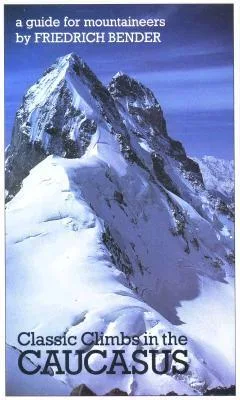 Classic Climbs in the Caucasus: 80 Selected Climbs in the Elbrus and Bezingi Regions of the Svanetian RangeFriedrich Bender · 1992